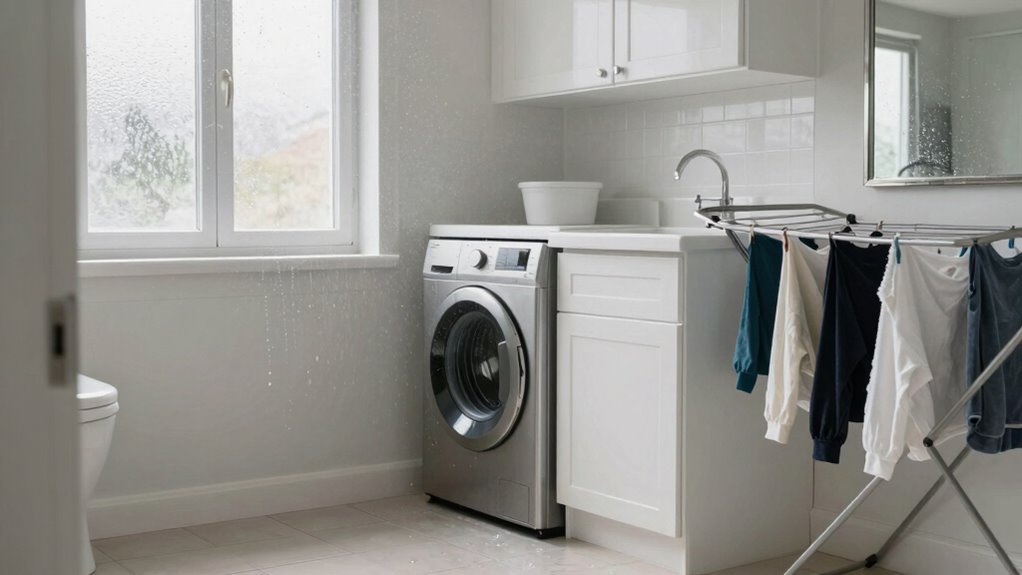

In humid homes, laundry rooms deserve more attention because moisture can quickly lead to mold growth, damaging your appliances and affecting indoor air quality. Proper ventilation, like exhaust fans or open windows, helps control humidity and prevents stagnant air. Fixing leaks and using dehumidifiers or moisture absorbers also make a difference. Keeping the space clean and well-maintained reduces moisture sources. Continue exploring to discover simple ways to keep your laundry area safe and mold-free.

Get garden gear delivered free with Prime
- Fast, free delivery on millions of items
- Prime Video, Amazon Music and more included
- Member-only deals all year
Key Takeaways
- Laundry rooms generate significant moisture from washing and drying, increasing mold risk in humid homes.
- Proper ventilation prevents excess humidity buildup, protecting both laundry appliances and indoor air quality.
- Addressing leaks and moisture sources promptly minimizes mold growth and structural damage.
- Using dehumidifiers and moisture absorbers helps maintain ideal humidity levels in humid environments.
- Regular cleaning and organization reduce mold spores and create a healthier, safer laundry space.

Have you ever wondered how to keep your laundry room from becoming a breeding ground for mold and mildew in a humid home? It’s a common concern, and one you shouldn’t ignore. Laundry rooms are often overlooked when it comes to maintenance, but in humid environments, they can quickly become hotspots for moisture buildup. Mold prevention should be a top priority because mold can damage your belongings, compromise your health, and create unpleasant odors. The key to staying ahead of mold is implementing effective ventilation solutions that reduce excess moisture and promote airflow. Without proper ventilation, humidity stays trapped, providing the perfect environment for mold spores to settle and grow. Proper ventilation and purification can significantly improve indoor air quality and help prevent mold growth. To protect your laundry space, you need to think about how air circulates in the room. Installing an exhaust fan is one of the simplest and most effective ventilation solutions. A good exhaust fan pulls humid air out of the room, especially during and after laundry loads. You want to run it whenever you’re doing laundry to keep humidity levels in check. If your laundry room doesn’t have a window, an exhaust fan becomes even more essential. Otherwise, moisture can linger for hours, creating a damp environment that invites mold to flourish. If you do have a window, opening it during and after laundry can help, but an exhaust fan or even a dehumidifier will do a better job of maintaining consistent airflow and moisture control. Additionally, ensuring proper air circulation can prevent stagnant air that encourages mold growth. Improving ventilation efficiency can also help keep humidity levels stable and prevent mold spores from settling. In addition to ventilation, you should pay attention to how moisture accumulates in your laundry room. Fix leaks immediately and ensure your washer and dryer are well-maintained, as leaks and excess condensation can add to humidity levels. Using moisture absorbers or dehumidifiers can also help control humidity, especially in consistently humid climates. Regularly wipe down surfaces, especially around your appliances, to prevent mold spores from settling. It’s also helpful to be aware of moisture accumulation sources and address them promptly to maintain a healthy laundry environment. Additionally, selecting proper ventilation systems can further enhance moisture control and air quality in your laundry space. Keep laundry detergents and supplies organized and away from areas prone to moisture buildup to avoid accidental spills that can increase humidity.
bathroom exhaust fan for laundry room
As an affiliate, we earn on qualifying purchases.
As an affiliate, we earn on qualifying purchases.
Frequently Asked Questions
How Can I Prevent Mold Growth in My Laundry Room?
To prevent mold growth in your laundry room, start by improving ventilation and using a dehumidifier. Apply mold-resistant paint to walls and ceilings, which helps stop mold spores from settling. Make certain your laundry room insulation is properly installed to control moisture and temperature fluctuations. Regularly clean and dry your laundry area, paying attention to corners and behind appliances. These steps create an environment less conducive to mold growth.
Are Dehumidifiers Necessary for Laundry Rooms in Humid Homes?
Dehumidifiers are often necessary for laundry rooms in humid homes because their effectiveness helps reduce moisture that causes mold and mildew. They can be a worthwhile investment when you do a cost-benefit analysis, considering the potential savings on repairs and health benefits. Using one keeps your laundry area dry, protecting your clothes and appliances, and creating a healthier environment, especially in consistently humid conditions.
What Are the Best Ventilation Options for Humid Laundry Spaces?
Imagine your laundry room as a bustling hub where moisture tries to linger. To keep it dry, opt for effective ventilation systems like exhaust fans or vented windows, ensuring steady airflow circulation. These options help expel humid air and bring in fresh air, preventing mold and mildew. Installing a combination of exhaust fans and vented windows provides the best ventilation, transforming your laundry space into a dry, healthy sanctuary.
Can Humidity Damage My Laundry Appliances Over Time?
Yes, humidity can damage your laundry appliances over time. Excess moisture promotes mold, rust, and corrosion, which can affect appliance performance. To prevent this, you should use proper ventilation, regularly clean your laundry detergents dispensers, and perform routine appliance maintenance. Keeping humidity levels in check helps prolong your appliances’ lifespan, ensuring they operate efficiently and avoiding costly repairs down the line.
How Often Should I Inspect for Mold in a Humid Laundry Room?
You should inspect your humid laundry room for mold at least once a month. Look behind appliances, in corners, and along seams for any signs of mold or mildew. Use mold-resistant paint on walls and install moisture barriers to prevent mold growth. Regular inspections, combined with these measures, help keep your laundry space safe and mold-free, protecting both your health and appliances over time.
Conclusion
Remember, a stitch in time saves nine—paying attention to your laundry room in a humid home now prevents bigger issues later. Keep your space dry, well-ventilated, and mold-free, and you’ll protect your belongings and your health. Don’t wait until dampness becomes a problem; proactive care makes all the difference. By giving your laundry room the attention it deserves, you’re ensuring a fresher, healthier home for you and your family.
Halloween Picks
halloween
As an affiliate, we earn on qualifying purchases.