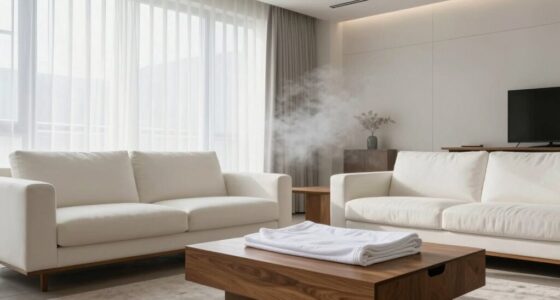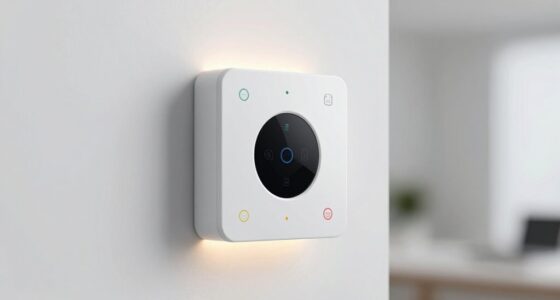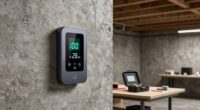
Cooking is the main source of indoor particulate matter, but you can catch and control it in real time. Use portable air quality monitors to track PM levels during cooking, so you know when to increase ventilation or activate air purifiers. Open windows, turn on exhaust fans, and place air purifiers near your cooking area for best results. Stay alert to how your choices affect indoor air quality; more tips are just ahead.
Key Takeaways
- Use portable air quality monitors to detect PM spikes during cooking in real time.
- Increase ventilation immediately when PM levels rise, by opening windows or turning on exhaust fans.
- Utilize HEPA air purifiers placed near cooking areas to continuously filter airborne PM.
- Maintain and clean ventilation systems regularly to ensure optimal removal of indoor PM.
- Adjust cooking methods, like lowering heat, based on real-time air quality feedback to minimize PM emissions.
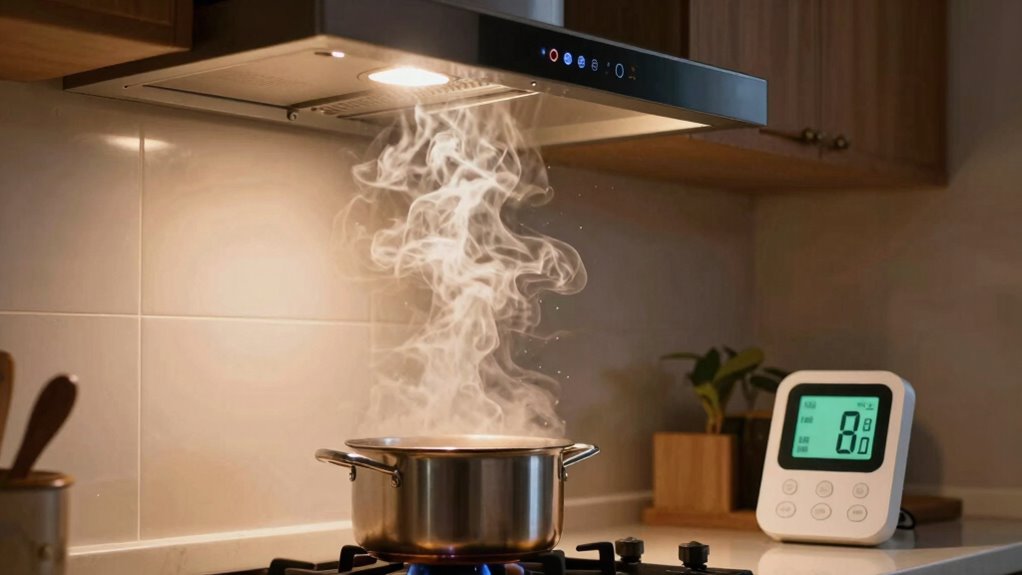
Cooking indoors is a common activity, but it can also be a significant source of indoor particulate matter (PM). Every time you fry, sauté, or bake, tiny particles are released into the air, often invisible to the naked eye. These particles, especially PM2.5, can pose health risks over time, making it important to find ways to detect and reduce their presence. One of the most effective methods is to improve your ventilation strategies and incorporate pollutant filtration into your kitchen.
Your ventilation system is your first line of defense. When you cook, open windows or use exhaust fans to help remove airborne particles before they settle. An efficient range hood that vents outside is ideal because it captures pollutants directly at the source. Make sure your range hood is properly maintained—clean filters regularly and ensure that it’s powerful enough for your cooking style. If your kitchen lacks adequate ventilation, consider adding supplemental air purifiers equipped with HEPA filters, which can trap a significant portion of PM. These devices work in real time, pulling in contaminated air and filtering out particles before they circulate throughout your home.
Pollutant filtration extends beyond just the ventilation system. Air purifiers with high-efficiency filters can target fine particles that slip past traditional exhaust fans. Place these purifiers strategically in your kitchen or adjacent living areas to continuously scrub the air as you cook. Remember, the key is to select units capable of filtering PM2.5, which are small enough to penetrate deep into your lungs and cause health issues. Combining ventilation strategies with pollutant filtration creates a multi-layered approach—ventilation rapidly removes larger particles and odors, while filtration handles the finer PM that remains airborne.
Monitoring indoor air quality in real time is also critical. Portable air quality monitors can help you track PM levels during and after cooking. When levels spike, you’ll know it’s time to boost ventilation or activate your air purifier. This immediate feedback allows you to respond quickly, reducing exposure and maintaining healthier indoor air. Over time, you’ll learn which cooking methods generate the most PM and adjust accordingly, perhaps by using lower heat or cooking in well-ventilated areas. Additionally, understanding indoor air quality can empower you to make informed decisions to create a healthier living environment.
Frequently Asked Questions
How Do Different Cooking Methods Affect PM Levels?
Different cooking methods markedly impact PM levels through pollutant emissions and cooking fumes. For example, frying and grilling produce more airborne particles compared to boiling or steaming. When you cook with high heat or oil, you release more pollutant emissions and cooking fumes, increasing PM levels indoors. To reduce this, you should use exhaust fans, open windows, and opt for gentler cooking methods whenever possible.
Can Indoor Plants Reduce Cooking-Related PM?
Indoor plants can help reduce cooking-related PM by acting as natural filters, improving your indoor air quality. Imagine lush leaves like tiny air purifiers, absorbing and trapping particles as you cook. Their benefits extend beyond aesthetics, creating a fresher, healthier environment. While plants won’t eliminate all PM, they contribute to cleaner indoor air, making your kitchen a more inviting space where you breathe easier amid the culinary activity.
What Are the Best Ventilation Practices During Cooking?
You should use effective ventilation techniques during cooking, like opening windows and turning on the kitchen exhaust fan. Make sure your exhaust hood is functioning properly and run it whenever you cook to remove airborne particles quickly. If possible, keep a window slightly open to enhance airflow. Using a combination of the kitchen exhaust and natural ventilation helps reduce indoor PM and keeps your indoor air cleaner.
How Often Should Air Filters Be Replaced for Optimal Indoor Air Quality?
You should replace your air filters every 1 to 3 months for ideal indoor air quality, depending on your filter’s lifespan and your household’s air pollution levels. Check your replacement schedules regularly, especially if you notice reduced airflow or increased dust. Regular changes ensure your filter effectively captures indoor pollutants, including cooking particles, helping you breathe cleaner air and maintain a healthier indoor environment.
Are There Specific Cookware Materials That Emit Less PM?
You should choose cookware materials like stainless steel, glass, or ceramic for emission reduction, as they emit less particulate matter during cooking. Avoid non-stick pans with synthetic coatings, which can release fumes and PM. Cast iron is also a good option, but guarantee proper ventilation. By selecting these materials, you minimize indoor PM levels and improve air quality, making your cooking safer and healthier.
Conclusion
Now that you know cooking is your home’s biggest indoor PM source, you can take action. Picture the smoke curling from your pan, settling into every corner, unseen but harmful. By ventilating properly and staying alert, you’re clearing the air, turning your kitchen into a safe haven. With each mindful step, you’re not just cooking—you’re creating a healthier space, where fresh air flows freely and invisible dangers fade away, leaving only warmth and comfort behind.