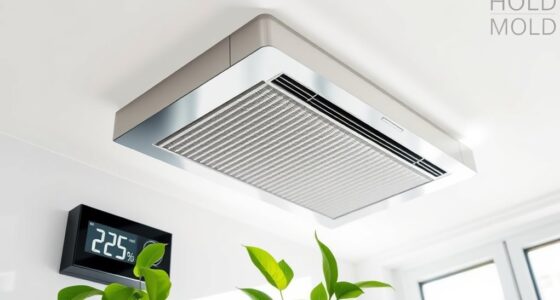
Multi-zone HVAC systems let you control temperature and air quality in different areas of large buildings, ensuring comfort and health. When combined with advanced air purification, they can target pollutants, humidity, and noxious gases, providing healthier indoor environments. These systems improve ventilation efficiency and reduce energy waste, keeping air fresh and clean. To learn how to optimize these solutions for your building, keep exploring how integrated controls and monitoring make a difference.
Key Takeaways
- Multi-zone HVAC allows tailored temperature and air quality control for different building areas, enhancing comfort and health.
- Integrating air quality monitoring enables real-time detection of pollutants, humidity, and CO2 levels for optimal ventilation.
- Advanced controls adjust airflow and filtration based on sensor data, preventing stale air buildup and ensuring consistent indoor air quality.
- Regular maintenance and calibration of air quality devices are crucial for accurate readings and system efficiency.
- Combining multi-zone systems with targeted air purification reduces energy waste and promotes healthier indoor environments in large buildings.
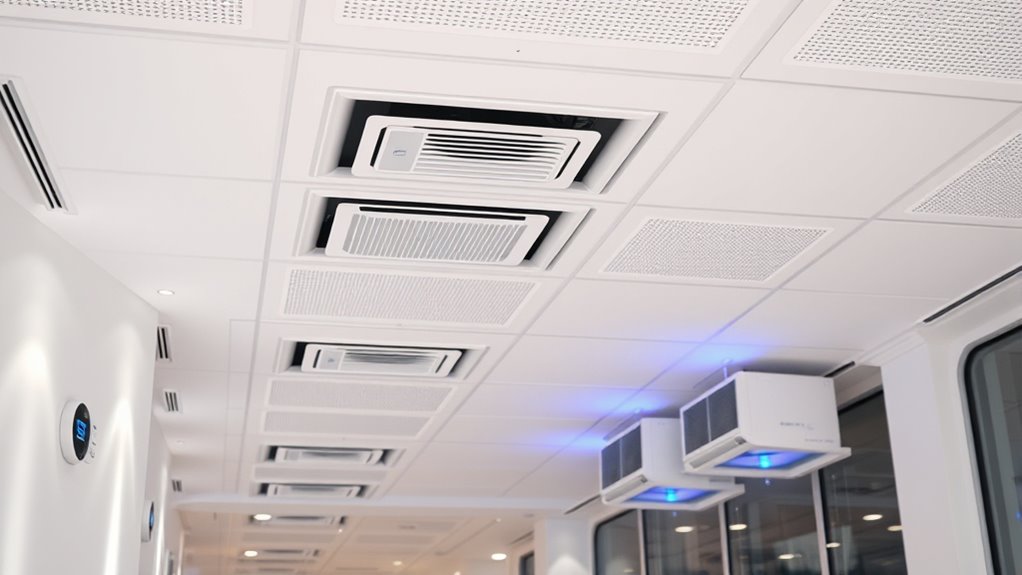
Are you looking for a way to improve your home’s comfort and air quality simultaneously? If you’re managing a large building, this goal becomes even more essential. Multi-zone HVAC systems offer a tailored approach, allowing you to control temperature and air quality in different areas independently. One key aspect of optimizing these systems is enhancing ventilation efficiency. When each zone receives the right amount of fresh air without over-ventilating, you reduce energy waste and ensure consistent comfort. Good ventilation efficiency helps prevent stale air from lingering and minimizes the risk of airborne contaminants spreading between zones.
To truly optimize your multi-zone HVAC setup, you need reliable air quality monitoring. These devices keep track of pollutants, humidity, and CO2 levels in real time, providing essential data to adjust the system accordingly. By continuously monitoring air quality, you can quickly identify issues like poor ventilation or elevated pollutant levels and respond promptly. This proactive approach not only maintains a healthier environment but also improves energy use, as the system only works harder when necessary. In large buildings, where air quality can fluctuate markedly from one zone to another, air quality monitoring becomes indispensable for maintaining consistent standards throughout the property.
Reliable air quality monitoring ensures optimal ventilation and energy efficiency in multi-zone HVAC systems.
Implementing an effective multi-zone HVAC system involves more than just installing multiple thermostats. It requires integrating advanced controls that can adapt to changing conditions across zones. These controls utilize data from air quality monitors and sensors to fine-tune airflow and filtration, ensuring each space has ideal ventilation efficiency. This dynamic adjustment prevents problems like overheating, under-ventilation, or excess humidity, which can compromise comfort and indoor air quality. Furthermore, by balancing airflow intelligently, you reduce energy costs and extend the lifespan of your HVAC equipment. Incorporating mindfulness techniques, such as mindful observation of indoor air quality, can help facility managers stay aware of subtle environmental changes and respond proactively.
Regular maintenance and calibration of your air quality monitoring devices are vital to keep the system running smoothly. Outdated or inaccurate readings can lead to improper ventilation adjustments, negating the benefits of your multi-zone system. When paired with strategies like zone-specific filtration and targeted ventilation, air quality monitoring offers a thorough approach to creating a healthier, more comfortable environment. Whether you’re overseeing a commercial office, a hospital, or a large residential complex, prioritizing ventilation efficiency and real-time air quality data will help you achieve better indoor air standards while saving energy and reducing operational costs.
Frequently Asked Questions
How Does Multi-Zone HVAC Impact Energy Consumption?
You might notice that multi-zone HVAC can increase energy consumption because it involves more components and system complexity. However, it also boosts energy efficiency by allowing you to target specific areas, reducing overall usage. While the system may use more energy upfront, the precise temperature control helps you save energy in the long run by avoiding unnecessary heating or cooling in unoccupied zones.
What Are the Maintenance Costs for Multi-Zone Systems?
Maintenance costs for multi-zone systems can feel like tending a complex garden, requiring regular pruning and care. You’ll spend on routine maintenance, inspections, and occasional equipment upgrades to keep everything running smoothly. While these costs may seem high at times, investing in upgrades prevents costly repairs down the line. Staying proactive with servicing guarantees your system remains efficient and reliable, saving you money in the long run and keeping your building comfortable.
Can Existing Buildings Be Retrofitted for Multi-Zone HVAC?
Yes, you can retrofit existing buildings for multi-zone HVAC systems. However, you’ll face retrofit challenges like modifying ductwork and installing zoning controls. These upgrades require careful planning to guarantee compatibility with your building’s structure. You’ll need to work with professionals to address these challenges, but the benefits include improved comfort and energy efficiency. Properly planning and investing in zoning controls will help you maximize your system’s performance.
How Do Air Purifiers Integrate With Multi-Zone Systems?
Air purifiers seamlessly integrate with multi-zone systems, enhancing air quality in each zone. You might think they operate independently, but they’re often connected through the building’s control system, allowing centralized management. This setup guarantees ideal air purification tailored to specific zone needs. By integrating air purifiers into your multi-zone HVAC, you improve overall air quality, reduce allergens, and maintain healthier indoor environments effortlessly through system integration.
What Is the Typical Lifespan of These HVAC and Purification Systems?
Your HVAC and air purification systems typically last around 10-15 years, depending on usage and maintenance. Regular upkeep ensures system durability and can extend their replacement timeline. Keep an eye on performance issues, increased energy use, or frequent repairs, as these signs indicate it’s time to contemplate replacements. Proper maintenance helps maximize lifespan, but eventually, system components wear out and need upgrading for efficient, reliable air quality control.
Conclusion
Imagine managing air quality for a building housing over 1,000 occupants, where multi-zone HVAC systems ensure everyone stays comfortable and healthy. Did you know that proper air purification can reduce airborne pathogens by up to 99%? By investing in advanced multi-zone HVAC and purification solutions, you create a safer, more comfortable environment for all. It’s not just about comfort—it’s about safeguarding health and enhancing productivity every day.