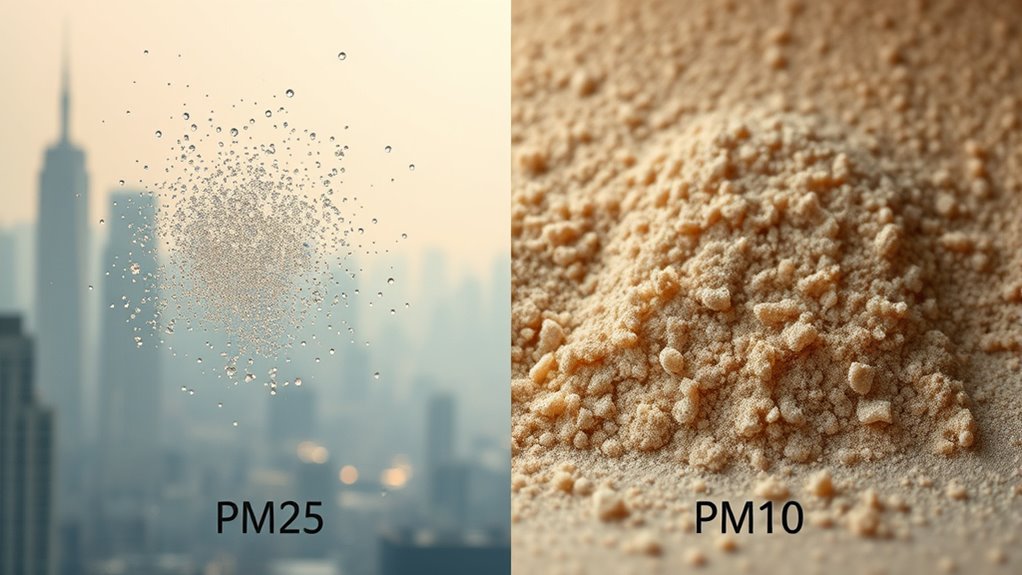

PM2.5 particles are smaller than PM10, measuring 2.5 micrometers or less, allowing them to penetrate deep into your lungs and bloodstream. PM10 particles are larger and tend to stay in your upper respiratory tract, causing more immediate symptoms like coughing and throat irritation. Because of their size, PM2.5 poses greater long-term health risks, including respiratory and cardiovascular problems. To understand how these particles impact your health and ways to protect yourself, keep exploring further.
Key Takeaways
- PM2.5 particles are 2.5 micrometers or smaller, penetrating deep into lungs and bloodstream, unlike larger PM10 particles which stay in upper airways.
- PM2.5 poses higher health risks, contributing to respiratory diseases, due to its ability to bypass natural defenses and carry harmful chemicals.
- Filtration systems like HEPA filters effectively capture PM2.5, emphasizing the importance of air quality standards to limit exposure.
- Both PM2.5 and PM10 cause respiratory irritation, but PM2.5’s deep penetration leads to more serious long-term health impacts.
- Monitoring PM levels and adopting protective measures are crucial for reducing health risks associated with particle size differences.
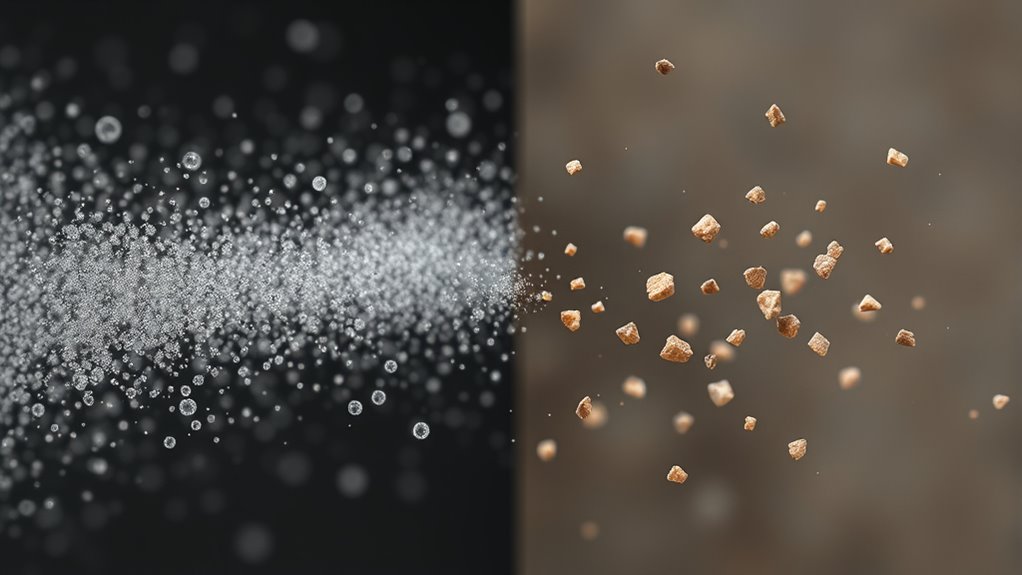
Have you ever wondered what distinguishes PM2.5 from PM10? These tiny particles are vital to understanding air quality and how it affects your health. PM2.5 particles are 2.5 micrometers or smaller, while PM10 includes particles up to 10 micrometers. The size difference might seem small, but it makes a big impact on how deeply these particles can penetrate your respiratory system. Because PM2.5 particles are so tiny, they can bypass your nose and throat defenses, reaching your lungs and even entering your bloodstream. This makes them particularly dangerous compared to larger particles, which tend to get trapped in your upper respiratory tract. HEPA filters are especially effective at capturing these smaller particles, highlighting the importance of proper air purification. When it comes to air quality standards, health authorities around the world set limits to regulate exposure to these particles. These standards are designed to protect public health by minimizing the risks associated with particle pollution. PM2.5 levels are closely monitored because of their ability to cause serious respiratory health impacts. Long-term exposure to elevated PM2.5 concentrations has been linked to chronic respiratory diseases such as asthma, bronchitis, and even more severe conditions like chronic obstructive pulmonary disease (COPD). Short-term spikes can lead to immediate issues, including coughing, wheezing, and difficulty breathing, especially in vulnerable groups like children, the elderly, and those with pre-existing health problems.
PM2.5 particles are tiny, penetrate deep into lungs, and pose greater health risks than larger PM10 particles.
Your respiratory health impacts are directly tied to the quality of the air you breathe. Fine particles like PM2.5 can irritate your airways, inflame lung tissue, and reduce lung function over time. Because they are so small, they can carry harmful chemicals, heavy metals, and biological materials that further aggravate respiratory conditions. Larger particles, like PM10, still pose health risks, but their impact tends to be more localized to your upper respiratory pathways, causing symptoms like throat irritation and coughing. However, both particle sizes contribute to pollution-related health problems, especially during high pollution events when concentrations skyrocket.
Understanding the differences between PM2.5 and PM10 helps you grasp why air quality standards emphasize reducing fine particle levels. These standards aim to safeguard your respiratory health by limiting exposure to the most harmful particles. Protecting yourself means staying informed about air quality reports, especially on days with high pollution levels. Wearing masks, avoiding outdoor activities during peak pollution times, and supporting policies aimed at reducing emissions can make a difference. Ultimately, recognizing how particle size influences health impacts emphasizes the importance of cleaner air for your overall well-being and respiratory health.
Frequently Asked Questions
How Do PM2.5 and PM10 Levels Vary Seasonally?
You’ll notice seasonal variations in PM2.5 and PM10 levels, with higher pollutant fluctuations during winter due to increased heating and stagnant air. In summer, levels often decrease as temperatures rise and wind disperses particles. During spring and fall, fluctuations can occur because of agricultural activities and weather changes. These seasonal patterns impact air quality, so monitoring helps you understand when pollution peaks and take precautions accordingly.
Which Pollutants Often Co-Occur With PM2.5 and PM10?
You’ll find pollutants like nitrogen oxides, sulfur dioxide, volatile organic compounds, and carbon monoxide often co-occur with PM2.5 and PM10 due to chemical interactions in the atmosphere. These pollutants can undergo atmospheric dispersion, influencing particle formation and distribution. This interplay worsens air quality and health effects, as it amplifies the presence of fine and coarse particles, making it essential to monitor and control multiple pollutants simultaneously for better air quality management.
Are There Specific Industries Contributing More to PM2.5 or PM10?
Oh, you’re curious if industries are secretly playing favorites with PM2.5 or PM10? Well, surprise! Industrial emissions from factories mainly contribute to PM2.5, while construction dust, that charming byproduct of urban growth, mostly adds to PM10. So, next time you see a construction site, remember it’s tossing around those larger particles, while smokestacks are busy creating the fine, health-harming PM2.5.
How Do Filtration Systems Differ in Removing PM2.5 Versus PM10?
Filtration systems differ in removing PM2.5 versus PM10 mainly through filter efficiency and particle retention. For PM2.5, you need high-efficiency filters like HEPA that can trap smaller particles effectively. For PM10, less dense filters often suffice, as larger particles are easier to catch. By selecting the right filter, you guarantee better particle retention, reducing health risks associated with these airborne particles.
What Long-Term Health Effects Are Linked Specifically to PM10?
Long-term exposure to PM10 can hinder your lung development, especially in children and young adults. It increases your risk of respiratory infections and aggravates existing respiratory conditions like asthma. Over time, inhaling these larger particles can cause persistent inflammation and reduced lung function, making you more vulnerable to illnesses. Reducing exposure is vital to safeguard your respiratory health and guarantee proper lung growth and maintenance.
Conclusion
Now that you know the difference between PM2.5 and PM10, it’s clear these tiny particles play a major role in your health — like silent villains lurking in the air. Remember, whether they’re the size of a grain of sand or smaller, both can impact your lungs and overall well-being. Stay alert and breathe easier knowing understanding these particles is your first step to cleaner, healthier air. After all, knowledge is your best shield against invisible threats.