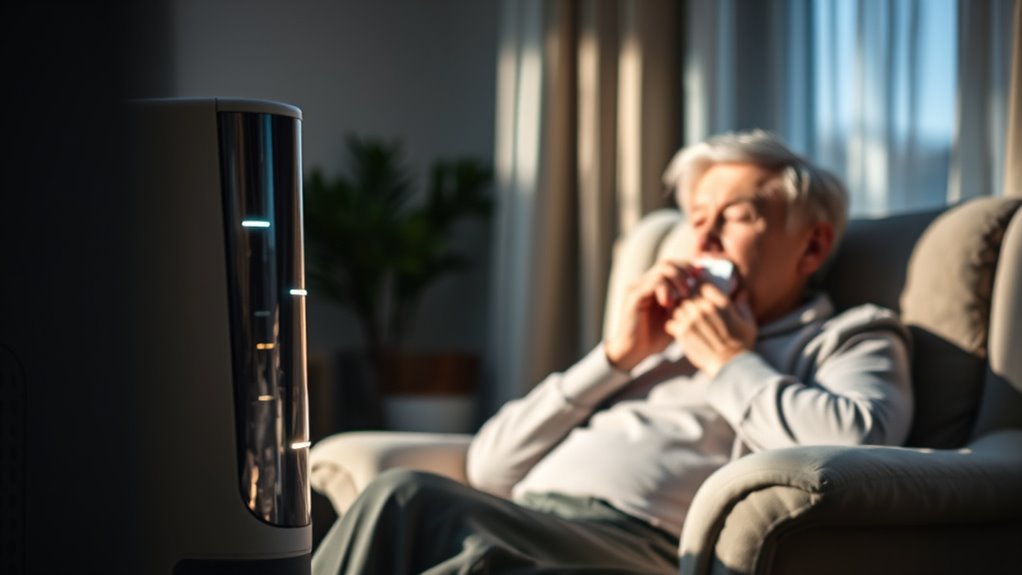
Using an air purifier can help ease COPD symptoms by removing airborne pollutants like dust, pet dander, and mold spores that irritate your lungs. Properly used, especially with HEPA filters, purifiers create cleaner indoor air, which can reduce coughing, wheezing, and shortness of breath. While they aren’t cures, many find relief when combining purifiers with other management strategies. To discover how to maximize their benefits for you, see what the latest findings reveal.

Get garden gear delivered free — and shop member deals
- Fast, free delivery on millions of items
- Access to Prime Big Deal Days deals on October 6–7
- Prime Video, Amazon Music and more included
Key Takeaways
- Air purifiers reduce indoor airborne pollutants that irritate lungs, easing COPD symptoms.
- HEPA filters trap 99.97% of particles as small as 0.3 microns, improving air quality.
- Consistent use of air purifiers correlates with fewer COPD exacerbations and less coughing.
- Proper device sizing and filter replacement are essential for maximum symptom relief.
- Combining air purifiers with other management practices enhances overall respiratory health.
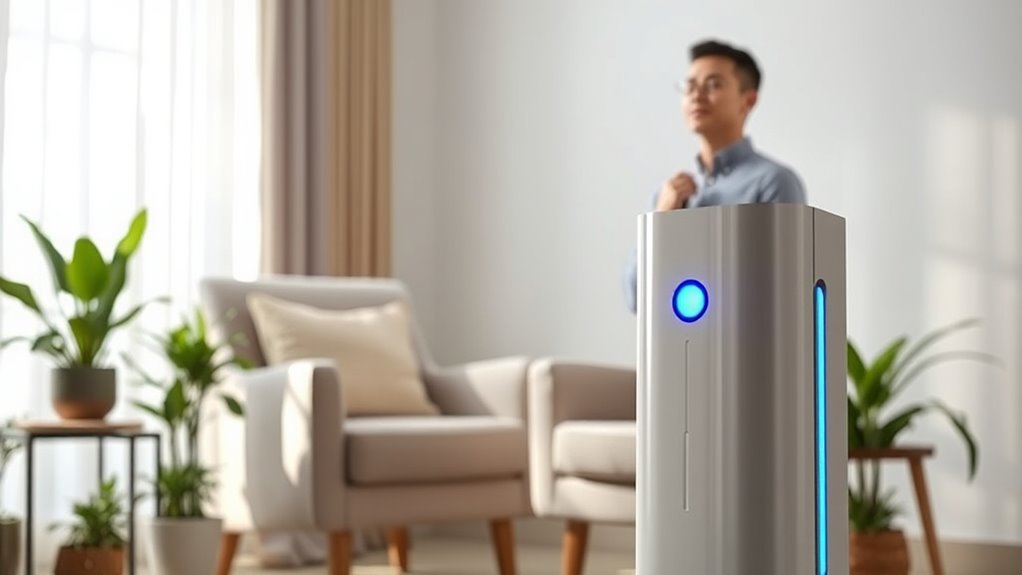
Have you ever wondered how indoor air quality affects COPD symptoms? Many people overlook the impact of the air you breathe inside your home or workspace. Poor indoor air quality can substantially worsen respiratory health, making it harder to breathe and increasing the frequency of COPD flare-ups. When air is filled with dust, pet dander, mold spores, or pollutants, your lungs have to work harder to filter out these irritants. This added strain can intensify symptoms like coughing, wheezing, and shortness of breath. That’s why improving indoor air quality is a vital step in managing COPD effectively.
Indoor air quality significantly impacts COPD symptoms and overall respiratory health.
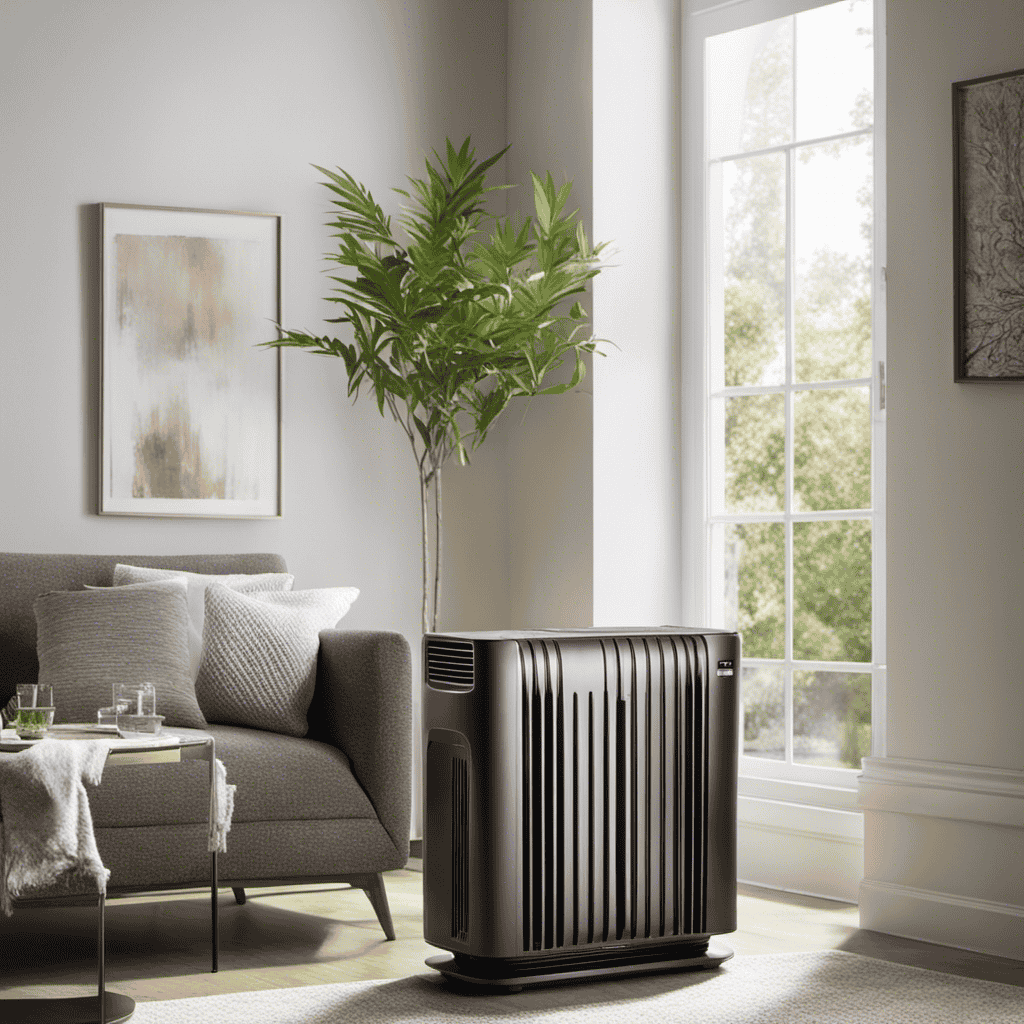
Air purifiers have gained attention as a practical solution to enhance respiratory health. These devices work by capturing airborne particles and reducing pollutants in your environment. When used properly, a purifier can lower the concentration of allergens and irritants in the air, creating a cleaner, safer space for your lungs. They’re especially beneficial in areas prone to dust, mold, or smoke, where pollutants tend to accumulate quickly. By filtering out these harmful substances, purifiers help to reduce lung inflammation and ease breathing difficulties.
Recent research shows that air purifiers can have a positive impact on COPD symptoms, especially for individuals living in urban settings with higher air pollution levels. Studies indicate that when air quality improves, patients report fewer exacerbations and experience a decrease in cough and mucus production. While a purifier isn’t a cure for COPD, it can be an effective component of a broader management plan. It’s important to choose a device with HEPA filters, which are proven to trap at least 99.97% of airborne particles as small as 0.3 microns, including pollen, dust mites, and bacteria. An appropriately sized purifier for your room ensures maximum efficiency and better air quality.
Using a purifier consistently is essential. Keep doors and windows closed when the device is running, and replace filters as recommended by the manufacturer. Combining this with other measures—like regular cleaning, avoiding smoking indoors, and minimizing exposure to strong fumes—can further protect your respiratory health. Remember, while a purifier can greatly improve the air you breathe, it’s also vital to follow your healthcare provider’s advice and medication plan. In essence, a high-quality air purifier can be a valuable tool to help ease COPD symptoms by improving indoor air quality, making your environment healthier and more comfortable to breathe in every day. Additionally, selecting an air purifier with HEPA filters ensures that the device effectively captures the tiniest harmful particles, providing a significant benefit to those with compromised respiratory systems.
As an affiliate, we earn on qualifying purchases.
Frequently Asked Questions
Are All Air Purifiers Effective for COPD Symptom Relief?
Not all air purifier types are effective for COPD symptom relief. HEPA filters are most recommended because they trap airborne particles and allergens. Some purifiers with activated carbon can reduce odors and gases. When choosing, consider cost considerations, as higher-quality models may be more effective but also pricier. Always check if the purifier is designed to remove pollutants relevant to COPD symptoms, ensuring you get the best benefit for your needs.
How Often Should a Purifier Filter Be Replaced for COPD Patients?
You should replace your purifier filter regularly to guarantee proper filter maintenance and extend the purifier lifespan. Typically, it’s recommended to change filters every 6 to 12 months, depending on usage and air quality. Regular filter maintenance keeps your purifier working efficiently, helping to better manage COPD symptoms. Check your device’s instructions for specific guidance, and don’t forget to monitor the filter’s condition for ideal air quality.
Do Portable Purifiers Work Better Than Whole-House Systems?
You might think whole-house systems are better, but portable air purifier technology often offers targeted relief and flexibility, making them more effective for COPD management. While cost considerations matter, portable units allow you to focus on critical areas like your bedroom or living room. Their mobility means you can easily adjust for changing needs, ensuring cleaner air where you spend the most time, which can considerably ease your symptoms.
Can Purifiers Remove Specific COPD Triggers Like Smoke or Dust?
You can use an air purifier to target specific COPD triggers like smoke or dust, but it’s essential to maintain it properly through regular air purifier maintenance. To guarantee it’s effectively removing pollutants, perform air quality testing periodically. This helps confirm that the purifier is working well and reducing harmful particles. While purifiers help improve air quality, combining them with other strategies offers the best relief for COPD symptoms.
Are There Any Risks Associated With Using Air Purifiers for COPD Sufferers?
Think of your indoor air as a garden, where every breath is a delicate flower. While air purifiers can brighten your air quality, beware of potential risks like over-filtering or improper maintenance. Poorly maintained devices may become breeding grounds for mold or bacteria, worsening indoor allergens. So, always choose wisely, keep filters clean, and monitor your indoor environment to protect your lungs and enjoy fresher, healthier air.
Conclusion
You might think a purifier can completely ease your COPD symptoms, but new findings suggest it’s not a cure-all. While purifiers can reduce airborne irritants and improve air quality, they won’t eliminate all triggers or replace medication. Think of them as a helpful tool, not a magic fix. So, if you’re considering one, use it alongside your treatment plan. It’s worth exploring, but don’t expect it to completely transform your COPD experience.
Fall yard work Picks
leaf blowers
As an affiliate, we earn on qualifying purchases.