To select HVAC filters that effectively remove viruses, choose filters with at least a MERV 13 rating, as they can trap smaller particles like aerosols carrying viruses. Make certain your system is compatible with high-efficiency filters to avoid airflow issues. Consider filters with electrostatic or HEPA-like features for enhanced particle capture. Regularly replacing and properly installing these filters maintains peak protection. Keep exploring to learn how advanced features and maintenance can boost your indoor air safety even further.
Key Takeaways
- Choose filters with at least MERV 13 to effectively trap virus-sized particles and aerosols.
- Ensure your HVAC system can accommodate high-efficiency filters without airflow restrictions.
- Consider filters with electrostatic or HEPA-like features for enhanced virus particle capture.
- Regularly replace and properly install filters to maintain optimal filtration performance.
- Balance filtration efficiency with system compatibility to maximize indoor air safety.
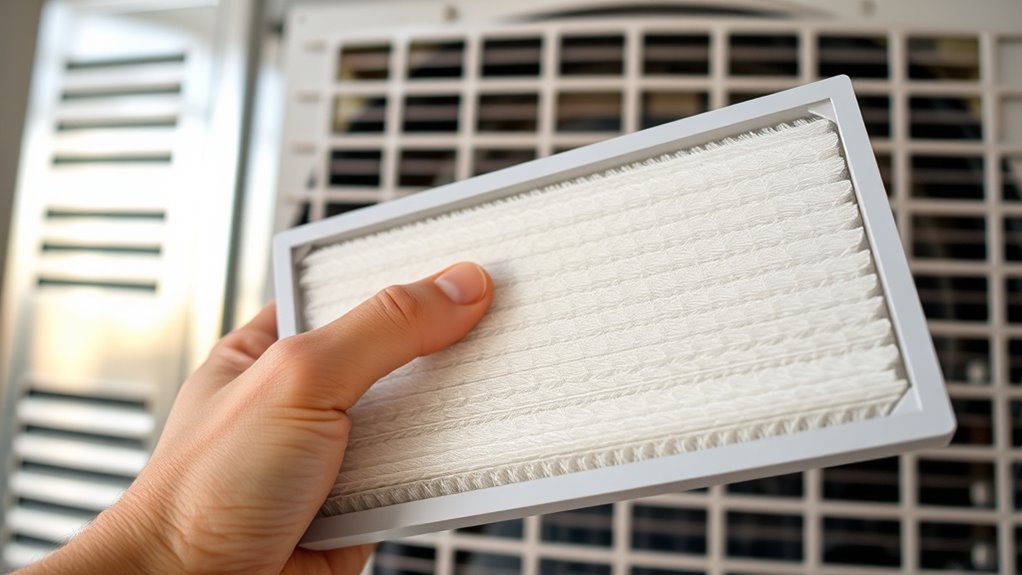
Choosing the right HVAC filter is essential for effectively removing viruses from indoor air. To do this, you need to understand how air filter ratings and virus particle size interact. Air filter ratings, such as MERV (Minimum Efficiency Reporting Value), indicate how well a filter captures particles of various sizes. The higher the MERV rating, the better the filter is at trapping smaller particles, including many virus-carrying aerosols. Virus particles are typically tiny, often less than 0.3 microns in diameter, making them difficult to filter out with standard filters. However, many viruses hitch a ride on larger respiratory droplets or aerosols that are within the capture range of high-quality filters.
Choosing high-MERV filters improves virus particle removal but ensure system compatibility for optimal indoor air safety.
When selecting a filter, look for one with a MERV rating of at least 13 or higher, as these are proven to trap particles in the size range of many airborne viruses. Filters with lower ratings, like MERV 8 or below, mainly capture larger dust and pollen but are less effective against tiny virus-laden aerosols. Keep in mind that the virus particle size alone isn’t the only factor. The effectiveness of the filter also depends on its ability to trap particles of the size that viruses typically travel in, which means focusing on filters that target the 0.3 to 1-micron range is critical.
It’s tempting to choose the highest-rated filter available, but you need to consider your HVAC system’s compatibility. High-efficiency filters with MERV ratings above 13 can restrict airflow, potentially overburdening your system if it isn’t designed for such filters. Proper installation and regular replacement are also vital to maintain filtration effectiveness. A clogged filter not only diminishes air quality but also reduces airflow, making your system work harder and less effectively at capturing virus particles.
In addition to MERV ratings, consider filters with additional features, such as electrostatic charge or HEPA-like capabilities. These can greatly improve the filter’s ability to attract and trap tiny virus particles and aerosols, especially in environments where virus transmission risk is high. Recently, advancements in filtration technology have emphasized enhanced particle capture, which can significantly boost air purification performance. Ultimately, investing in a filter with the right balance of high air filter ratings, appropriate virus particle size capture, and system compatibility will help you create a safer, healthier indoor environment. Regular maintenance and timely replacements will ensure your HVAC system continues to effectively reduce airborne viruses, giving you peace of mind in your indoor spaces.
Frequently Asked Questions
How Often Should HVAC Filters Be Replaced for Optimal Viral Protection?
You should replace your HVAC filters every 1 to 3 months for essential viral protection. Regular filter maintenance is vital because clogged filters reduce air quality and viral filtration efficiency. Follow recommended replacement schedules based on filter type, usage, and indoor air quality demands. If you have pets or high occupancy, consider replacing filters more frequently. Staying consistent with these schedules guarantees your system effectively captures airborne viruses.
Do HEPA Filters Eliminate All Airborne Viruses Effectively?
While HEPA filters excel in viral filtration, they don’t catch every single airborne virus. Thanks to their high efficiency, they markedly reduce the presence of viruses, making indoor air safer. However, some microscopic particles may still slip through, so it’s wise to combine HEPA filtration with other protective measures. Overall, HEPA filters greatly enhance viral removal, but no system offers absolute elimination of all airborne viruses.
Can Portable Air Purifiers Complement HVAC Filters for Better Viral Removal?
Yes, portable air purifiers can complement your HVAC filters to improve air quality and filtration efficiency. They target airborne viruses directly, especially when equipped with HEPA filters, reducing the viral load indoors. Using both systems together helps create a cleaner environment, minimizing risks. Make sure your purifier is appropriately rated for your space, and combine it with a well-maintained HVAC system for maximum viral removal.
What Are the Cost Differences Between Various Filters Designed for Viral Filtration?
You’ll find that the cost comparison between filters varies widely. HEPA filters, which are highly effective for viral removal, tend to be more expensive upfront but offer better filter affordability over time due to their efficiency. MERV-rated filters are generally cheaper and still provide good viral filtration, but their cost effectiveness depends on how often you need to replace them. Balancing initial costs with long-term performance helps you choose the right filter for your budget.
Are There Specific Brands Recommended for Viral Removal in HVAC Systems?
You might wonder if specific brands are recommended for viral removal. The truth is, reputable brands with certifications like HEPA or MERV 13+ are your best choice. Filter comparisons show these brands meet strict standards for viral particle filtration. Always check for verified certifications, as they guarantee the filter’s effectiveness. Trust brands with proven track records and independent testing to keep your indoor air safer and healthier.
Conclusion
By choosing the right HVAC filter, you can substantially reduce viral spread in your space. For example, imagine a school upgrading to MERV 13 filters; after installation, the school noticed fewer respiratory illnesses among students. When selecting filters, prioritize those rated for viral removal and guarantee proper fit and maintenance. Taking these steps helps create a safer environment, giving you peace of mind knowing you’re actively reducing health risks for everyone inside.