Variable speed compressors adjust their output based on your home’s heating or cooling needs, which improves energy efficiency and comfort. With high SEER ratings, these systems operate at lower speeds during mild conditions, consuming less energy and lowering your utility bills. They also run more quietly and smoothly, reducing noise pollution. By combining variable speed technology with high SEER ratings, you get a system that saves energy and delivers reliable performance. Keep exploring to learn more about these advanced solutions.
Key Takeaways
- Variable speed compressors adjust their output based on real-time demand, optimizing energy use and maintaining consistent comfort.
- They operate efficiently across diverse environmental conditions, contributing to higher SEER ratings and reduced utility bills.
- Integration with smart grids allows demand response, reducing peak energy usage and enhancing overall system efficiency.
- These compressors run more quietly by ramping up gradually, decreasing noise pollution in residential and noise-sensitive areas.
- High SEER ratings from variable speed technology indicate superior energy efficiency, lowering environmental impact and utility costs.
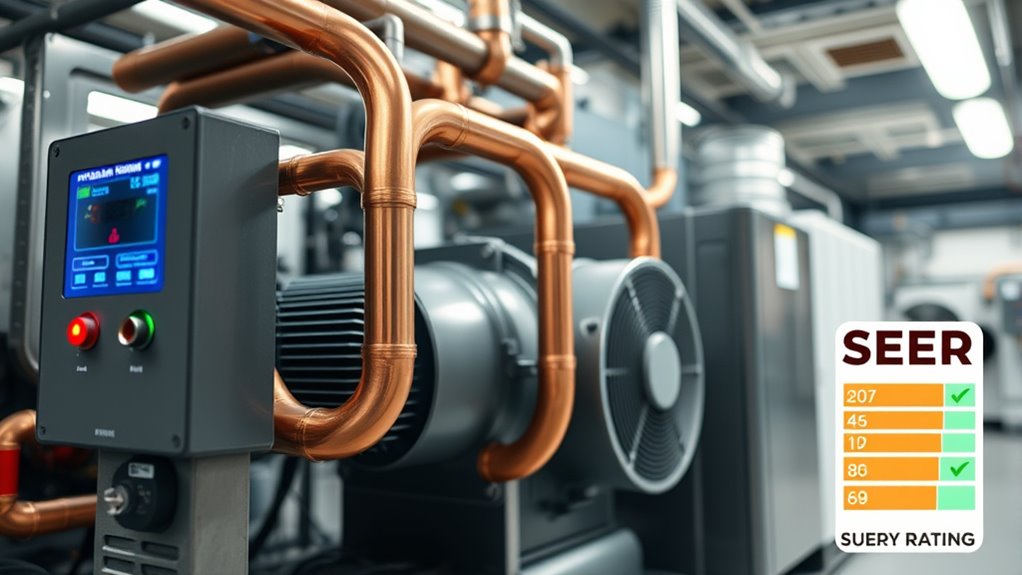
Have you ever wondered how modern air conditioning and refrigeration systems save energy while maintaining ideal performance? The secret lies in advanced technologies like variable speed compressors, which adjust their output based on real-time demand. Unlike traditional units that run at full capacity or turn off completely, these compressors modulate their speed, matching cooling or heating needs precisely. This flexibility not only enhances comfort but also considerably reduces energy consumption. When integrated with a smart grid, these systems become even more efficient. The smart grid enables real-time communication between your HVAC system and the utility provider, allowing for demand response strategies that optimize energy use during peak hours. By adjusting compressor speeds in response to grid signals, your system helps flatten demand spikes, leading to lower energy bills and reduced strain on the power infrastructure. This synergy between variable speed compressors and smart grid technology makes your heating and cooling system smarter and more sustainable. Additionally, the ability of variable speed compressors to operate efficiently across diverse conditions is rooted in their adaptive capacity, which optimizes performance and energy savings under varying environmental factors. Noise reduction is another critical advantage of variable speed compressors. Traditional compressors operate at fixed speeds, often producing loud, disruptive noises when running at full capacity. In contrast, variable speed units run more smoothly and quietly because they ramp up gradually to meet demand. This not only creates a more comfortable environment but also minimizes noise pollution, which can be especially beneficial in residential areas or noise-sensitive environments. The quieter operation is a direct result of the compressor’s ability to run at lower speeds during periods of mild temperature fluctuations, avoiding the abrupt start-stop cycles that generate noise. As a result, you get a more peaceful living or working space without sacrificing performance. High SEER ratings are closely linked to the efficiency benefits of variable speed compressors. The Seasonal Energy Efficiency Ratio (SEER) measures how much cooling a system provides per unit of energy consumed over a season. Units equipped with variable speed compressors typically boast higher SEER ratings because they operate at ideal efficiency across a range of conditions. Instead of running at full blast all the time, they adjust their capacity to match the actual cooling load, reducing unnecessary energy use. This dynamic performance means lower utility bills and a smaller carbon footprint. Over time, the initial investment in a high-SEER system pays off through substantial savings and enhanced comfort, especially when paired with smart grid integration and noise reduction features.
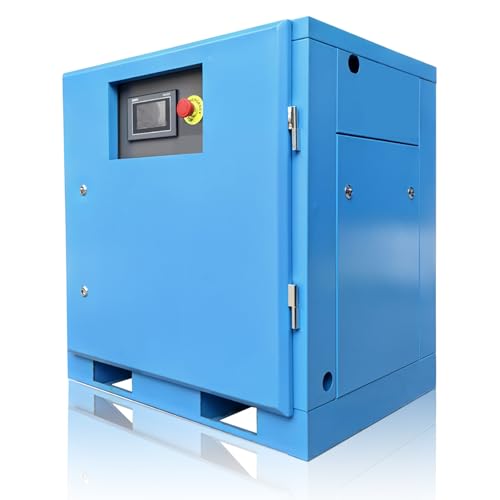
10HP 7.5KW Variable Speed Frequency Rotary Screw Air Compressor 39CFM@120PSI/230V/60Hz/1-Phase, Stationary Industrial Air Compressor
- Power: 10 HP (7.5KW) motor
- Voltage: 208-230V, 60Hz
- Phase: Single-phase operation
As an affiliate, we earn on qualifying purchases.
As an affiliate, we earn on qualifying purchases.
Frequently Asked Questions
How Long Do Variable Speed Compressors Typically Last?
Variable speed compressors typically last around 10 to 15 years with proper maintenance. To maximize your compressor’s lifespan, follow maintenance tips like regular filter changes, keeping the outdoor unit clear of debris, and scheduling professional inspections. Proper care ensures your system runs efficiently and prevents early breakdowns, helping you get the most out of your investment. Remember, timely maintenance is key to longevity and peak performance.
Are Variable Speed Compressors Compatible With All HVAC Systems?
Variable speed compressors aren’t compatible with all HVAC systems. You need to check system compatibility carefully, as some units may require upgrades or specific wiring for proper installation. Installation challenges can arise if your current setup isn’t designed for a variable speed compressor, potentially increasing costs or complexity. It’s best to consult an HVAC professional to confirm your system supports this technology and to avoid any compatibility issues.
What Is the Average Cost Difference for Variable Speed Units?
Think of variable speed units as a premium car—costs are higher upfront but save you money long-term. On average, their cost comparison to traditional units ranges from $1,500 to $3,000 more, mainly due to higher installation expenses. While initial investment is steeper, you’ll likely see energy savings over time, making the extra cost worth it. Your decision hinges on balancing initial expenses with long-term efficiency benefits.
Do Variable Speed Compressors Require Special Maintenance?
Yes, variable speed compressors require some special maintenance. You should regularly check your refrigerant levels and guarantee your smart thermostat is properly programmed to optimize performance. It’s also important to keep an eye on refrigerant types, as using the correct one helps maintain efficiency and prevents system issues. Scheduling professional inspections periodically will help keep your system running smoothly and extend its lifespan.
Can They Operate Efficiently in Extremely Cold Climates?
In icy winds and freezing temperatures, your variable speed compressor keeps working smoothly, adapting to cold weather. You’ll see it quietly adjusting its speed, like a skier gracefully descending icy slopes, maintaining ideal compressor performance. While extremely cold climates can challenge any system, modern variable speed compressors are designed to operate efficiently, preventing performance drops. With proper insulation and maintenance, you’ll enjoy reliable comfort even in the harshest winter conditions.
Conclusion
By choosing variable speed compressors with high SEER ratings, you’re making a smart move toward energy efficiency and cost savings. These compressors adjust to your needs, reducing waste and lowering bills. Isn’t it time you visualized your home running smoothly, with energy bills shrinking and comfort rising? Upgrading now means you’ll enjoy reliable, eco-friendly cooling while making a positive impact on your wallet and the environment. Isn’t that the kind of comfort you deserve?