Choosing better filters can improve air quality but may hurt your HVAC airflow if they’re too restrictive. Higher-efficiency filters trap more particles but also increase static pressure, making it harder for air to flow through the system. This can reduce efficiency, cause uneven heating or cooling, and even damage your equipment over time. If you want to keep your system running smoothly and enjoy good air quality, understanding how static pressure impacts performance is key. Keep exploring to learn more.
Key Takeaways
- Higher-efficiency filters increase airflow resistance, leading to static pressure buildup that hampers air circulation.
- Excess static pressure makes it harder for HVAC systems to push air through filters and ductwork.
- Overly restrictive filters can cause uneven heating or cooling and raise energy consumption.
- Selecting filters with the right balance of filtration and airflow prevents system strain and damage.
- Regular filter maintenance, including timely replacement, helps maintain optimal static pressure and system efficiency.
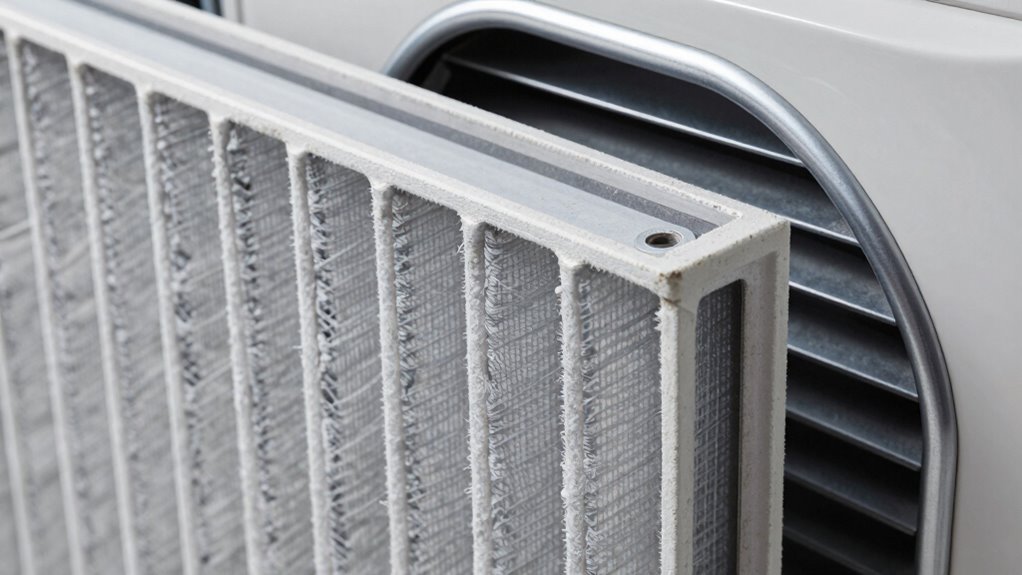
Have you ever wondered why your HVAC system doesn’t perform as efficiently as it should? One common reason is airflow resistance caused by the filters you choose. When your filter isn’t properly selected, it can create unnecessary static pressure within your system, making it harder for air to circulate freely. This increased airflow resistance forces your blower motor to work harder, which not only wears out the equipment faster but also reduces the overall comfort in your space. While it might seem intuitive to opt for the thickest or most efficient filter, doing so can backfire if you don’t consider how it impacts airflow.
Filters with higher efficiency ratings tend to trap more airborne particles, which is great for improving indoor air quality. However, these filters often come with denser media that markedly increase airflow resistance. The more resistant the airflow, the more static pressure builds up inside your ductwork. When static pressure climbs too high, your HVAC system struggles to push air through the filter and the ducts, leading to uneven heating or cooling and increased energy consumption. You might notice your system running longer or louder than usual, or it may even shut down prematurely because it’s overtaxed.
High-efficiency filters increase airflow resistance, causing static pressure buildup and system inefficiency.
It’s vital to understand that filter efficiency isn’t just about capturing dust and allergens; it’s also about balancing air quality with system performance. If you install a filter that is overly restrictive, you inadvertently create a bottleneck that hampers airflow. This scenario elevates static pressure and can cause your system to operate inefficiently, wasting energy and potentially damaging components over time. Conversely, using a filter that’s too open or with low MERV ratings might allow more contaminants to circulate, but it won’t cause as much resistance. The key is finding a filter that offers sufficient filtration without creating excessive airflow resistance. Additionally, understanding vetted filters and their performance can help you make better choices for your system.
Monitoring static pressure and understanding how filter choices influence airflow resistance can help you optimize your HVAC system. Regularly changing filters and selecting the right type based on your system’s specifications ensures that you maintain a healthy balance. Remember, a filter’s efficiency doesn’t solely depend on its ability to trap particles; it also depends on how well it allows air to pass through without creating unnecessary static pressure. By paying attention to both factors, you’ll keep your HVAC running smoothly, prolong its lifespan, and ensure your indoor environment remains comfortable and healthy.

Aerostar Air Filter 16x25x1 MERV 13 AC Filter, HVAC, Furnace Filter, 6 Pack
- Universal Compatibility: Fits most 1-inch HVAC filters
- High-Efficiency Filtration: Captures up to 98% airborne particles
- Electrostatically Charged: Traps more particles without airflow restriction
As an affiliate, we earn on qualifying purchases.
As an affiliate, we earn on qualifying purchases.
Frequently Asked Questions
How Often Should I Replace My HVAC Filter to Maintain Proper Static Pressure?
You should replace your HVAC filter every 1 to 3 months to maintain proper static pressure. Regular filter replacement guarantees ideal airflow, preventing strain on your system and improving indoor air quality. If you have pets, allergies, or your system runs constantly, consider changing the filter more frequently. Consistent filter replacement is essential for airflow maintenance and keeping your HVAC system running efficiently and effectively.
Can High Static Pressure Cause Long-Term Damage to My HVAC System?
Coincidentally, high static pressure can cause long-term damage to your HVAC system. When you face airflow restriction, your equipment strains more to maintain airflow, which can lead to component wear and potential failure over time. This extra strain accelerates parts’ deterioration, reduces efficiency, and may cause costly repairs. To prevent this, guarantee your filters are replaced regularly and static pressure stays within recommended levels, protecting your system’s longevity.
What Are Signs My System Is Experiencing High Static Pressure?
You’ll notice airflow restrictions like weak airflow from vents, inconsistent heating or cooling, and increased energy bills. Pressure buildup can cause your system to work harder, leading to strange noises or frequent cycling. If you see these signs, high static pressure may be the culprit, and addressing it early can prevent long-term damage. Regular maintenance and filter checks help keep static pressure within ideal levels.
Are There Specific Filters Designed to Reduce Static Pressure?
Yes, there are filters designed to reduce static pressure. Look for filters with specialized filter materials that lower airflow resistance, such as pleated or electrostatic filters. These filters allow air to pass through more easily, minimizing static pressure buildup. When choosing filters, check the MERV ratings and material specifications to make sure they’re optimized for airflow, helping your HVAC system operate efficiently without sacrificing filtration quality.
How Does Duct Size Affect Static Pressure and Airflow?
Think bigger, or your duct dimensions will turn your HVAC system into a traffic jam. Smaller ducts increase airflow resistance, causing static pressure to skyrocket and choking your system’s efficiency. Larger ducts reduce resistance, letting air flow freely and maintaining proper static pressure. So, if you want your system to breathe easy, match duct size to your needs—don’t squeeze the air through a straw and expect smooth sailing.
Conclusion
Remember, chasing the latest filters can be like chasing a mirage—you think you’re improving airflow, but you might be blocking your system’s breath. Static pressure is the silent conductor of your HVAC symphony; if it’s off-key, your system struggles like a runner with a heavy pack. So, instead of adding weight, focus on balance. Keep static pressure in check, and your HVAC system will sing smoothly, giving you clean, comfortable air without choking your airflow.