A well-designed return-air system helps you control indoor particles by promoting even airflow and effective filtration. Proper vent placement reduces dead zones, prevents stagnation, and pulls contaminated air away from occupants. Conversely, poor design can cause uneven airflow, particle buildup, and re-circulation, worsening air quality. When airflow is optimized, pollutants are captured more efficiently, creating a healthier space. If you want to learn the key factors for better indoor air, keep exploring how system design impacts particle control.
Key Takeaways
- Proper return air placement ensures balanced airflow, effectively removing airborne particles and reducing stagnation zones.
- Poor vent placement can cause uneven airflow, allowing particles to accumulate in specific areas.
- Optimized airflow patterns enhance filtration efficiency by drawing contaminated air uniformly into the system.
- Dead zones and stagnant areas from bad design increase particle buildup and indoor pollutant levels.
- Well-designed return air systems improve indoor air quality while reducing energy consumption through efficient circulation.
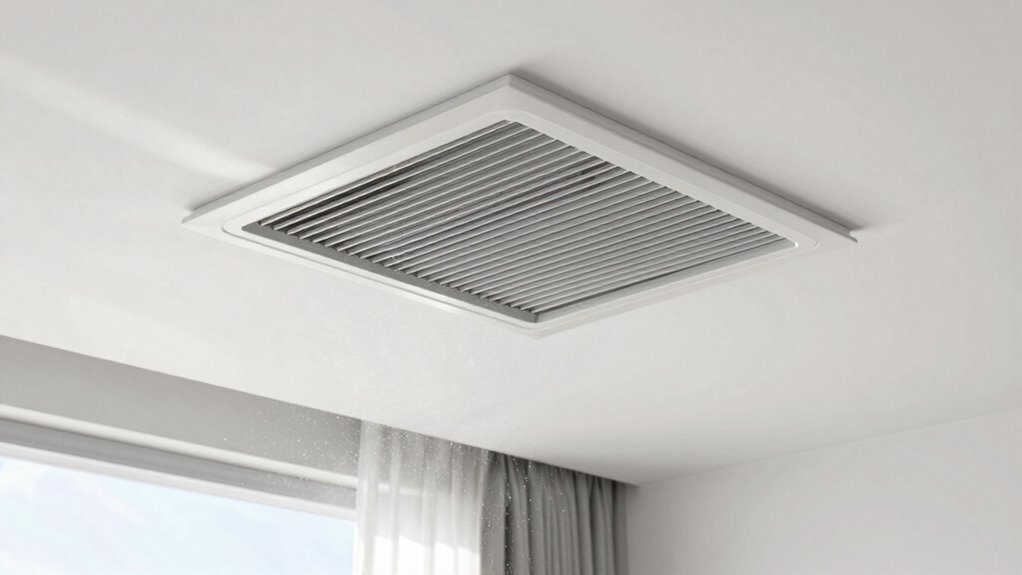
Have you ever wondered how the design of return air systems impacts indoor air quality? It’s an essential factor because the way air circulates within your space directly influences the levels of particles, allergens, and pollutants you’re exposed to daily. Return air vents are responsible for pulling used air back to the HVAC system, and their placement and design create airflow patterns that determine how effectively contaminants are removed. When designed properly, these patterns promote consistent circulation, guaranteeing that polluted air doesn’t stagnate in certain areas and that clean, filtered air replaces it efficiently. Conversely, poor design can lead to uneven airflow, dead zones, or even re-circulation of particles, which hurts your indoor air quality.
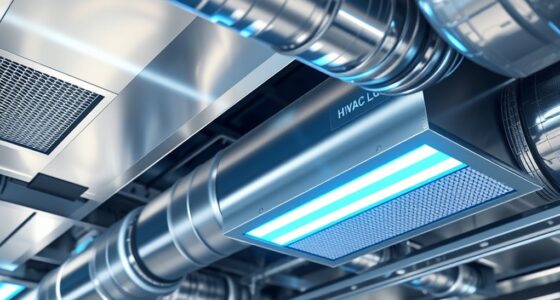
Proper return air system design ensures efficient airflow and cleaner indoor air quality.
Filtration efficiency plays a key role here. The return air system’s ability to draw in contaminated air depends on how well it captures particles before they settle or spread. If return vents are poorly located or obstructed, airflow patterns become disrupted, reducing the system’s capacity to effectively filter out particles. Proper placement of return vents helps create a balanced airflow that pulls in air from all parts of the room or building uniformly. This balance ensures that contaminated air doesn’t linger in corners or behind furniture, which can lead to higher particle concentrations and poorer indoor air quality. When airflow patterns are optimized, filtration systems work more effectively, capturing a higher percentage of airborne particles and preventing their recirculation. Additionally, understanding the importance of airflow dynamics can help in designing more effective ventilation systems. Ensuring that return air systems are properly distributed throughout a building can significantly enhance indoor air quality by preventing particle buildup and promoting effective filtration. Properly designed return-air placement also reduces energy consumption by minimizing unnecessary air movement, leading to more efficient system operation. Moreover, employing advanced airflow techniques can further improve particle control, especially in spaces with high pollution or specific contamination concerns. In summary, a well-designed return air system not only improves airflow but also contributes to a healthier indoor environment by effectively reducing airborne particles.
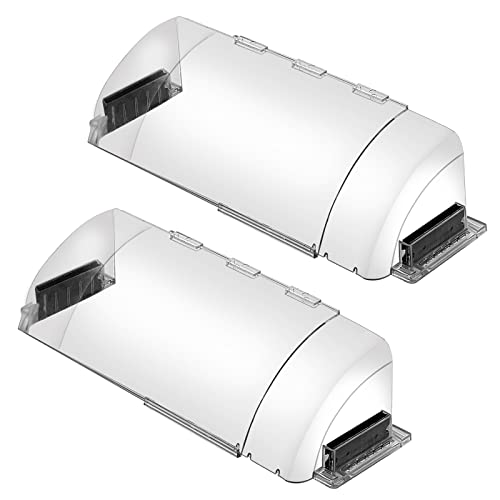
2 Pack Air & Heat Deflector for Vents, Sidewalls and Ceiling Registers, Adjustable from 8.5" to 15"
【DESIGN】Unique two part expandable design, made of High transparent unbreakable plastic.
As an affiliate, we earn on qualifying purchases.
As an affiliate, we earn on qualifying purchases.
Frequently Asked Questions
How Does Return-Air Placement Affect Energy Efficiency?
Return-air placement directly impacts energy efficiency by influencing airflow balance within your system. Proper placement guarantees consistent airflow, reducing strain on your HVAC unit, and enhancing system efficiency. When return vents are well-positioned, your system can maintain desired temperatures more effectively, saving energy. Conversely, poor placement causes uneven airflow, forcing your system to work harder, increasing energy consumption, and lowering overall efficiency.
Can Poor Return-Air Design Cause Mold Growth?
A stitch in time saves nine, and poor return-air design can lead to mold growth. When air circulation is inefficient, excess moisture can accumulate in hidden spots, creating the perfect environment for mold. Improper return-air placement reduces airflow, traps humidity, and hampers mold prevention efforts. To keep your space healthy, make sure your return-air system promotes proper air circulation, preventing moisture buildup and safeguarding against mold development.
What Materials Are Best for Return-Air Ducts?
You should choose smooth, durable materials like galvanized steel or aluminum for your return-air ducts to guarantee effective airflow and minimize particle buildup. These materials resist mold and corrosion, supporting airflow optimization. Flexible ducts are convenient but can trap dust if not maintained properly. Prioritize proper sealing and insulation, regardless of material, to prevent leaks and maintain indoor air quality. Regular cleaning helps keep your system efficient and healthy.
How Often Should Return-Air Filters Be Replaced?
Don’t put off filter maintenance; it’s vital for healthy indoor air. You should replace your return-air filters every 1 to 3 months, depending on usage and filter type. Following a regular replacement schedule keeps particles from sneaking back into your home’s air. Keep an eye on your filters—if they look dirty or clogged sooner, change them sooner. Staying proactive guarantees your HVAC system runs efficiently and your indoor air stays clean.
Does Return-Air Design Impact Noise Levels?
Yes, your return-air design impacts noise levels. Poor design can cause noise mitigation issues by increasing airflow turbulence, which creates unwanted sounds. Conversely, a well-planned return-air system promotes airflow balance, reducing turbulence and minimizing noise. To keep noise levels low, guarantee your return vents are properly sized and positioned, and consider using sound-absorbing materials. This approach helps maintain a quieter indoor environment while ensuring efficient airflow.

Filtrete 16x25x1 Air Filter, MERV 11, MPR 1000, Allergens & Pet Dander, 3-Month AC and Furnace Filters, Cleaner Air, Reliable Airflow, 2 HVAC Filters (Actual Size 15.68 x 24.68 x 0.81 in)
MAKE YOUR HOME YOUR SANCTUARY: 2-pack of 3-month pleated Filtrete 16x25x1 MERV 11 MPR 1000 AC Furnace Air…
As an affiliate, we earn on qualifying purchases.
As an affiliate, we earn on qualifying purchases.
Conclusion
Understanding how your return-air design influences indoor particle control can make a real difference in air quality. If you overlook these details, you might unintentionally allow particles to circulate more freely, impacting health and comfort. Isn’t it worth considering how your system’s design can help keep your indoor air clean? By paying attention to return-air placement and flow, you can create a healthier, more comfortable environment for everyone inside.

Indoor Air Quality and HVAC Systems
Used Book in Good Condition
As an affiliate, we earn on qualifying purchases.
As an affiliate, we earn on qualifying purchases.
HVAC return air grille
As an affiliate, we earn on qualifying purchases.
As an affiliate, we earn on qualifying purchases.