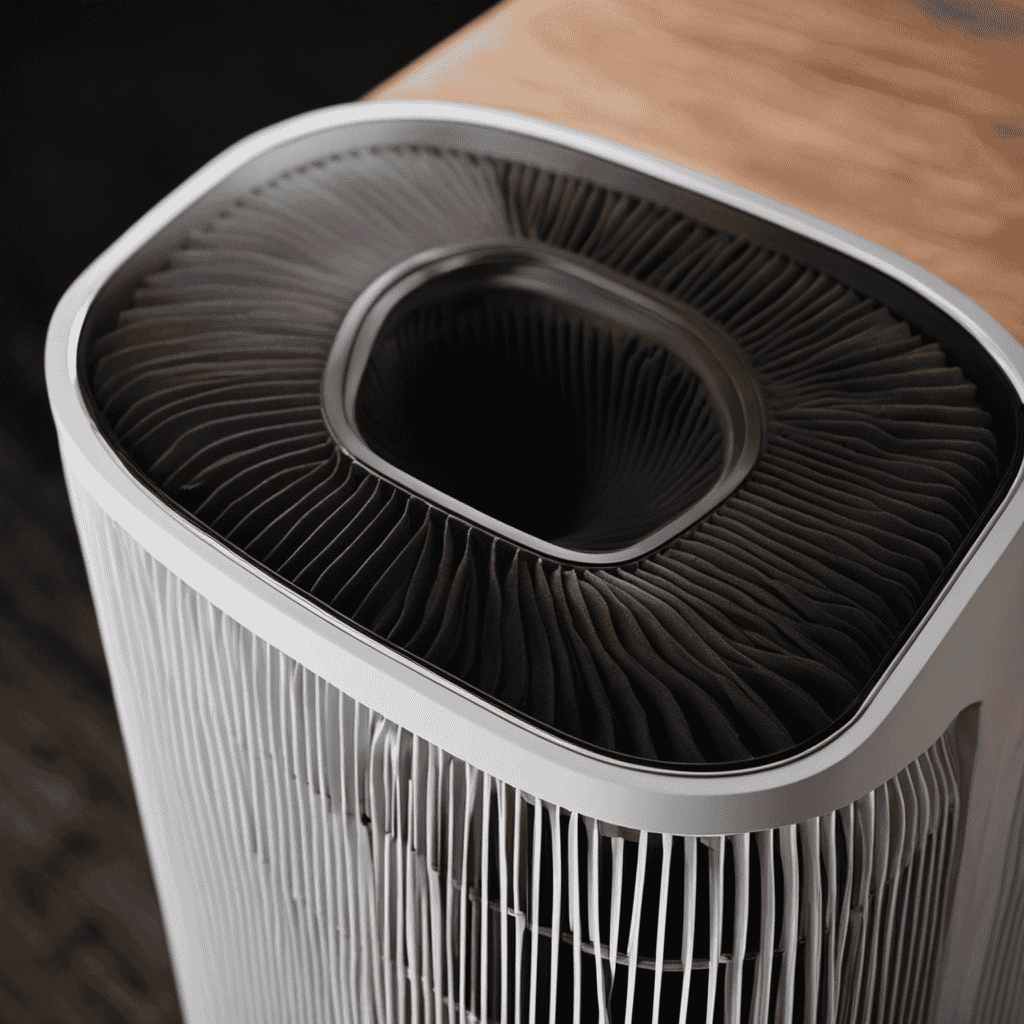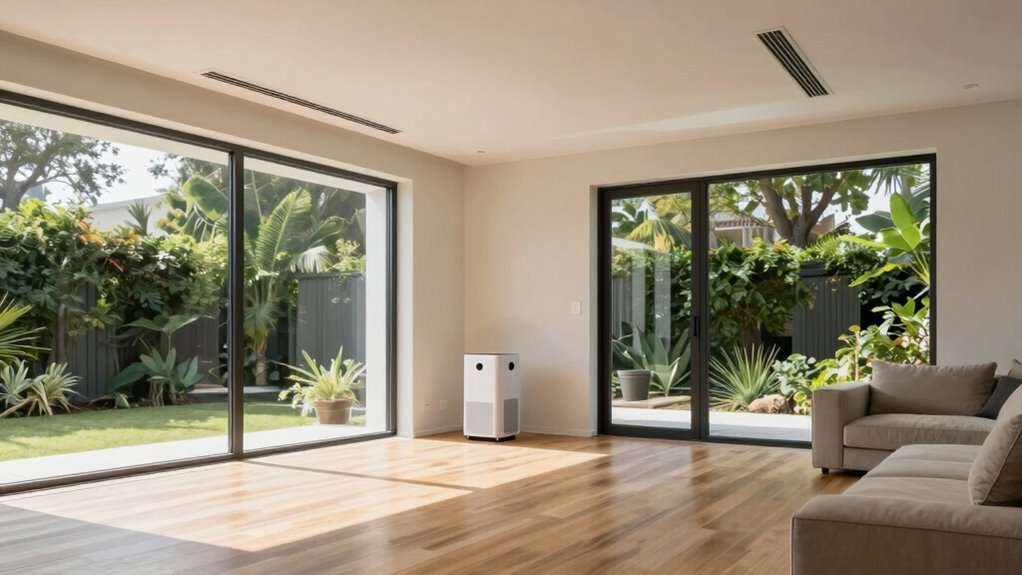

To size clean air for open floor plans accurately, start by measuring the room’s length, width, and height to find the total volume. Then, check ventilation standards like ASHRAE to determine the recommended airflow rates per person or square foot. Use these guidelines to calculate the necessary airflow, ensuring you don’t under- or over-ventilate. If you want to learn how to perform these calculations precisely, keep exploring for detailed steps.
Open a free Amazon Business account
Business pricing, bulk buying and tax-exempt orders.
As an affiliate, we earn on qualifying purchases.
Key Takeaways
- Measure the total volume of the space (length x width x height) accurately for precise calculations.
- Refer to established ventilation standards like ASHRAE for minimum airflow rates per occupant or square foot.
- Calculate necessary airflow based on occupancy, activity level, and space usage to meet health guidelines.
- Design and size ductwork and ventilation systems to match calculated airflow needs for efficient performance.
- Regularly monitor and adjust airflow to ensure it remains within optimal ranges, preventing over- or under-ventilation.

Have you ever wondered how to guarantee your open floor plan stays fresh and healthy? The key lies in properly sizing your clean air system, which involves understanding airflow efficiency and adhering to ventilation standards. When your space is open, air moves freely, but without the right planning, pollutants, odors, and humidity can build up quickly. To keep your environment comfortable and safe, you need to assure your ventilation system supplies the correct amount of clean air, tailored precisely to your space’s size and usage.
Airflow efficiency plays a crucial role here. It’s about ensuring your ventilation system delivers the right volume of air at the right rate. Too little airflow, and you risk poor air quality, stuffiness, and potential health issues. Too much, and you’re wasting energy and increasing costs. To strike the perfect balance, start by calculating the total volume of your open space—length, width, and height—and then determine the necessary airflow rate. This calculation helps you avoid guessing and guarantees your system is neither under- nor over-sized.
Proper airflow balance ensures healthy, efficient ventilation without wasting energy or compromising air quality.
Ventilation standards set the benchmark for these calculations. They provide clear guidelines on how much fresh air your space needs based on occupancy, activities, and space type. For example, the American Society of Heating, Refrigerating and Air-Conditioning Engineers (ASHRAE) offers standards that specify minimum ventilation rates per person or per square foot. Following these standards assures your space meets health and safety regulations, and it prevents issues like mold growth or stale air accumulation that can occur in poorly ventilated open areas. Additionally, understanding air exchange rates can help you optimize your system’s performance even further. Regularly monitoring and adjusting your airflow based on these standards can enhance air quality and overall system efficiency. Incorporating proper duct design** and high-quality filters further ensures your system performs optimally and maintains good indoor air quality. Moreover, paying attention to ventilation system capacity** can prevent overworking your system and improve longevity. Regular maintenance and performance checks are essential for sustained efficiency and healthful indoor environments.
As an affiliate, we earn on qualifying purchases.
Frequently Asked Questions
What Are the Best Air Purifiers for Large Open Spaces?
For large open spaces, you should choose air purifiers with high purifier efficiency and a suitable CADR rating to guarantee excellent air quality. Look for models designed for bigger areas, such as HEPA filters with a high airflow capacity. You might consider multiple units or a commercial-grade purifier to effectively cover the entire space. This approach guarantees cleaner air and maintains healthy indoor air quality without guesswork.
How Often Should I Replace Air Filters in Open Floor Plans?
You should replace air filters in open floor plans every 3 to 6 months, depending on the air filter lifespan and your home’s ventilation strategies. Regularly checking filters helps guarantee ideal air quality and system efficiency. If you notice dust buildup or reduced airflow, replace filters sooner. Incorporate effective ventilation strategies, like exhaust fans or air exchange systems, to maintain clean air and extend filter lifespan.
Can Natural Ventilation Improve Air Quality in Open Areas?
Yes, natural airflow can improve air quality in open areas by enhancing ventilation efficiency. When you open windows or use strategically placed vents, fresh air circulates more effectively, reducing indoor pollutants. This natural ventilation helps remove odors, moisture, and airborne contaminants, making your space healthier. To maximize benefits, combine natural airflow with proper HVAC systems, ensuring consistent air exchange and maintaining a comfortable, clean environment.
What Are Common Mistakes When Sizing Air Purification Systems?
You often make mistakes like neglecting airflow efficiency and skipping proper system calibration. These errors can lead to under- or over-purification, wasting energy and compromising air quality. Always guarantee your system is correctly calibrated for your open floor plan’s size and layout, and focus on optimizing airflow efficiency. This way, you’ll get effective purification without unnecessary costs or inefficiencies, keeping your space healthy and comfortable.
How Do Climate and Outdoor Pollution Affect Indoor Air Sizing?
Climate and outdoor pollution directly influence indoor air sizing because they impact pollutant sources and indoor humidity levels. You need to account for higher outdoor pollution, such as smog or pollen, which can increase indoor pollutant levels, requiring a more robust purification system. Additionally, outdoor humidity affects indoor moisture, so size your system to handle fluctuations, ensuring it effectively manages indoor humidity and reduces pollutants from external sources.
Conclusion
Now that you know how to properly size clean air for your open floor plan, you’re equipped to create a space that feels as fresh as a mountain breeze. Forget guesswork—your home can breathe easy, providing a sanctuary so pure it might just rival the air at the top of Everest. With these tips, you’re not just maintaining air quality; you’re transforming your living space into a haven of crisp, clean air that truly stands above the rest.
NFL season / tailgating Picks
team gear
As an affiliate, we earn on qualifying purchases.