
To think about air movement in small rooms, focus on creating steady, well-directed airflow that promotes fresh air intake and removes stale air efficiently. Position fans near windows or doors to facilitate cross-ventilation, and open windows on opposite sides for natural breezes. Use multiple fans to guarantee smooth air circulation and avoid pockets of stagnation. Mastering these strategies will help you achieve better indoor air quality and comfort, and you’ll discover more ways to optimize airflow as you explore further.

Get garden gear delivered free with Prime
- Fast, free delivery on millions of items
- Prime Video, Amazon Music and more included
- Member-only deals all year
Key Takeaways
- Prioritize natural cross-ventilation by opening windows on opposite sides for steady airflow.
- Use strategically placed fans to enhance airflow and prevent stagnant air pockets.
- Maintain consistent air exchange rates to keep fresh air circulating effectively.
- Arrange airflow paths to promote smooth, uninterrupted movement across the room.
- Focus on creating a balance between fresh air entry and stale air removal for optimal comfort.
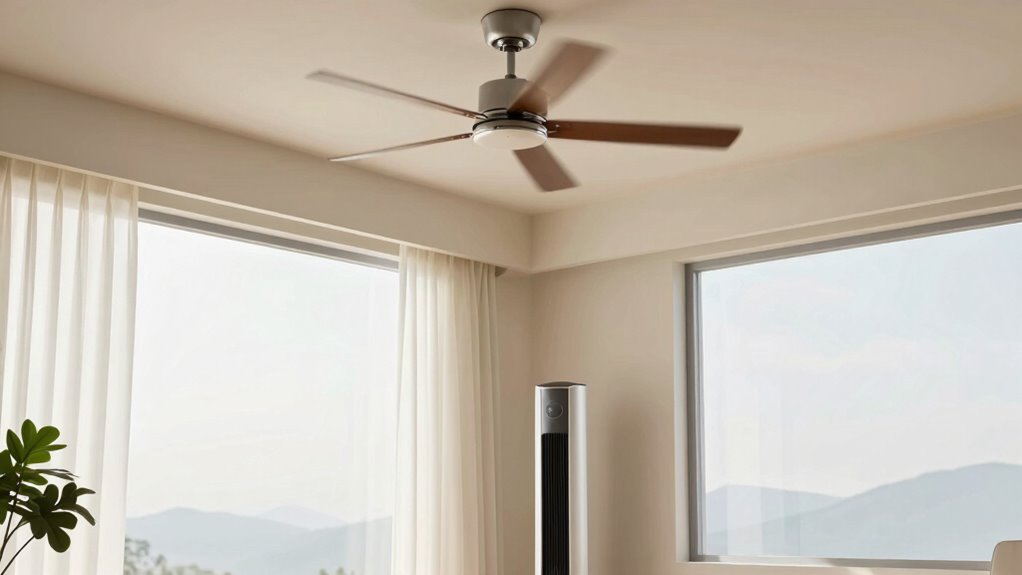
Have you ever noticed how stuffy or uncomfortable a small room can feel? That tight, stagnant air can make you want to leave immediately. The key to avoiding this discomfort lies in understanding how air moves within the space. Good air circulation is essential because it helps distribute fresh air evenly and removes stale, contaminated air. When air circulates properly, it prevents pockets of stagnation and keeps the room feeling fresh. But simply having air moving isn’t enough; you need to think about ventilation efficiency. This means optimizing how well fresh air enters and how effectively stale air exits, so you get maximum comfort with minimal effort.
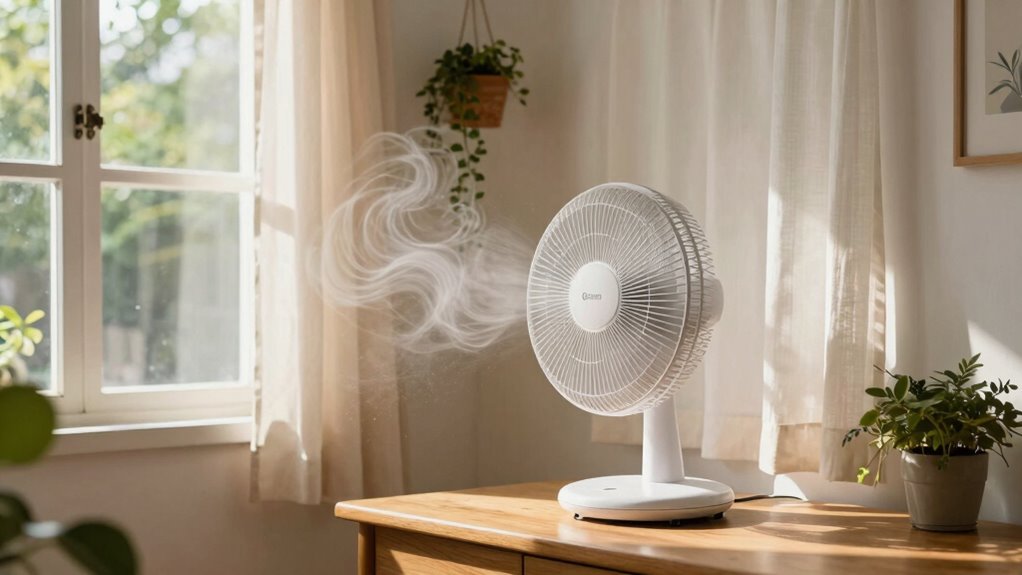
To improve air circulation, start with the placement of fans and vents. Positioning a fan near a window or door can create a flow that pulls in fresh air and pushes out the old. If you have multiple fans, arrange them to promote cross-ventilation—this is when air flows smoothly from one side of the room to the other, helping to replace stale air quickly. It’s also beneficial to open windows on opposite sides of the room if possible, creating a natural breeze that enhances circulation. This steady movement prevents air from stagnating, which is especially important in small rooms where a lack of space can trap heat, humidity, and indoor pollutants. Proper air movement can significantly improve overall indoor air quality and comfort. Additionally, understanding the principles of ventilation efficiency can help you make smarter decisions about airflow management in your space. Recognizing the importance of air exchange rates can further optimize how quickly fresh air replaces stale air, especially in confined areas. Maintaining appropriate airflow patterns is crucial for ensuring consistent and effective ventilation throughout the room. A focus on airflow dynamics can also assist in designing better ventilation strategies tailored to your specific space.
As an affiliate, we earn on qualifying purchases.
Frequently Asked Questions
How Does Furniture Placement Affect Air Circulation?
Furniture placement considerably influences airflow patterns in your room. If you position large pieces like sofas or bookshelves blocking vents or windows, it restricts air circulation. Instead, arrange furniture to allow unobstructed pathways for air to flow freely. Keep gaps between pieces and avoid clutter that can create dead zones. This thoughtful furniture arrangement promotes better air movement, helping your small room feel fresher and more comfortable.
What Is the Ideal Fan Placement for Small Rooms?
Back in the day, fans were simply box-shaped gadgets, but now, their placement impacts ventilation patterns and fan efficiency. For small rooms, position the fan near a window or doorway to create cross-ventilation, drawing fresh air in and pushing stale air out. Place it at an angle to promote circulation, ensuring airflow reaches all corners. This setup maximizes comfort and air quality, making your space feel fresher and more inviting.
How Does Room Humidity Influence Air Movement?
Humidity levels directly influence air movement because high humidity can cause condensation issues, making the air feel heavier and reducing airflow efficiency. When humidity is low, air moves more freely, helping to circulate fresh air better. To optimize airflow, adjust ventilation based on humidity; using dehumidifiers in damp conditions prevents condensation issues, while ensuring proper ventilation in dry environments helps maintain comfortable, balanced humidity levels and effective air movement.
Can Air Purifiers Improve Airflow in Small Spaces?
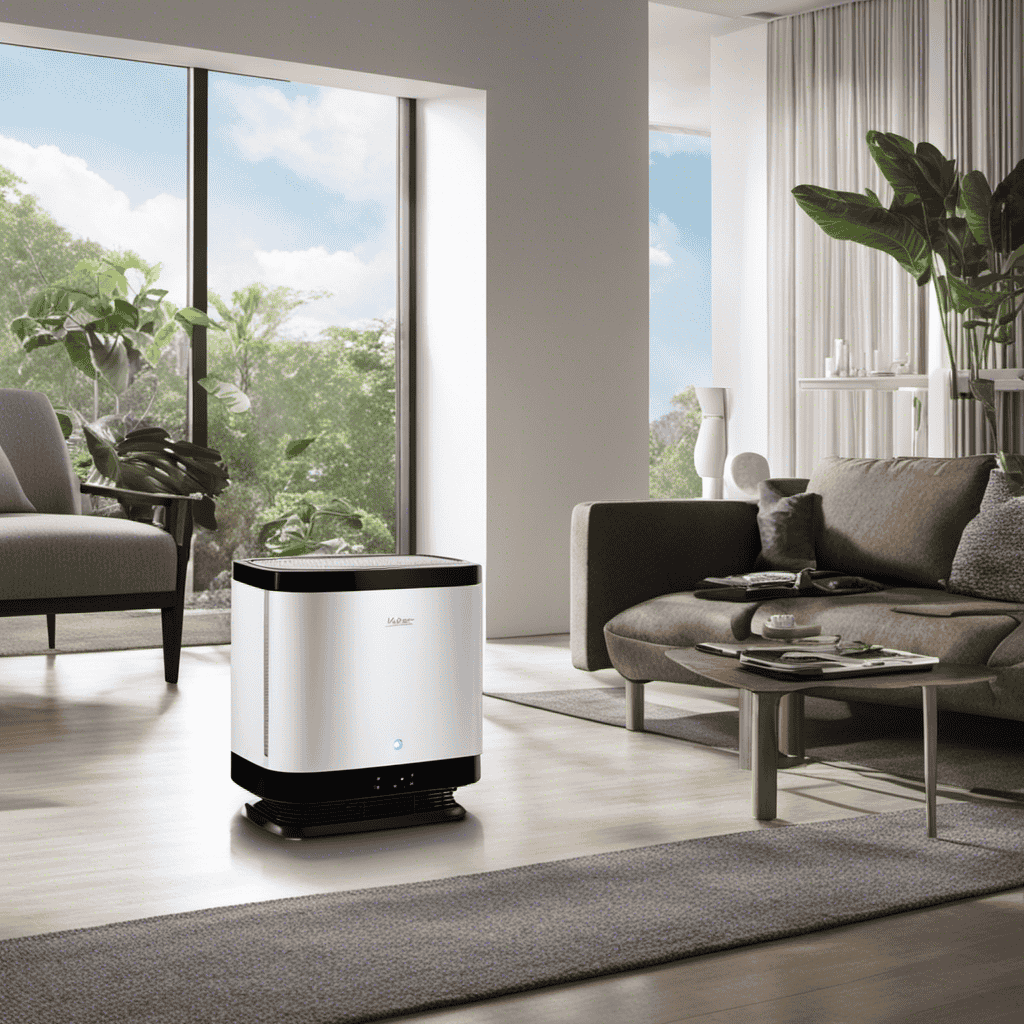
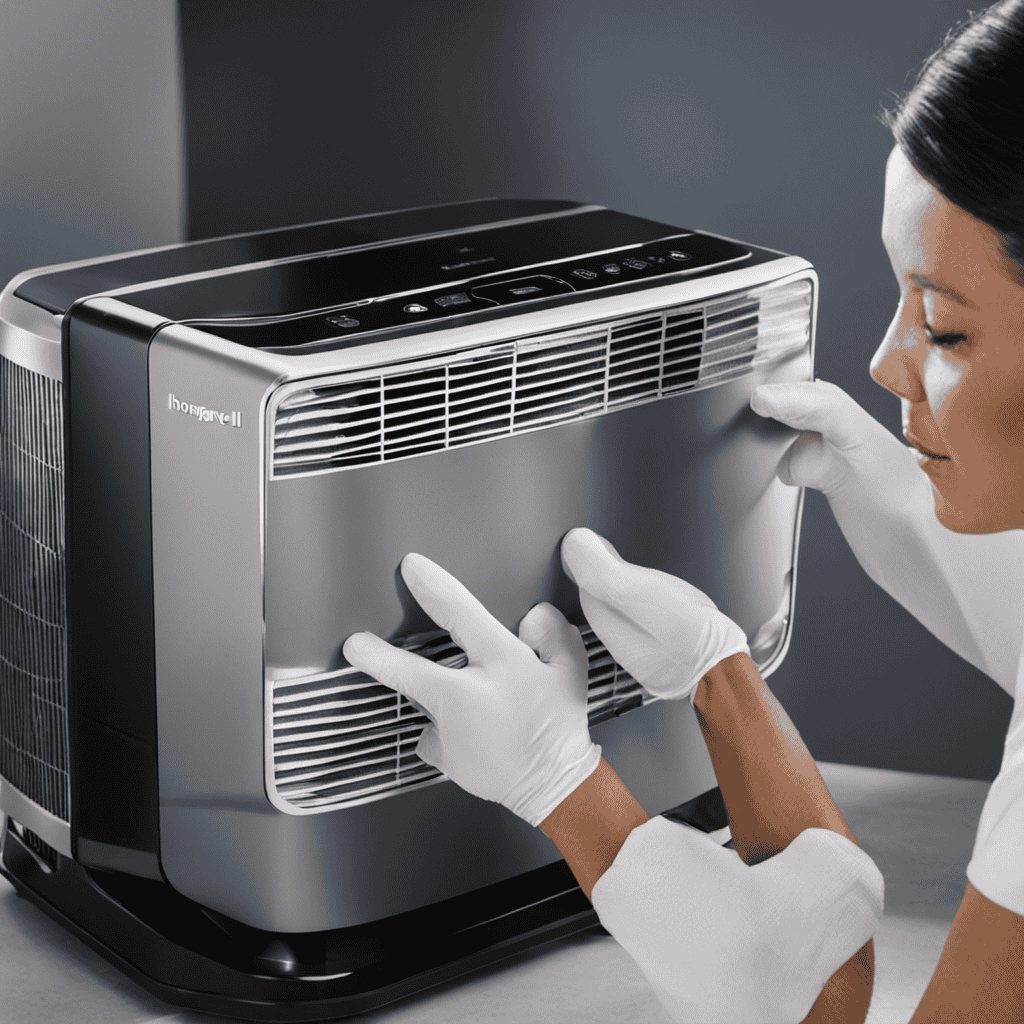
Think of an air purifier as a conductor guiding airflow patterns in your small room. Yes, it can improve airflow by removing pollutants and enhancing circulation. To keep it effective, you need regular air purifier maintenance, such as filter changes. When properly maintained, an air purifier encourages better air movement, making your space feel fresher and more comfortable. This way, your room’s air stays cleaner and more evenly circulated.
What Are the Signs of Poor Air Circulation in a Room?
You’ll notice poor air circulation if the room feels stuffy, has lingering odors, or if you experience allergies or respiratory issues. Look for stagnant airflow patterns, such as areas where air doesn’t move or feels warm and unmoving. Effective ventilation techniques, like opening windows or using fans, help improve airflow patterns. These steps guarantee fresh air circulates evenly, reducing stuffiness and enhancing overall air quality in your small room.
Conclusion
To keep your small room feeling fresh, think of air movement like a gentle dance—constant, balanced, and unobtrusive. When you understand how airflow circulates, you can position fans or vents for ideal effect. It’s not just about moving air; it’s about creating a rhythm that promotes comfort and air quality. Trust the science, experiment a little, and soon you’ll find the perfect flow that keeps your space lively and breathable.
Fall Picks
fall essentials
As an affiliate, we earn on qualifying purchases.