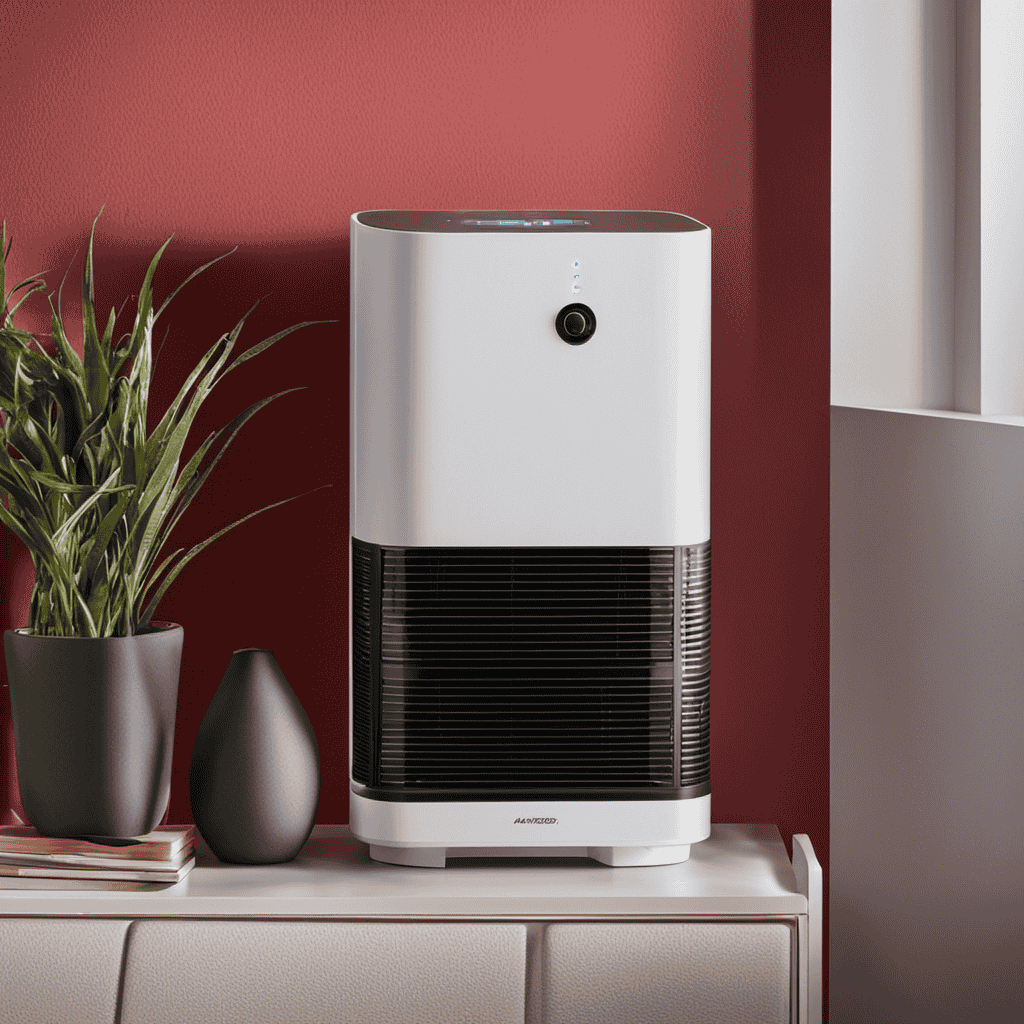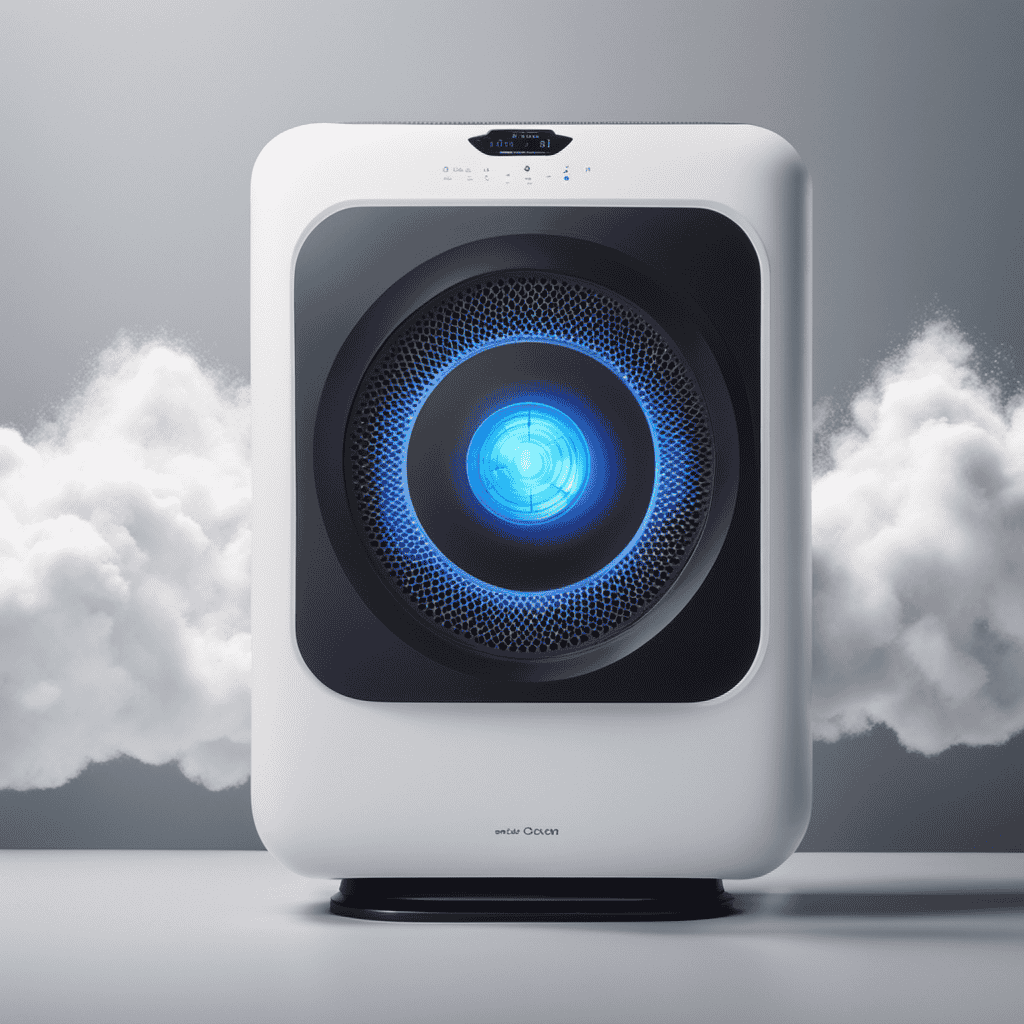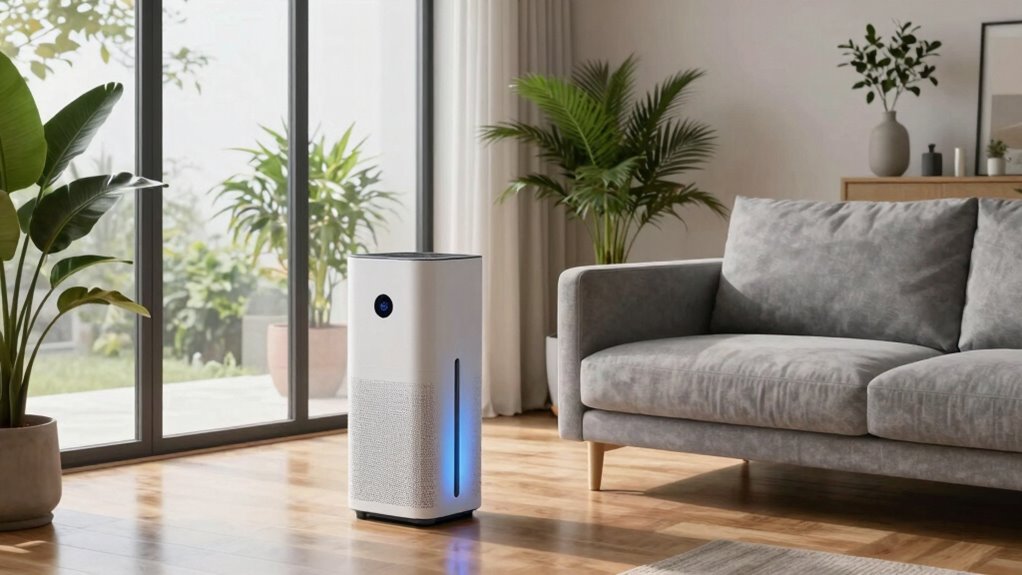

To improve your indoor air quickly, start by combining a quality air purifier with proper ventilation. Use a purifier with HEPA filters to capture dust, pollen, and pet dander, while ensuring your space has good air exchange through opening windows or using exhaust fans. Maintaining your ventilation system and running both strategies consistently will give you fast results and long-term benefits. Keep going, and you’ll find even more effective tips to breathe easier.

Get garden gear delivered free with Prime
- Fast, free delivery on millions of items
- Prime Video, Amazon Music and more included
- Member-only deals all year
Key Takeaways
- Begin by identifying and removing sources of indoor pollutants, like smoking or mold.
- Use a high-efficiency HEPA air purifier in the room where you spend the most time.
- Improve ventilation by opening windows or using exhaust fans to increase fresh air flow.
- Regularly maintain and clean your air purification and ventilation systems for optimal performance.
- Combine active air filtration with increased ventilation for rapid, comprehensive indoor air quality improvement.

Maintaining good indoor air quality is vital for your health and comfort, especially since you spend much of your time indoors. When you’re looking to improve your air quickly, the smartest place to start is with understanding how air purifier technology and ventilation strategies work together. These two approaches can make a noticeable difference in the air you breathe, providing immediate relief from pollutants and allergens.
Air purifier technology has advanced markedly in recent years. Modern devices don’t just filter dust; they target a broad spectrum of airborne contaminants like pollen, pet dander, mold spores, bacteria, and volatile organic compounds (VOCs). HEPA filters, in particular, are highly effective at capturing tiny particles that can trigger allergies or respiratory issues. Some purifiers incorporate activated carbon filters to absorb odors and chemical fumes, further improving air quality. When choosing an air purifier, consider the size of the room and the device’s Clean Air Delivery Rate (CADR) to guarantee it can handle the space effectively. Running a purifier continuously can quickly reduce airborne pollutants, making your environment healthier almost immediately.
Modern air purifiers effectively remove dust, pollen, pet dander, mold, bacteria, and VOCs for healthier indoor air.
However, relying solely on an air purifier isn’t enough. Ventilation strategies play a vital role in maintaining fresh, healthy indoor air. Good ventilation involves bringing in fresh outdoor air while exhausting stale indoor air, which helps dilute indoor pollutants. Simple strategies like opening windows and doors periodically can considerably improve air quality, especially on days with good outdoor air quality. If natural ventilation isn’t feasible or sufficient, mechanical ventilation systems—such as exhaust fans in kitchens and bathrooms—help remove moisture and odors. For more extensive solutions, consider installing an energy recovery ventilator (ERV) or heat recovery ventilator (HRV). These systems exchange indoor air with outdoor air while conserving energy, maintaining a steady flow of fresh air and preventing indoor pollutants from building up. Additionally, understanding ventilation systems is essential to optimize your indoor air quality strategy and ensure a healthy indoor environment. Knowing about air exchange rates can help you fine-tune your ventilation to improve efficiency and air quality further. Incorporating ventilation system maintenance ensures your systems operate at peak performance and continue to support your indoor air quality goals.
Combining air purifier technology with effective ventilation strategies offers a sturdy approach to improving indoor air quality rapidly. While purifiers actively filter out airborne particles, ventilation ensures a continuous supply of fresh air and reduces the concentration of pollutants indoors. Understanding ventilation systems is essential for creating a comprehensive indoor air quality strategy. Together, they create a cleaner, healthier environment almost instantly. Starting with these strategies is the smartest move you can make when you want better indoor air fast. It’s a proactive step that not only improves your immediate comfort but also supports your long-term health by reducing exposure to indoor pollutants.
HEPA air purifier for large room
As an affiliate, we earn on qualifying purchases.
As an affiliate, we earn on qualifying purchases.
Frequently Asked Questions
How Often Should I Change My Indoor Air Filters?
You should change your indoor air filters every 1 to 3 months, depending on usage and filter type. Regular filter maintenance is essential for maximum air quality monitoring and to prevent dust, allergens, and pollutants from circulating. If you have pets, allergies, or live in a high-pollution area, consider replacing filters more frequently. Keep an eye on your indoor air quality and replace filters promptly to maintain a healthier environment.
Do Houseplants Really Improve Indoor Air Quality?
Yes, houseplants can improve indoor air quality by aiding plant detox and enhancing air circulation. They absorb toxins and increase oxygen levels, making your space healthier. While they’re not a complete solution, adding plants like pothos or snake plants helps clear the air naturally. Keep them healthy with proper watering and placement, and you’ll notice a fresher, more breathable environment in your home.
Can Pets Affect Indoor Air Pollution Levels?
Pets can considerably influence indoor air pollution levels. Pet dander, odors, and allergens circulate, creating a cloudy, constant concern. You can combat this by controlling pet dander and odors through regular cleaning, air purifiers, and ventilation. While pets bring joy, their presence can also introduce pollutants, so staying vigilant with ventilation and cleaning routines helps improve indoor air quality, ensuring your space stays fresh and healthier for everyone.
Are Air Purifiers Effective Against All Indoor Allergens?
Air purifiers with HEPA filters are highly effective against most indoor allergens, including pollen, pet dander, and dust mites. They remove these particles through allergen removal, improving air quality. However, they may not eliminate gases, odors, or certain airborne chemicals. To maximize allergen removal, make certain you choose a purifier with a true HEPA filter and regularly maintain it. This approach helps create a healthier indoor environment quickly.
What Are Common Sources of Indoor Air Pollutants?
An ounce of prevention is worth a pound of cure. Common sources of indoor air pollutants include airborne chemicals from cleaning products, paints, and fragrances, as well as mold spores lurking in damp areas. These pollutants can cause health issues and worsen allergies. To improve your indoor air quality, identify and reduce these sources, improve ventilation, and consider air purifiers to help filter out harmful particles.
Conclusion
Improving your indoor air quality doesn’t have to be complicated or costly. Start with simple steps like increasing ventilation, using air purifiers, and keeping your space clean. These small changes can make a big difference in how you breathe and feel every day. So, why wait to create a healthier home? Take action now—your lungs and your well-being will thank you for it. Isn’t your health worth the effort?
Fall Picks
fall essentials
As an affiliate, we earn on qualifying purchases.