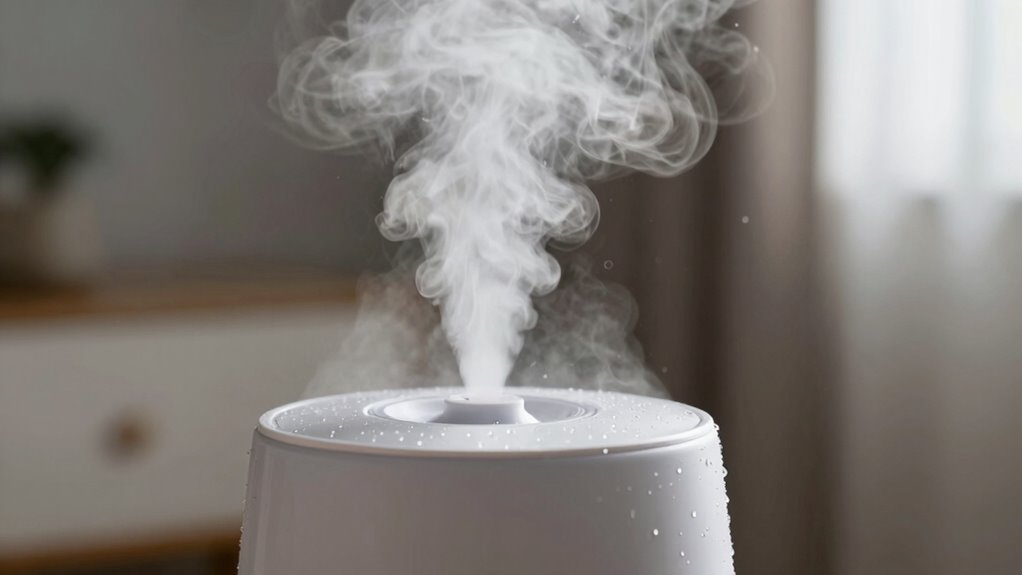
Using a steam humidifier without monitoring humidity levels can dangerously boost moisture indoors, promoting mold growth and respiratory problems. Overuse or improper maintenance—like neglecting regular cleaning or using unclean water—further increases health risks and electrical hazards. Too much humidity can also cause condensation, harming walls or furniture. To keep safe, you need to control humidity and guarantee proper care. If you keep going, you’ll uncover essential tips to prevent these hidden dangers.
Key Takeaways
- Excessive humidity from steam humidifiers can promote mold growth indoors if not properly managed.
- Over-humidification may cause condensation, leading to structural damage and increased allergy risks.
- Using the device without humidity controls can create overly damp environments harmful to health.
- Continuous operation without monitoring can raise indoor moisture levels beyond safe limits.
- Proper use of humidistat features and regular maintenance help prevent humidity levels from becoming dangerously high.
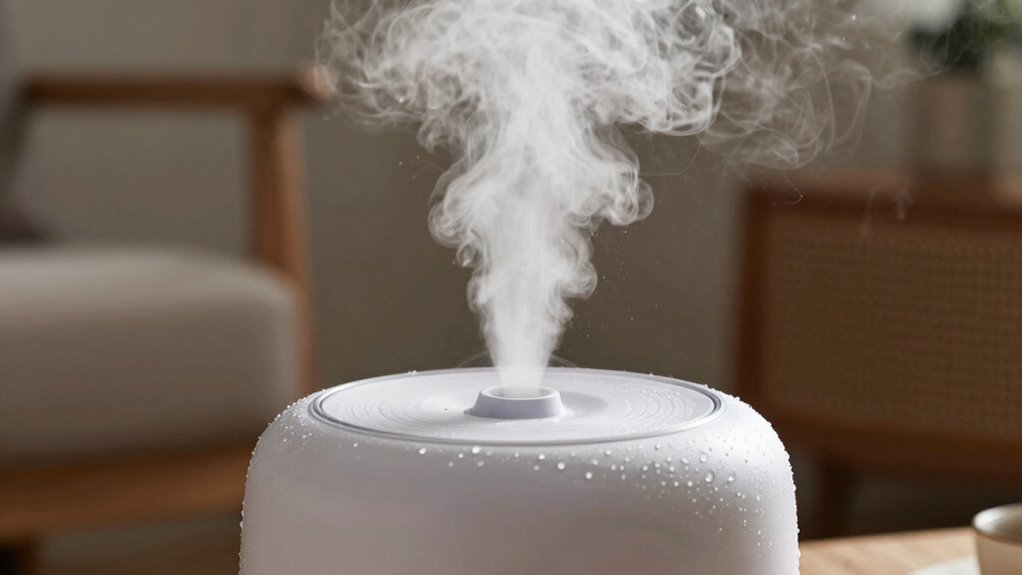
Steam humidifiers are an effective way to add moisture to dry indoor air, especially during cold winter months. They work by boiling water to produce steam, which then humidifies the room. While they’re popular for easing respiratory issues and preventing dry skin, many people overlook the potential risks that come with improper use or maintenance. One significant concern is mold growth. If you don’t regularly clean your humidifier, mold can develop inside the device or on surrounding surfaces. Mold spores thrive in damp, warm environments, and a neglected humidifier provides the perfect setting for them to proliferate. When the humidifier is turned on, these spores can be released into the air, potentially causing allergies, respiratory problems, or other health issues. To prevent this, you need to clean your device thoroughly and frequently, following the manufacturer’s instructions. Using distilled or demineralized water also helps reduce mineral buildup, which can contribute to mold growth and bacterial contamination.
Another critical risk involves electrical hazards. Because steam humidifiers operate with electrical components, there’s always a chance of short circuits or shocks if the device isn’t properly maintained. Water and electricity don’t mix well, so any cracks, leaks, or malfunctioning parts can create dangerous situations. If your humidifier has a damaged power cord or shows signs of electrical wear, it’s essential to stop using it immediately. Keep the device on a stable, waterproof surface, and avoid positioning it near outlets or electrical appliances that could be damaged by moisture. Always unplug the humidifier when refilling or cleaning it, and ensure it’s completely dry before plugging it back in. Regular inspections for frayed cords or corrosion can help you catch potential hazards early. Neglecting these precautions puts you at risk of electrical shocks or even fires. Additionally, choosing a humidifier with proper safety features can help mitigate some of these risks.
Frequently Asked Questions
Are Steam Humidifiers Safe Around Children and Pets?
Steam humidifiers can be safe around children and pets if you take proper precautions. You need to guarantee child safety by keeping the device out of reach and regularly cleaning it to prevent bacteria buildup. For pet safety, place the humidifier on a stable surface and avoid direct contact with animals. Always supervise usage, follow manufacturer instructions, and consider automatic shut-off features to minimize risks and keep everyone safe.
How Often Should I Clean My Steam Humidifier?
Imagine your humidifier’s water reservoir as a tiny ecosystem that needs regular care. You should clean it at least once a week to prevent mold, bacteria, and mineral buildup. Proper humidifier maintenance guarantees safe, healthy moisture in your home. If you notice any cloudy water or strange odors, increase cleaning frequency. Regular upkeep keeps your device running smoothly and your space comfortable and safe.
Can Steam Humidifiers Cause Mold Growth?
Yes, steam humidifiers can cause mold growth if humidity isn’t properly managed. Excess moisture creates a mold risk, especially when you neglect regular cleaning and maintenance. To prevent this, make certain your humidifier is cleaned frequently, and monitor indoor humidity levels. Proper humidity control keeps mold at bay, protects your health, and maintains a comfortable environment. Stay vigilant and keep your device clean to avoid mold issues.
What Is the Recommended Humidity Level for Indoor Air?
You should aim for an ideal humidity level of about 30-50%, which keeps your indoor air comfortable and healthy. Using a reliable humidity measurement device helps you stay within this range. Too much of a good thing can backfire, so don’t let your home turn into a humidity jungle. Maintaining proper levels prevents issues like mold and mold growth, ensuring your space remains cozy without the risks that come with excess moisture.
Do Steam Humidifiers Increase Energy Consumption Significantly?
Steam humidifiers do increase energy consumption because they use electricity to generate steam, impacting overall power consumption. However, if you choose energy-efficient models and operate them wisely, the extra energy use isn’t usually significant. To improve energy efficiency, make sure to maintain your humidifier properly, use it only when needed, and select a unit with features designed to minimize power consumption. This way, you balance comfort and energy savings effectively.
Conclusion
Just like a delicate bonsai tree, your home needs just the right amount of moisture to thrive. Steam humidifiers can be helpful, but too much humidity can turn your cozy space into a breeding ground for mold and bacteria. Stay vigilant and monitor humidity levels, so you don’t unwittingly invite trouble into your sanctuary. Think of it as tending a garden—you control the water, ensuring your environment stays healthy and balanced.