
Temperature and humidity greatly affect your sensor’s accuracy, causing fluctuations if not properly managed. Rapid environmental changes can distort measurements, making them unreliable. Many sensors are sensitive to these external factors, so without proper calibration and compensation, your data may be skewed. To maintain dependable results, you need to monitor conditions closely and apply correction techniques. Keep reading to understand how environmental influences can be effectively minimized and your sensor’s performance optimized.

Get garden gear delivered free with Prime
- Fast, free delivery on millions of items
- Prime Video, Amazon Music and more included
- Member-only deals all year
Key Takeaways
- Temperature and humidity fluctuations can cause significant measurement errors in sensors.
- External environmental factors influence sensor accuracy, necessitating proper compensation techniques.
- Regular calibration helps identify and correct distortions caused by changing temperature and humidity.
- Compensation methods, like algorithms and sensor monitoring, adjust readings in real-time for environmental variations.
- Accurate sensor data relies on integrating environmental measurements and applying dynamic correction strategies.
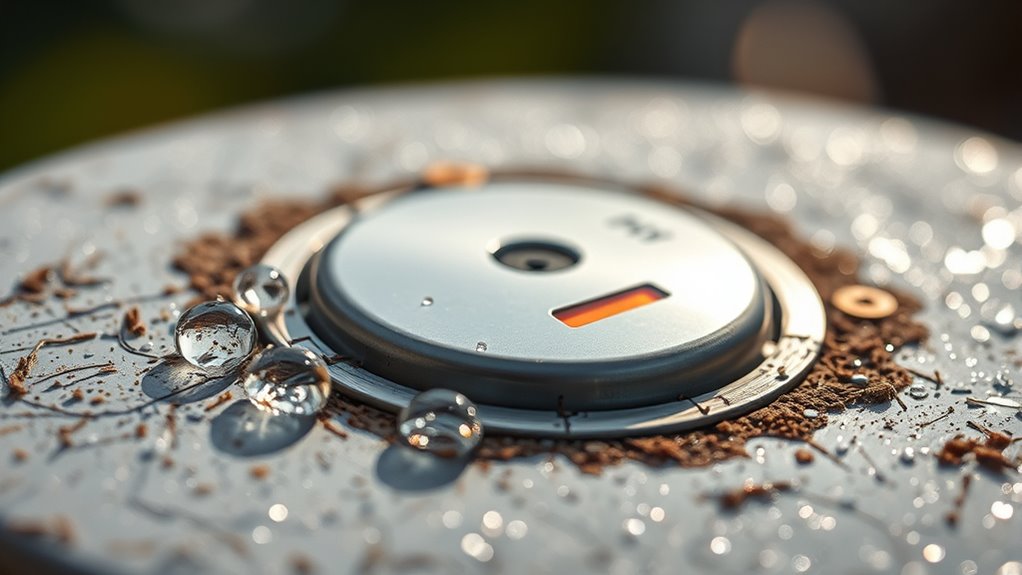
Temperature and humidity considerably influence sensor readings, often causing inaccuracies if not properly accounted for. When you use sensors in various environments, you might notice that their measurements fluctuate unexpectedly, especially when conditions change rapidly. This is because many sensors are sensitive to environmental factors like temperature and humidity, which can distort their readings if left uncorrected. To maintain accuracy, you need to focus on sensor calibration and environmental compensation. These processes are essential for adjusting sensor outputs so they reflect true measurements regardless of external conditions.
Sensor calibration is your first line of defense. It involves comparing your sensor’s output against a known standard or reference under controlled conditions, then adjusting its settings to minimize errors. Proper calibration ensures that your sensor provides reliable data over time, but it’s not a one-time fix. Environmental conditions can vary, so regular recalibration is often necessary. Calibration helps identify how temperature and humidity influence your sensor’s readings, giving you a baseline to adjust from. Without calibration, your data might be skewed, leading to false conclusions or faulty decisions. Additionally, understanding the sensor sensitivities allows for more precise environmental compensation strategies.
Regular calibration ensures reliable sensor data and helps account for environmental influences like temperature and humidity.
Environmental compensation is the method you use to counteract the effects of temperature and humidity after calibration. Many modern sensors come with built-in compensation algorithms, but if yours doesn’t, you’ll need to implement your own correction techniques. This involves monitoring ambient conditions continuously and applying mathematical adjustments to your sensor data. For example, if you know that your sensor’s readings tend to drift upward during high humidity, you can subtract a correction factor based on current humidity levels. Similarly, temperature corrections adjust readings to account for thermal effects that can cause sensors to respond differently at varying temperatures.
It’s important to understand that environmental compensation isn’t just about fixing errors; it’s about optimizing accuracy in real-time. By integrating temperature and humidity sensors with your primary sensor system, you can create a feedback loop that dynamically adjusts readings, ensuring your data remains precise across different conditions. This might involve using lookup tables, polynomial equations, or machine learning models trained to predict and correct environmental influences. Whatever method you choose, the goal is to ensure your sensor’s output stays consistent, reliable, and reflective of true environmental parameters.
As an affiliate, we earn on qualifying purchases.
Frequently Asked Questions
How Do Different Sensor Types React to Temperature Changes?
Different sensor types react differently to temperature changes depending on their sensor material. For example, thermocouples quickly respond due to their metal composition, offering fast response times. In contrast, resistive sensors may take longer because their material’s response time varies with temperature. You’ll notice that some sensors are more sensitive to temperature shifts, which can affect accuracy. Selecting the right sensor material guarantees reliable readings across temperature variations.
Can Humidity Fluctuations Cause Permanent Sensor Damage?
Humidity fluctuations can cause sensor degradation over time, especially if moisture intrusion occurs. If moisture gets inside the sensor, it may lead to corrosion or damage sensitive components, resulting in permanent harm. To prevent this, you should guarantee proper sealing and use humidity-resistant sensors. Regular maintenance and monitoring help catch moisture issues early, reducing the risk of long-term damage caused by ongoing humidity changes.
What Calibration Methods Minimize Environmental Effects on Sensors?
Think of sensor calibration as your shield against environmental chaos. To minimize effects, you should regularly perform sensor calibration in controlled conditions and apply environmental compensation algorithms. Use calibration standards that mimic actual operating environments, and incorporate real-time adjustments to account for temperature and humidity variations. This proactive approach guarantees your sensor readings stay accurate, no matter how unpredictable the environment may be, keeping your data trustworthy and reliable.
How Quickly Do Sensors Recover From Temperature or Humidity Spikes?
When temperature or humidity spikes, your sensors typically take a few minutes to recover, depending on their design and calibration. Environmental compensation techniques help reduce sensor drift during these fluctuations, allowing quicker stabilization. To improve response time, verify your sensors are properly calibrated with environmental compensation algorithms, which adjust for rapid changes and minimize the impact of temperature and humidity spikes on your readings.
Are There Sensors Designed to Be Unaffected by Environmental Variations?
Yes, you can find sensors designed to be unaffected by environmental variations. These sensors often feature enhanced durability and environmental shielding, making them resistant to temperature and humidity changes. You’ll notice they maintain accuracy even in harsh conditions. By choosing such sensors, you guarantee reliable readings and longer lifespan, reducing the need for frequent calibration or replacement, especially in critical applications where environmental factors are unpredictable or extreme.
Conclusion
Understanding how temperature and humidity affect your sensor readings is vital for accurate data collection. By accounting for these environmental factors, you guarantee reliability and precision in your measurements. Do you really want to let changing conditions skew your results? Staying aware and implementing calibration methods helps you maintain data integrity. Remember, a little attention to environmental details can make all the difference in the accuracy of your sensor-based projects.
Fall Picks
fall essentials
As an affiliate, we earn on qualifying purchases.