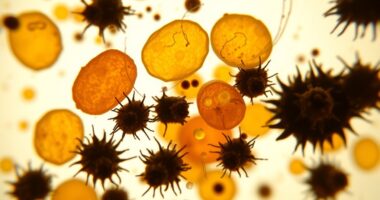
Your air quality monitor mainly detects PM2.5 particles, which are larger and easier to measure, but it often misses ultrafines smaller than 0.1 micrometers. These tiny particles can penetrate deepen into your lungs and bloodstream, posing serious health risks. Since standard monitors don’t catch ultrafines, you might not realize how much dangerous pollution is present. If you’re curious about what else you might not see, continue to learn more about the hidden dangers in your air.
Open a free Amazon Business account
Business pricing, bulk buying and tax-exempt orders.
As an affiliate, we earn on qualifying purchases.
Key Takeaways
- Standard monitors mainly detect PM2.5, missing ultrafines smaller than 0.1 micrometers.
- Ultrafines can penetrate deeper into lungs and enter the bloodstream, posing higher health risks.
- Specialized instruments like CPCs and SMPS are needed to accurately measure ultrafine particle concentrations.
- Relying solely on PM2.5 readings may underestimate true air pollution and health hazards.
- Comprehensive monitoring that includes ultrafines provides a clearer picture of airborne health risks.
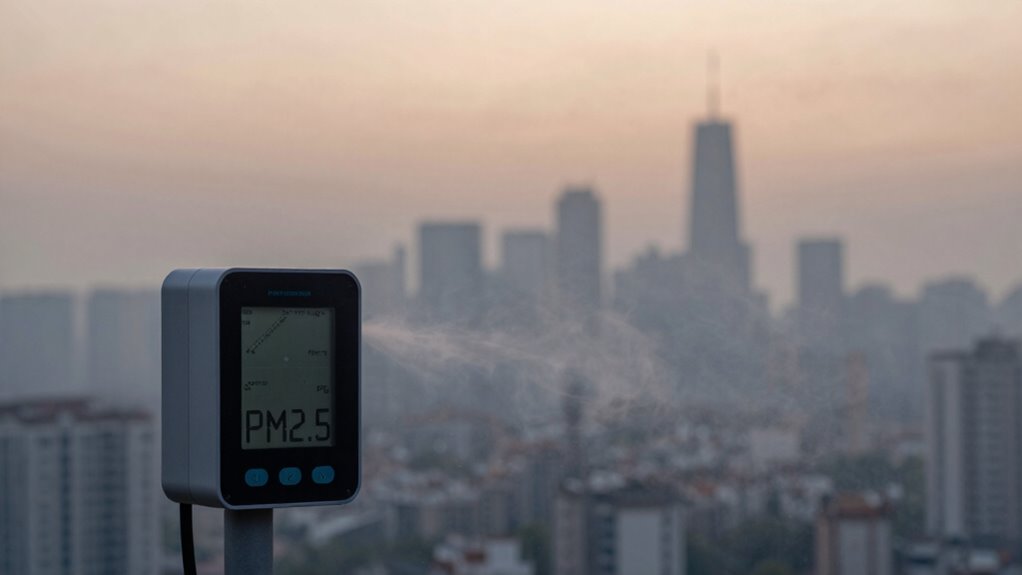
When comparing air pollutants, understanding the difference between PM2.5 and ultrafines is essential because both can harm your health, but they behave differently in the environment and your body. PM2.5 particles are tiny, measuring 2.5 micrometers or less in diameter, while ultrafines are even smaller—less than 0.1 micrometers. Your typical air monitor might focus on PM2.5 because it’s easier to measure, but it often misses the ultrafines, which can be more dangerous in some cases. This oversight has significant health implications, as ultrafine particles can penetrate deeper into your lungs and even enter your bloodstream, increasing risks for cardiovascular and respiratory diseases. Understanding these differences helps you better grasp what’s in the air you breathe and how it affects your health. Additionally, particle size distribution** plays a crucial role in determining how pollutants interact with your body and environment, highlighting the importance of comprehensive measurement techniques. Measurement techniques are key to detecting these particles accurately. Standard air quality monitors usually use optical sensors or gravimetric methods to measure PM2.5, which are effective for larger particles but less sensitive to ultrafines. Instruments like condensation particle counters (CPCs) and scanning mobility particle sizers (SMPS) are designed specifically to measure ultrafines, providing detailed data on their concentration and size distribution. These specialized tools can reveal a hidden layer of pollution that your regular monitor might overlook, giving you a clearer picture of potential health risks. If you’re concerned about ultrafines, investing in or accessing such measurement techniques becomes vital because they allow you to understand the full scope of airborne dangers, not just the particles your standard monitor detects. Knowing the health implications of ultrafines also means recognizing how these particles behave once inhaled. Due to their tiny size, ultrafines can bypass the body’s natural defenses more easily than larger particles, reaching your alveoli—the tiny air sacs in your lungs—and entering your bloodstream. This can trigger inflammation, oxidative stress, and even lead to systemic effects** like increased blood clotting or arterial plaque buildup. The health implications are serious, especially for vulnerable groups such as children, the elderly, or those with pre-existing health conditions. Regularly measuring only PM2.5 might give you a false sense of security, ignoring the potentially more harmful ultrafines that can be lurking in the air. Hence, understanding both the measurement techniques and health implications helps you take more informed steps to protect yourself and your loved ones from unseen airborne threats.
ultrafine particle air quality monitor
As an affiliate, we earn on qualifying purchases.
As an affiliate, we earn on qualifying purchases.
Frequently Asked Questions
How Do Ultrafine Particles Affect Long-Term Health?
Ultrafine particles can critically impact your long-term health by increasing respiratory risks and exposing you to carcinogenic effects. When you breathe in these tiny particles, they penetrate deep into your lungs and can enter your bloodstream, leading to inflammation and potential chronic diseases. Over time, this exposure raises your risk of developing conditions like asthma, heart disease, and even certain cancers, making it essential to minimize your exposure.
Can Standard Monitors Distinguish Between PM2.5 and Ultrafines?
Oh, so your monitor claims to be all-knowing? Don’t be fooled. Standard sensors struggle with detection challenges and can’t distinguish between PM2.5 and ultrafines. Their limitations mean you’re likely missing vital details about the tiniest particles floating around. You need specialized equipment for accurate readings, otherwise, you’re flying blind in the smoke and dust maze, unaware of unseen dangers lurking in the air you breathe.
What Are the Sources of Ultrafine Particles in Urban Areas?
You’ll find ultrafine particles mainly come from traffic pollution and industrial emissions in urban areas. Vehicle exhaust releases tons of these tiny particles into the air, especially during rush hours. Industrial activities, like manufacturing and power plants, also emit ultrafines through burning fossil fuels. These particles are so small that they can easily penetrate deep into your lungs, posing health risks even if your monitor only shows larger PM2.5 particles.
Are Ultrafines More Harmful Than Larger Particulate Matter?
Ultrafines are arguably more harmful because of their tiny size, enabling ultrafine penetration deep into your lungs and even your bloodstream. This enhances their particle toxicity, making them potentially more dangerous than larger particles. Their small size allows them to bypass natural defenses, increasing health risks. So, yes, ultrafines can be more harmful than larger particulate matter, especially considering their ability to infiltrate and impact your body at a cellular level.
How Can I Improve Indoor Air Quality Against Ultrafine Particles?
To improve indoor air quality against ultrafine particles, you should use air purifiers equipped with HEPA filters that can trap these tiny particles effectively. Additionally, implement proper ventilation strategies, like opening windows or using exhaust fans, to reduce indoor pollutants. Regularly maintain your filtration devices and keep your space clean to minimize ultrafine particle buildup, ensuring healthier air inside your home.
Conclusion
Understanding the difference between PM2.5 and ultrafines is like seeing only the tip of the iceberg—you miss the hidden dangers lurking beneath. Your monitor might show you the numbers, but it can’t tell the full story of what’s truly in the air you breathe. Stay vigilant, because these tiny particles are like silent assassins, quietly compromising your health. Keep digging deeper to protect yourself—you deserve a clearer picture of your air quality.
Fall Picks
fall essentials
As an affiliate, we earn on qualifying purchases.