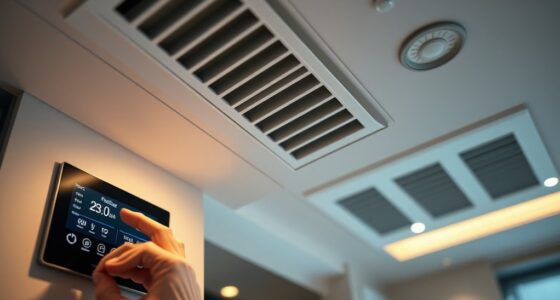

To vent effectively in winter without freezing, you should install a heat recovery or energy recovery ventilation system that transfers heat from outgoing air to incoming fresh air. Make sure vents are well-insulated and positioned to minimize cold drafts. Regularly maintain filters and clear obstructions to keep airflow efficient. Sealing leaks around windows and doors helps reduce heat loss. If you want practical tips for keeping your system frost-free, keep exploring for more solutions.
Key Takeaways
- Install heat recovery or energy recovery ventilators to pre-warm incoming air and prevent freezing.
- Ensure intake and exhaust vents are properly sealed and insulated to reduce cold air infiltration.
- Use duct insulation and strategically locate vents away from cold drafts to maintain airflow without freezing.
- Incorporate humidity controls or dehumidifiers to prevent excess moisture that can cause freezing issues.
- Regularly maintain and check vent systems to ensure unobstructed airflow and optimal heat exchange performance.
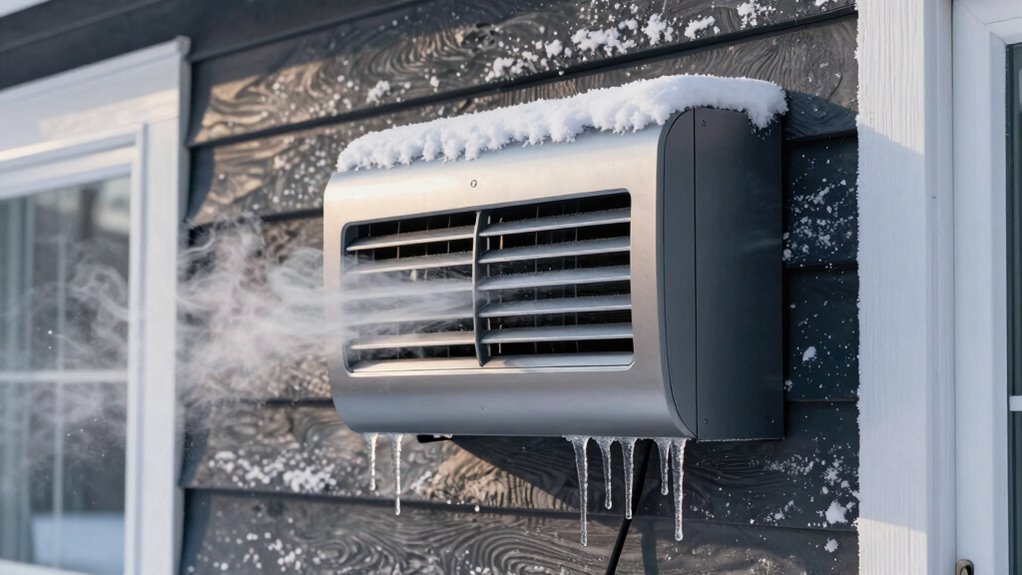
Have you ever wondered how to keep your indoor air fresh and healthy during the cold winter months? It’s a common concern, especially since cold air can make ventilation tricky without sacrificing warmth. Using air exchangers effectively during winter requires balancing energy efficiency and moisture control. When you ventilate properly, you prevent stale air from lingering while avoiding heat loss and moisture buildup that can lead to mold or damage.
Maintaining fresh indoor air in winter requires balancing energy efficiency and moisture control.
One of the key strategies is choosing the right type of air exchanger. Heat recovery ventilation (HRV) and energy recovery ventilation (ERV) systems are designed to maximize energy efficiency. These systems transfer heat from the outgoing stale air to the incoming fresh air, which helps maintain indoor temperatures without overtaxing your heating system. This process reduces energy consumption, saving you money on heating bills while keeping your home well-ventilated. When you set up an HRV or ERV, you’re actively reducing heat loss, ensuring your home stays warm even when fresh air is constantly coming in.
Moisture control is equally important during winter. When you ventilate without proper measures, excess moisture from cooking, bathing, or even breathing can accumulate indoors. This excess humidity, if not managed, can cause condensation on windows, walls, and ceilings. Over time, that moisture can lead to mold growth and structural issues. An effective air exchanger helps maintain a healthy humidity level by removing excess moisture along with stale air. Many systems include humidity sensors or controls, allowing you to fine-tune ventilation based on the moisture levels inside. This way, you keep the air dry enough to prevent mold but not so dry that it causes discomfort or respiratory issues.
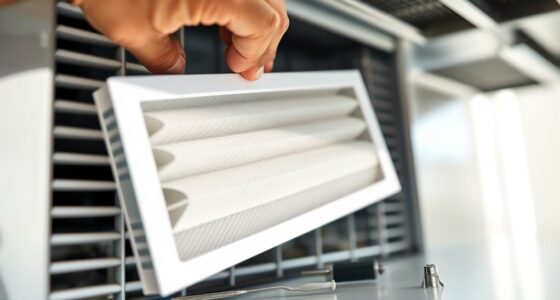
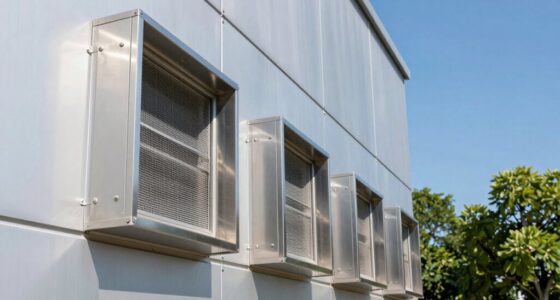
To optimize your winter ventilation, ensure your air exchanger is correctly installed and maintained. Check filters regularly and clear any obstructions in the vents. Proper placement of intake and exhaust vents is vital for effective circulation. If you notice drafts or cold spots near vents, it might be time to adjust or upgrade your system. You can also use additional strategies like sealing leaks around windows and doors to minimize heat loss, making your ventilation efforts even more energy efficient. Additionally, understanding air exchanger operation can help you troubleshoot and improve system performance further.
In essence, keeping indoor air fresh in winter without freezing involves smartly leveraging air exchangers. By choosing systems that prioritize energy efficiency and moisture control, you create a healthier, more comfortable environment. Proper setup, regular maintenance, and mindful operation allow you to enjoy fresh air year-round, even during the coldest months.
Frequently Asked Questions
Can Air Exchangers Operate Effectively in Extreme Cold Temperatures?
Yes, air exchangers can operate effectively in extreme cold temperatures if you guarantee proper insulation and use units with frost control features. These measures help maintain energy efficiency and improve indoor air quality without risking freezing. Regular maintenance and adjusting settings for winter conditions keep your system running smoothly. By doing so, you enjoy fresh air indoors while minimizing energy loss and preventing costly damage.
What Maintenance Is Required for Winter Operation of Air Exchangers?
Did you know that proper maintenance can boost your air exchanger’s efficiency by up to 30%? To keep it running smoothly in winter, regularly check and replace filters to prevent frost buildup. Make sure drainage solutions are clear to avoid ice blockages. Additionally, clean vents and inspect for any leaks. These steps help prevent freezing issues and ensure your system operates effectively during the coldest months.
Are There Specific Models Designed for Harsh Winter Climates?
Yes, there are specific models designed for harsh winter climates. These models often feature enhanced winter insulation and frost protection, ensuring they operate efficiently without freezing. Look for units with insulated housing and frost control systems, which prevent ice buildup and maintain proper airflow. By choosing these specialized air exchangers, you’ll keep ventilation smooth and reliable even during the coldest months, reducing maintenance and improving indoor air quality.
How Does Freezing Impact the Lifespan of an Air Exchanger?
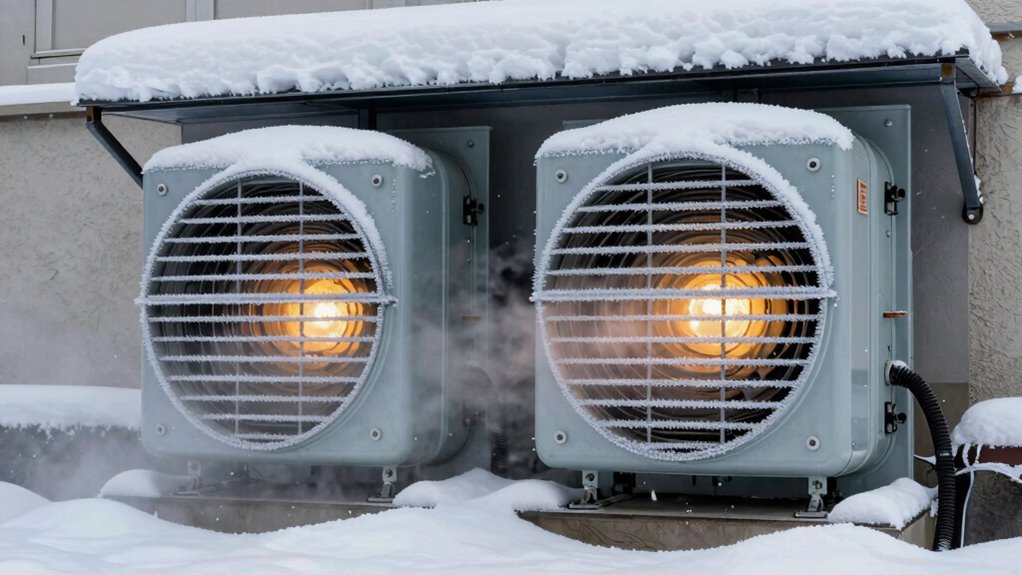
Freezing damage can considerably shorten your air exchanger’s lifespan. When components freeze, it causes stress and potential breakage, leading to costly repairs or replacement. Many believe that proper insulation and defrost features eliminate this risk, but if these aren’t maintained, freezing can still occur. Regular upkeep and ensuring your unit is designed for cold climates protect it from lifespan reduction caused by winter freezing, keeping it running smoothly longer.
Can I Install an Air Exchanger Myself in Winter Conditions?
Yes, you can do a DIY installation of an air exchanger during winter, but you should take safety precautions. Make sure you have proper insulation around the vents to prevent freezing and keep your workspace safe from cold hazards. Follow the manufacturer’s instructions carefully, wear appropriate gear, and consider consulting a professional if you’re unsure. Proper planning and caution will help you install your air exchanger effectively even in cold weather.
Conclusion
Now that you understand how to prevent your air exchanger from freezing, picture it as a warm breath in a cold room—an invisible guardian keeping your home’s air fresh and balanced. When you implement these tips, you’re creating an underground river of warmth that flows smoothly, even in winter’s grip. With proper care, your venting system stays resilient, ensuring comfort and air quality without the chilling surprise of frozen pipes.