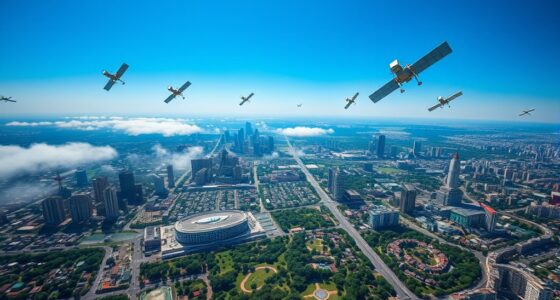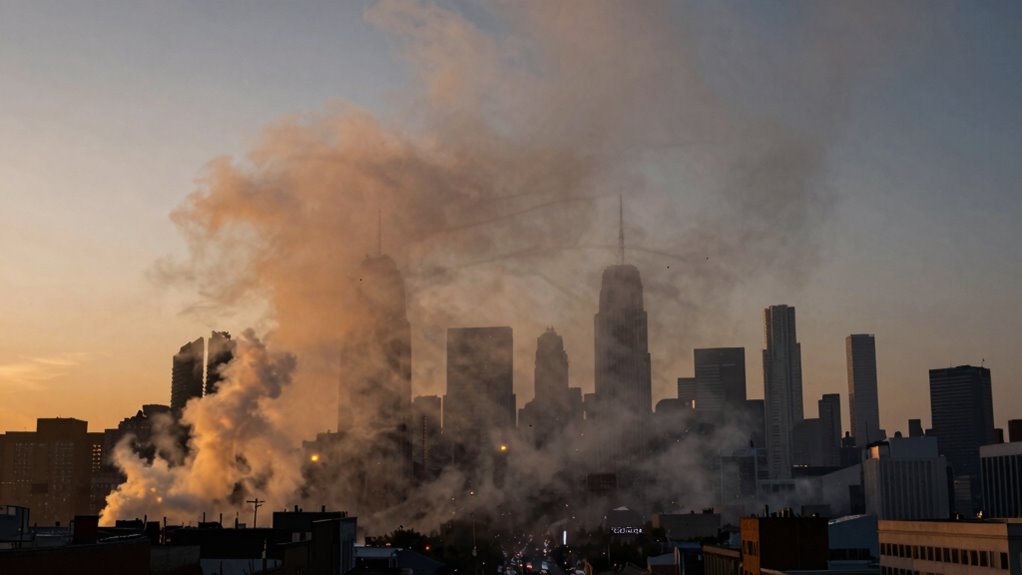

Warm air carries pollutants differently than cool air because it’s less dense, allowing pollutants to disperse more broadly and quickly. In warm conditions, vertical mixing and buoyancy lift pollutants higher into the atmosphere, reducing ground-level concentrations. Cooler air, being denser, tends to trap pollutants near the source, making pollution more concentrated and local. Understanding how temperature influences dispersion can help you better predict air quality changes as conditions shift. Keep exploring to learn more about these effects.
Key Takeaways
- Warm air is less dense, allowing pollutants to disperse over a wider area more quickly.
- Buoyancy in warm air lifts pollutants higher, reducing ground-level concentrations.
- Cooler air is denser, trapping pollutants near the source and limiting vertical movement.
- Temperature inversions in warm layers can trap pollutants beneath, worsening air quality.
- Temperature influences vertical mixing, affecting how pollutants spread and dilute in the atmosphere.
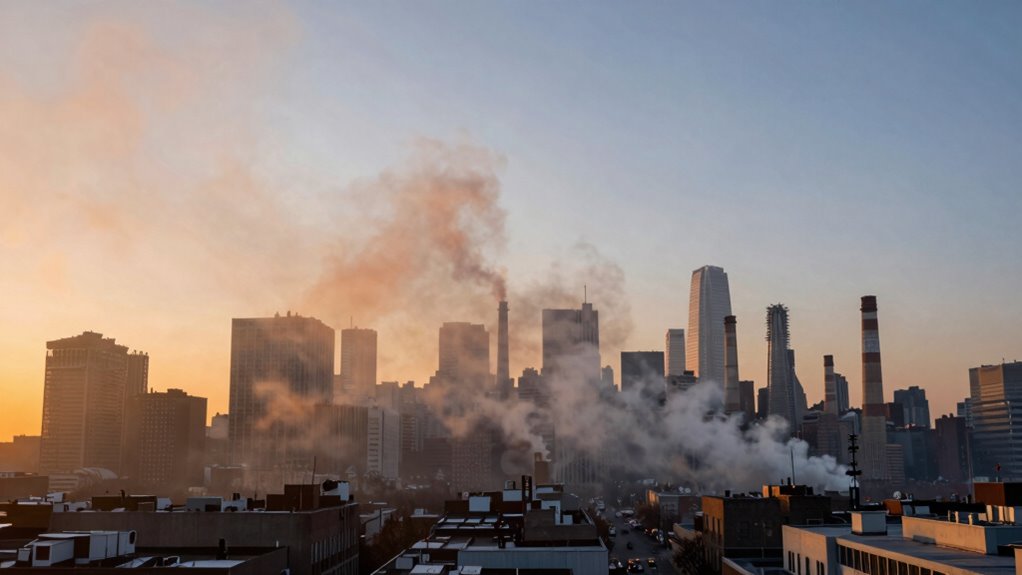
Have you ever wondered why pollutants seem to behave differently in warm air compared to cool air? It all boils down to how temperature influences air density and, consequently, pollutant dispersion. When the air is warm, it becomes less dense because the molecules spread out more. This change in air density impacts how pollutants travel through the atmosphere. In warm conditions, the less dense air allows pollutants to disperse more widely and quickly, often resulting in a broader, more diluted pollution plume. Conversely, in cooler air, higher air density causes pollutants to stay concentrated and close to their source, making air pollution more localized and potentially more harmful in those areas.
You can think of warm air as having the ability to lift pollutants higher into the atmosphere, thanks to the buoyancy created by temperature differences. This vertical mixing helps disperse pollutants over a larger area, reducing their concentration at ground level. When pollutants are lifted higher, they’re less likely to settle near the source, which means that in warm weather, the impact can be less immediate and intense at ground level. However, this effect isn’t uniform, as factors like wind speed and atmospheric stability also play significant roles. Still, the key point is that warm temperatures tend to promote greater pollutant dispersion because of the lower air density and increased vertical mixing. Additionally, temperature fluctuations can influence air circulation patterns, which further affect how pollutants spread. Recognizing the temperature effects on air density can help us better anticipate pollution behavior under different weather conditions and understand atmospheric stability in relation to pollution dispersion.
In contrast, cool air’s higher density acts like a cushion, trapping pollutants closer to the ground. This phenomenon is often observed during temperature inversions, where a layer of warm air sits above cooler air at the surface. During these conditions, pollutants can become trapped beneath the warm layer, accumulating and leading to poor air quality. Because the denser cool air restricts vertical movement, pollutants don’t disperse as effectively, resulting in higher concentrations near the source. This can make pollution more hazardous, especially in urban areas or valleys where air circulation is limited. Furthermore, temperature inversions can persist for days, intensifying pollution problems during certain weather patterns. Recognizing the impact of temperature inversion is crucial for understanding pollution episodes and their duration.
Understanding these differences is vital if you’re concerned about air quality or planning activities dependent on pollution levels. Warm air’s tendency to enhance pollutant dispersion can sometimes improve air quality, but it can also allow pollutants to travel farther. Meanwhile, cooler conditions tend to keep pollutants localized and more concentrated, raising health risks. So, when evaluating pollution risks, it’s important to take into account how temperature influences air density and dispersion patterns, as these factors directly shape how pollutants spread and impact your environment.

Air Quality Monitor Indoor, 10 in 1 Portable Smart Air Quality Tester for CO2 | TVOC | HCHO | Temp | AQI | PM0.3-1 Detection Suitable for Home, Cars, Plants, Pets and Hotels
- 10-in-1 Multi-Gas Detection: Detects CO2, HCHO, TVOC, benzene, PM2.5/10
- High-Definition Color Display: Real-time data with intuitive visual alerts
- Smart Sensor Technology: Reliable, stable, and long-term accurate readings
As an affiliate, we earn on qualifying purchases.
As an affiliate, we earn on qualifying purchases.
Frequently Asked Questions
How Does Humidity Affect Pollutant Dispersion in Warm Air?
Humidity effects profoundly influence pollutant dispersion in warm air. When humidity is high, water vapor increases, causing pollutants to stick together and settle faster, which alters dispersion patterns. This can lead to more localized pollution, reducing the spread of pollutants over larger areas. Conversely, low humidity allows pollutants to remain suspended longer, dispersing more widely. Understanding these humidity effects helps predict how pollutants behave in warm, humid conditions.
Do Different Pollutants React Differently to Temperature Changes?
Yes, different pollutants react differently to temperature changes because chemical reactions often speed up with increased heat, altering how pollutants behave. Warmer air decreases air density, causing pollutants to disperse more widely but also potentially react more quickly. You’ll notice that some pollutants degrade faster in warm conditions due to enhanced chemical reactions, while others may persist longer or change form, depending on their chemical properties and the surrounding temperature.
How Does Urban Heat Influence Pollutant Transportation?
Urban heat increases pollutant transportation by creating thermal uplift in city environments. As warm air rises within urban canyons, it carries pollutants higher into the atmosphere, dispersing them more widely. This process enhances the spread of pollutants, making air quality worse. You’ll notice that during hot days, pollutants linger longer and travel further, especially in areas with tall buildings that trap heat, intensifying the urban heat island effect.
Can Warm Air Cause Pollutants to Settle Faster?
Ever wondered if warm air can cause pollutants to settle faster? It’s unlikely because warm air creates thermal plumes that rise, promoting upward movement of pollutants. In contrast, cool air leads to stable air stratification, trapping pollutants near the ground. Warm air generally disperses pollutants more effectively, preventing settling. So, no, warm air typically keeps pollutants airborne longer, reducing their tendency to settle quickly.
What Role Do Atmospheric Pressure Differences Play in Pollutant Movement?
You notice that atmospheric pressure differences influence pollutant movement by creating altitude variability and wind shear. When pressure drops with altitude, pollutants tend to rise, spreading out more widely. Wind shear, where wind speed or direction changes sharply, can push pollutants horizontally or vertically, affecting their dispersion. These factors combined determine how pollutants travel through the atmosphere, often making their paths unpredictable and impacting air quality.
Conclusion
Next time you feel the warm breeze carrying a faint haze, remember it’s like a swimmer gliding through different currents—warm air can lift pollutants higher, dispersing them more widely, much like how a boat’s speed changes with water temperature. Studies show that warmer conditions often lead to more widespread pollution spread, impacting air quality far beyond the source. So, as you breathe in that warm air, realize you’re also inhaling the invisible journey of tiny particles dancing through the atmosphere.