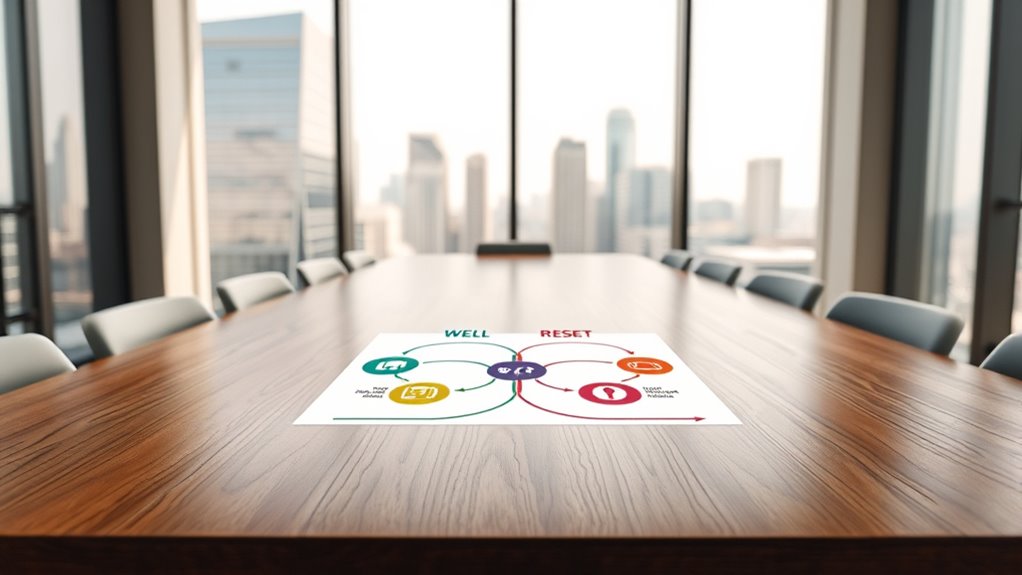

The crosswalk between WELL and RESET (2025 update) shows how these standards work together to create healthier, sustainable indoor spaces. WELL emphasizes occupant health through metrics like air quality, lighting, and acoustics, while RESET focuses on continuous environmental data monitoring. Their alignment highlights shared practices such as low-emission materials and air filtration, supporting a holistic approach. To explore how these frameworks integrate for better building performance, you’ll find key insights if you continue exploring further.

Get garden gear delivered free with Prime
- Fast, free delivery on millions of items
- Prime Video, Amazon Music and more included
- Member-only deals all year
Key Takeaways
- The 2025 crosswalk aligns WELL’s occupant health metrics with RESET’s environmental performance data.
- It highlights shared practices like low-emission materials and real-time indoor air quality monitoring.
- The crosswalk clarifies how WELL and RESET standards complement each other for holistic building health and sustainability.
- It facilitates integrated project planning, performance tracking, and compliance across wellness and environmental goals.
- The update promotes a unified approach to designing and operating healthier, more sustainable indoor environments.

Have you ever wondered how WELL and RESET standards compare and how they align? These two frameworks aim to create healthier, more sustainable environments, but they approach this goal from different angles. To understand their relationship, you need to look at how each one uses wellness metrics and sustainability standards to guide building design and operation. Wellness metrics focus on the human experience within indoor spaces—air quality, lighting, acoustics, and biophilic design—while sustainability standards emphasize reducing environmental impact through energy efficiency, water conservation, and material selection. Both sets of standards intersect in their pursuit of healthier, more sustainable spaces, but their priorities can differ.
WELL is primarily centered on human health and wellness, relying heavily on wellness metrics to evaluate how well indoor environments support occupant well-being. These metrics measure things like air purity, thermal comfort, access to natural light, and mental health factors. The WELL Building Standard provides specific criteria to achieve high levels of occupant comfort and health, making it a go-to framework for projects prioritizing human experience. On the other hand, RESET standards focus more on real-time environmental data and sustainability standards. RESET emphasizes continuous monitoring of building performance, including indoor air quality, temperature, humidity, and VOC levels, to ensure ongoing compliance and improvements. It’s designed to promote transparency and operational efficiency while reducing environmental footprints.
Despite their different emphases, these standards align in their core goal: creating spaces that are both healthy for people and sustainable for the planet. The 2025 update to the crosswalk between WELL and RESET illustrates this convergence, highlighting areas where wellness metrics complement sustainability standards. For example, both frameworks promote the use of low-emission materials and advanced air filtration systems. They also encourage monitoring indoor environmental quality, though WELL emphasizes occupant comfort and health outcomes, while RESET leans toward data-driven performance management. This synergy enables designers and building operators to adopt a holistic approach—balancing occupant wellness with environmental responsibility.
Creating healthy, sustainable spaces through wellness and environmental performance integration.
Understanding this crosswalk helps you see how integrating both standards can lead to smarter, more sustainable buildings that prioritize human health without compromising environmental goals. By aligning wellness metrics with sustainability standards, you can develop projects that not only meet regulatory requirements but also foster healthier lifestyles and reduce ecological impact. The 2025 update clarifies how these standards work hand-in-hand, offering a thorough pathway to achieve truly sustainable, health-oriented environments. For you, this means easier decision-making, better performance tracking, and ultimately, spaces that support both people and the planet. Additionally, holistic building design is increasingly recognized as essential for achieving comprehensive environmental and health objectives.
As an affiliate, we earn on qualifying purchases.
Frequently Asked Questions
How Often Is the WELL and RESET Crosswalk Updated?
You should check the WELL and RESET crosswalk annually to verify crosswalk accuracy and credential alignment. Updates are typically made every year or as needed when new standards or credentials are introduced. Staying current helps you accurately compare requirements and certifications, making sure your efforts align with evolving industry benchmarks. Regular updates ensure the crosswalk remains a reliable tool for understanding how WELL and RESET standards correspond.
Can Organizations Switch Between WELL and RESET Certifications Easily?
You can switch between WELL and RESET certifications, but it’s not a walk in the park. The process involves a certification shift and standard alignment, which can be complex. You’ll need to meet specific requirements for each program and possibly update your project documentation. Planning ahead and consulting with certification bodies can smooth the process, ensuring your organization aligns with the new standards without losing momentum.
Are There Costs Associated With Aligning WELL and RESET Standards?
Yes, aligning WELL and RESET standards involves costs. You should conduct a thorough cost analysis to understand expenses related to certification updates, staff training, and system adjustments. Engaging stakeholders early helps identify potential costs and streamline the process. By actively involving everyone, you can reduce surprises and facilitate smoother shifts, ultimately saving money and time while maintaining compliance with both standards.
What Are Common Challenges in Implementing the Crosswalk?
You might face challenges like stakeholder engagement and implementation barriers when applying the crosswalk. Engaging all relevant parties guarantees alignment, but it can be time-consuming and complex. You may also encounter resistance to change, resource constraints, or unclear guidance, which slow progress. To overcome these issues, prioritize clear communication, foster collaboration, and develop detailed implementation plans that address potential barriers upfront.
How Does the Crosswalk Impact Certification Timelines?
The crosswalk streamlines your green building certification process by clarifying how WELL and RESET criteria align, which can speed up your timeline. You’ll spend less time interpreting conflicting standards and more time implementing sustainable practices. However, coordination between the standards might occasionally cause minor delays if adjustments are needed. Overall, it helps you achieve certification more efficiently, reducing the time required and making the green building certification process smoother.
Conclusion
By grasping the crosswalk between WELL and RESET, you access a powerful tool for growth and well-being. Remember, knowing the landscape isn’t enough—you’ve got to navigate it confidently. Think of this knowledge as your compass, guiding you through the maze of wellness strategies. Keep in mind, a journey of a thousand miles begins with a single step. So, step forward with purpose, and let these frameworks lead you toward a healthier, more balanced life.
Fall Picks
fall essentials
As an affiliate, we earn on qualifying purchases.