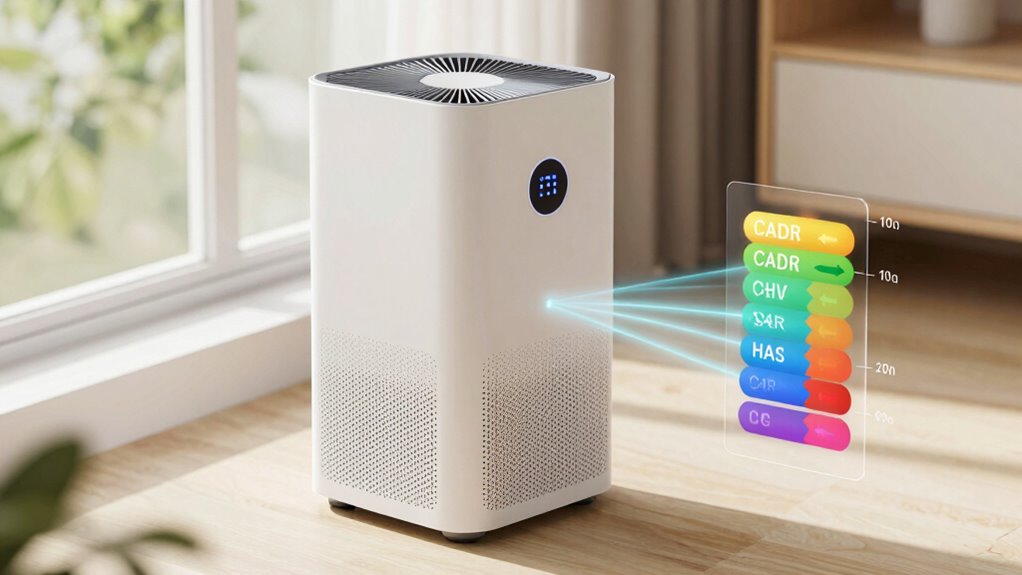
Think of CADR, or Clean Air Delivery Rate, as a score that shows how fast your air purifier can clean the air in a room. A higher number means it removes dust, smoke, and pollen quicker, making the air healthier for you. It’s like a race—better devices refresh the air more often. If you want to understand how this works and find the best purifier, keep exploring, and you’ll get all the important details.

Get garden gear delivered free — and shop member deals
- Fast, free delivery on millions of items
- Access to Prime Big Deal Days deals on October 6–7
- Prime Video, Amazon Music and more included
Key Takeaways
- CADR shows how fast an air purifier cleans the air in a room.
- Higher CADR means quicker removal of dust, smoke, and pollen.
- It combines how strong the filter is and how well the device works.
- Better filters catch more tiny particles, boosting overall cleaning power.
- When choosing an air purifier, look for high CADR and good filter tech for best results.
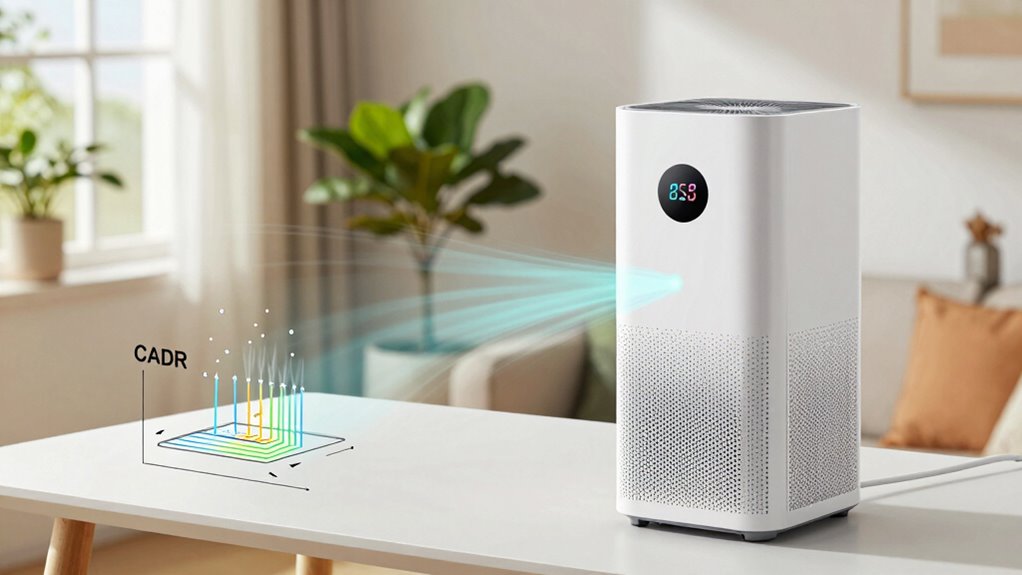
Have you ever wondered how air purifiers actually clean the air around you? It all comes down to a number called CADR, which stands for Clean Air Delivery Rate. Think of CADR as a way to measure how good an air purifier is at cleaning the air in your room. But before you get lost in numbers, let’s break it down. When you buy an air purifier, you want to know it works well, right? That’s where understanding CADR helps. It tells you how fast the purifier can remove smoke, dust, and pollen from the air, giving you a clearer picture of its effectiveness.
One key factor that impacts how well an air purifier performs is its filter performance. The filter is like a trap that catches tiny particles floating in the air. The better the filter, the more particles it can catch and hold, which boosts the overall air purifier efficiency. If a filter isn’t good enough, even the most powerful purifier won’t do a great job. So, when comparing air purifiers, pay attention to the quality of their filters. HEPA filters are considered some of the best because they catch 99.97% of particles as small as 0.3 microns. When a purifier has a high-quality filter, it can handle airborne pollutants more effectively, and that makes a real difference in how clean the air feels.
Air purifier efficiency isn’t just about the filter, though. It’s also about how the device uses that filter to clean the air quickly and thoroughly. A higher CADR means the purifier can deliver clean air faster, which is especially important if your room is big or you have allergies. Think of it like a race: a purifier with a high CADR can refresh the air more often, keeping your environment healthier and more comfortable. If you’re sensitive to dust or smoke, you want an air purifier with a high CADR for those specific pollutants. It ensures the purifier isn’t just working, but working effectively and efficiently, giving you the best bang for your buck.
Additionally, the technology behind the filters plays a crucial role in determining overall performance and effectiveness. Ultimately, understanding CADR helps you choose the right air purifier for your needs. It’s a simple way to compare how well different models perform in real-life situations. Higher CADR numbers mean faster, more efficient cleaning, especially when combined with a top-tier filter. So, next time you’re shopping for an air purifier, look beyond the brand name. Check the CADR ratings and consider the filter quality, so you pick a device that truly clears the air and makes your space healthier.
HEPA air purifier with high CADR
As an affiliate, we earn on qualifying purchases.
As an affiliate, we earn on qualifying purchases.
Frequently Asked Questions
How Is CADR Measured in Real-World Air Quality?
You measure CADR in real-world air quality by testing how effectively an air purifier reduces specific pollutants like dust, pollen, and smoke. You compare the device’s cleaning rate to air quality standards, ensuring it meets safety levels. Accurate measurement involves controlled experiments that assess measurement accuracy, simulating typical room conditions. This helps you determine how well an air purifier improves air quality in your space, giving you confidence in its performance.
Does a Higher CADR Always Mean Better Air Purification?
A higher CADR usually means better air purification, but it’s not the whole story. You should also consider filter lifespan, because a high CADR filter might need more frequent changes, increasing costs. Noise levels matter too; some high-CADR units can be loud, which might bother you. So, look at the overall balance—good CADR, reasonable filter lifespan, and acceptable noise—before choosing an air purifier.
Can CADR Be Different for Various Pollutants Like Dust or Smoke?
Think of CADR like a superhero with different powers for each pollutant type. It can vary when measuring dust, smoke, or pollen because each requires different detection and removal methods. This means CADR isn’t a one-size-fits-all score—it’s tailored to specific pollutants. For measurement accuracy, check if the ratings are tested for each pollutant type, ensuring the purifier’s effectiveness matches your needs and giving you a clearer picture of its true cleaning power.
How Often Should I Replace Filters Based on CADR Ratings?
You should replace filters based on their CADR ratings and filter lifespan recommendations, typically every 3 to 6 months. Keep an eye on your air purifier’s performance and follow maintenance tips like checking for reduced airflow or odors. Higher CADR ratings usually mean filters last longer, but regular replacement guarantees top-notch air quality. Staying consistent with maintenance helps your device work efficiently and keeps your indoor air clean.
Is CADR the Only Factor to Consider When Choosing an Air Purifier?
Imagine you’re choosing an air purifier; CADR is important, but it’s not the only factor. You also need to take into account filter maintenance—how often you’ll need to replace filters—and noise levels, especially if you plan to use it in a bedroom or quiet space. A device with high CADR might be loud or require frequent filter changes, so balancing these factors helps you pick the best purifier for your needs.
Conclusion
So, now you know that CADR measures how fast an air purifier cleans the air, helping you breathe easier. Did you know that high CADR ratings can remove up to 99% of airborne particles? That’s like having a superhero in your room! Remember, a higher CADR means cleaner air, so pick your purifier wisely. With this info, you’ll be able to choose the best one to keep your air fresh and healthy every day.
Fall Picks
fall essentials
As an affiliate, we earn on qualifying purchases.