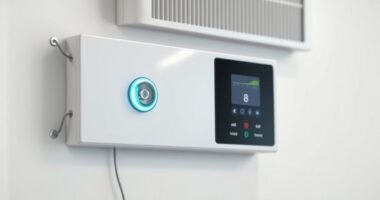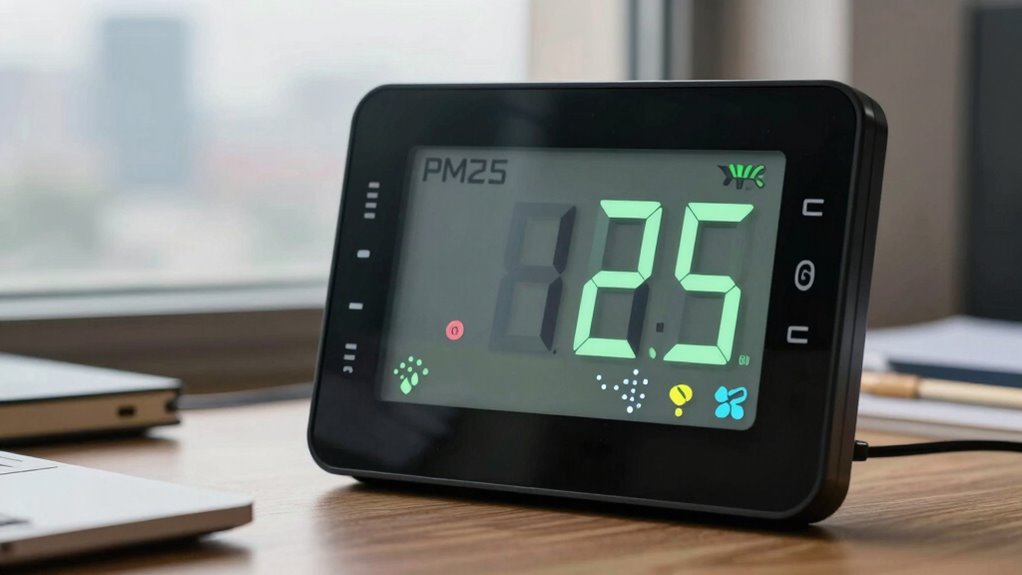

PM2.5 monitors give you real-time data on tiny airborne particles, helping you identify pollution sources like cooking or outdoor pollution. They’re great at providing localized air quality snapshots and guiding quick actions like ventilating or using air purifiers. However, they miss the full picture, not detecting gases, particle composition, or ultrafine particles. If you want to understand what these devices truly reveal—and what they overlook—you’ll find useful insights ahead.

Get garden gear delivered free with Prime
- Fast, free delivery on millions of items
- Prime Video, Amazon Music and more included
- Member-only deals all year
Key Takeaways
- PM2.5 monitors accurately measure fine particles in real-time, indicating pollution levels and potential indoor pollution sources.
- They primarily detect particle size and concentration but do not identify particle composition or chemical pollutants.
- Sensor drift and calibration issues can affect accuracy, requiring regular maintenance for reliable readings.
- They cannot distinguish between different particle types like dust, pollen, smoke, or gases such as VOCs.
- When used alone, they provide an incomplete picture of indoor air quality, best supplemented with additional assessment methods.
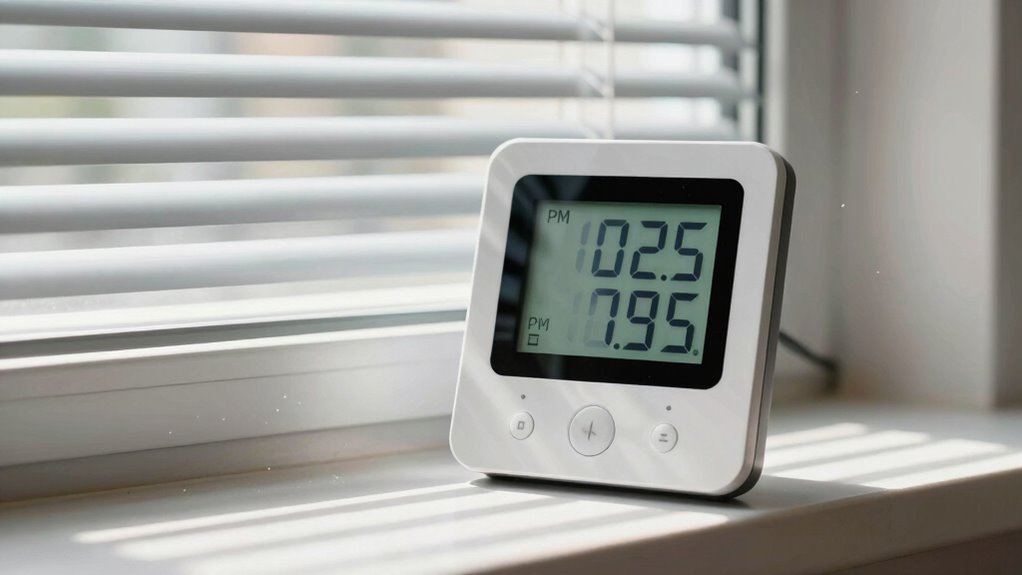
Have you ever wondered how you can accurately measure the tiny particles that threaten your health? When it comes to PM2.5 monitors, you’re relying on devices designed to detect those minuscule particles that can penetrate deep into your lungs and bloodstream. These monitors are essential tools for gauging indoor air quality, helping you identify when your environment becomes unsafe. But understanding what they tell you—and what they miss—is crucial if you’re serious about protecting yourself and your loved ones.
PM2.5 monitors work by sampling air and using sensors to detect particles smaller than 2.5 micrometers. They give you real-time data, which allows you to see how pollution levels fluctuate throughout the day. This is invaluable because it helps you pinpoint the sources of indoor pollution, like cooking, heating, or outdoor air infiltration. You can then take targeted actions to improve air quality, such as increasing ventilation or using air purifiers. However, while these monitors excel at providing immediate, localized readings, they don’t always tell the full story about indoor air quality.
PM2.5 monitors provide real-time, localized data but may not reveal the full picture of indoor air quality.
One major challenge with PM2.5 monitors is calibration. Because these devices rely on sensors that can drift over time, maintaining accuracy requires regular calibration. Without proper calibration, your monitor might underestimate or overestimate particle concentrations, leading you to make decisions based on faulty data. Achieving precise calibration can be tricky, especially for consumer-grade monitors, which may not have the same rigor as professional equipment. This calibration challenge means you need to stay vigilant, regularly checking and maintaining your device to ensure the readings remain trustworthy. Sensor calibration is essential to maintain the accuracy and reliability of your device over time.
Despite their strengths, PM2.5 monitors have limitations. They primarily measure particles suspended in the air, but they don’t identify the specific composition of those particles. For example, they can’t tell you whether the particles come from dust, pollen, smoke, or chemical pollutants. This is important because different sources pose different health risks. Additionally, some monitors struggle to detect ultrafine particles or gases like VOCs, which can also harm your health. As a result, relying solely on PM2.5 readings might give you an incomplete picture of your indoor air quality. Sensor limitations can sometimes lead to misinterpretations of pollution levels, especially when different pollutants coexist. Understanding air quality measurement and how sensors function helps you interpret the data more accurately and avoid misconceptions.
Furthermore, understanding the limitations of sensors and their potential inaccuracies is essential for making informed decisions about your environment. In the end, PM2.5 monitors are powerful tools that offer valuable insights into your indoor environment, helping you take steps to reduce exposure. But they’re not perfect. They require regular calibration, and their readings don’t capture all aspects of air pollution. To truly understand the air you breathe, it’s best to combine monitor data with other assessments and keep in mind the limitations of what these devices can and cannot tell you.
As an affiliate, we earn on qualifying purchases.
Frequently Asked Questions
How Do PM2.5 Monitors Differ From Other Air Quality Sensors?
PM2.5 monitors differ from other air quality sensors mainly in their focus on fine particulate matter. You’ll find that they often have better sensor calibration, which improves data accuracy for PM2.5 levels. Unlike general sensors that measure multiple pollutants, PM2.5 monitors are specialized, providing precise readings of tiny particles. This specialization helps you better understand pollution exposure, but accuracy depends on proper calibration and maintenance.
Are PM2.5 Monitors Effective Indoors and Outdoors Equally?
Did you know indoor PM2.5 levels can be up to 50% higher than outdoors? PM2.5 monitors are effective indoors for measuring personal exposure, especially when combined with indoor plants that can filter some pollutants. Outdoors, they provide valuable data on air quality, but environmental factors like wind can affect accuracy. Overall, they’re useful both indoors and outdoors, but consider placement and context for the best insights.
What Are the Maintenance Requirements for Accurate Readings?
To keep your PM2.5 monitor accurate, you need to perform regular calibration, ideally every few months, depending on usage. Check the device’s manual for specific calibration frequency. Also, monitor the battery life; replace or recharge batteries promptly to avoid inaccuracies caused by power loss. Proper maintenance guarantees your readings stay precise, helping you make informed decisions about air quality indoors and outdoors.
Can PM2.5 Monitors Detect All Types of Airborne Pollutants?
Imagine a knight with a shield—your PM2.5 monitor. It mainly detects fine particles like those from industrial emissions, allergens, and pollen, but it doesn’t catch all airborne pollutants like gases or VOCs. So, while it provides valuable data on specific pollutants, it can’t tell you everything floating in the air. For a complete picture, consider additional sensors that target other pollutants.
How Quickly Do PM2.5 Levels Change in Response to Environmental Shifts?
You’ll notice PM2.5 levels respond quickly to environmental fluctuations, often within minutes, due to particle dispersion caused by wind, traffic, or weather changes. Monitors can capture these rapid shifts, giving you near real-time data. However, keep in mind that localized pollution sources or sudden environmental shifts might cause brief spikes or drops, so it’s essential to interpret the data within the context of broader environmental conditions.
Conclusion
As you glance at the PM2.5 monitor’s numbers, remember they’re just a snapshot, like a single brushstroke in a vast painting. While the device reveals the air’s hidden whispers, it can’t capture the full story—like the unseen currents of pollution swirling around you. So, trust the data, but stay mindful of what remains behind the screen. Breathe deeply, knowing each inhalation is part of a larger, unseen dance in the air you inhabit.
Halloween Picks
halloween
As an affiliate, we earn on qualifying purchases.