Your air purifier likely doesn’t clean evenly because airflow gets blocked by furniture, walls, or clutter, creating stagnant zones. Factors like room shape, size, and vent placement influence how air circulates, meaning pollutants can stick around in corners or behind objects. Moving the purifier or rearranging furniture can improve circulation and reduce buildup. If you want to understand how to optimize your space for better air quality, there’s more to take into account below.
Key Takeaways
- Air purifiers mainly filter the air in their immediate vicinity, leaving corners and behind furniture less cleaned.
- Room layout, furniture placement, and obstacles create zones of poor airflow, causing uneven pollutant removal.
- Air circulation depends on room size, shape, vents, and window placement, affecting how pollutants disperse.
- Stagnant or still air pockets allow pollutants to linger and settle, reducing overall air cleaning effectiveness.
- Small adjustments in furniture arrangement and adding fans can improve airflow and promote more uniform cleaning.
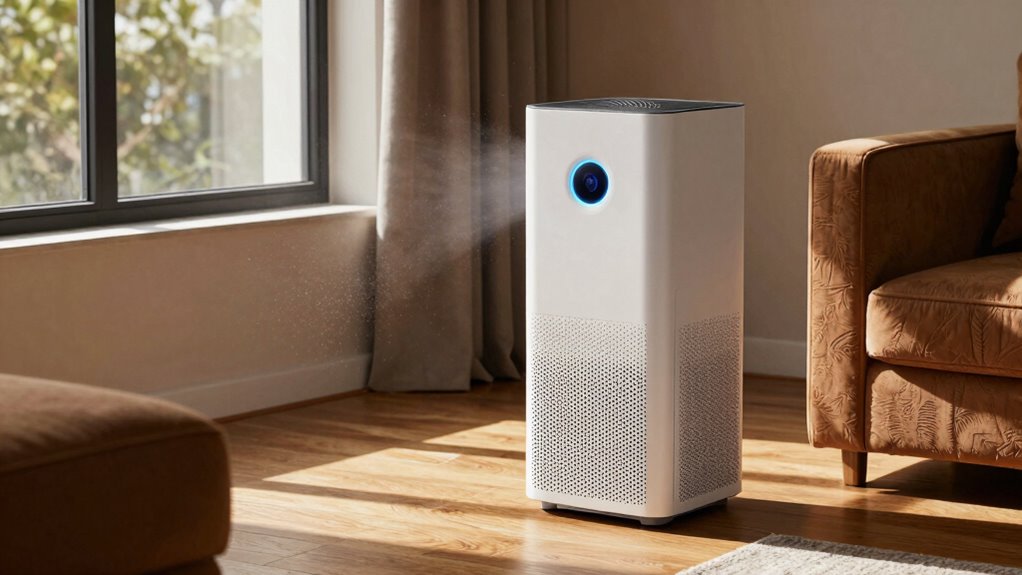
You might assume that air purifiers clean the air evenly throughout a room, but in reality, airflow patterns and room design cause uneven cleaning. When you turn on your air purifier, it pulls in air from its immediate vicinity, filters out pollutants, and releases cleaner air back into the room. However, the way air moves around your space isn’t uniform. Air circulation isn’t just about the purifier’s fan; it’s influenced by furniture placement, room size, vents, windows, and even the shape of the room. These factors create zones where air moves more freely and others where it stagnates. As a result, some areas experience constant air exchange, while others see little to no movement.
Pollutant accumulation becomes a real concern in these stagnant zones. Particles like dust, pet dander, or airborne viruses tend to settle or linger in places with poor air circulation. If your furniture blocks airflow or if vents direct air away from certain corners, pollutants can build up in these areas. The purifier may efficiently clean the air in its immediate vicinity, but pollutants in the corners or behind large furniture might remain untouched. Over time, this uneven distribution can reduce the overall effectiveness of your air cleaning efforts.
Pollutants can linger in poorly circulated areas, reducing your air purifier’s overall effectiveness over time.
The design of your room plays a significant role in how well air circulates. Open spaces allow for better airflow, helping pollutants disperse and making it easier for purifiers to do their job. Conversely, cluttered or cramped spaces hinder air movement, creating pockets of still air where pollutants can accumulate. Even the placement of your air purifier impacts its efficiency. If you position it near a wall or in a corner, it might not draw in air from the entire room equally, leaving some areas less cleaned than others. Moving it to a central location often improves circulation, but it’s not a guarantee that all pollutants will be evenly removed. Additionally, using airflow management techniques can help optimize circulation further and prevent air stagnation.
Understanding these dynamics helps you recognize why your room isn’t perfectly clean after running an air purifier. It’s not just about the purifier’s capacity but also about how air flows through your space. To maximize air quality, consider rearranging furniture, adding fans to improve circulation, and positioning your purifier in a central spot. These small adjustments can help reduce pollutant buildup and create a more uniformly clean environment, even if the air isn’t perfectly even at all times. Recognizing the importance of airflow patterns can guide you in optimizing your space for better air quality.

U ULTTY Bladeless Fan with Air Purifier, Quiet Tower Fan with Remote, Touch, 9 Speeds, 8H Timer, HEPA Filter 99.97%, 90° Oscillation Fans, Floor Fans Powerful for Home Office Room, CR022D White
- Bladeless Safety Design: Safe for children and pets
- Wide Airflow Coverage: 90° oscillation for fast cooling
- Customizable Cooling Settings: 3 modes, 9 speeds, adjustable outlet
As an affiliate, we earn on qualifying purchases.
As an affiliate, we earn on qualifying purchases.
Frequently Asked Questions
How Often Should I Replace My Air Filters?
You should replace your air filter every 1 to 3 months, depending on its lifespan and your household’s needs. Regular filter maintenance tips include checking it monthly and replacing it when it looks dirty or clogged. If you have pets or allergies, change it more frequently. Keeping track of your air filter lifespan guarantees your HVAC system runs efficiently, improving indoor air quality and preventing uneven cleaning across the room.
Do Air Purifiers Work Better in Small or Large Rooms?
Think of your room as a stage—air circulation determines the spotlight. Air purifiers work better in small rooms because they can circulate and filter the air more efficiently, guaranteeing cleaner air faster. In larger spaces, they struggle to cover the entire area effectively, which can shorten filter lifespan and reduce performance. So, for maximum results, match your purifier size to your room and ensure proper airflow.
Can Indoor Plants Improve Air Quality Evenly?
Indoor plants can improve air quality, but they don’t do so evenly. You need to take plant placement into account carefully, spreading them throughout the room rather than clustering in one area. Leaf size matters too—larger leaves can filter more air, but if you have many small-leaf plants, their combined effect can be significant. By strategically placing plants with varying leaf sizes, you help guarantee more uniform air quality improvement across your space.
Does Window Placement Affect Air Cleaning Efficiency?
Yes, window placement considerably affects air cleaning efficiency. Properly positioned windows promote better air circulation, allowing fresh air to flow in and stale air to escape. If windows are placed strategically—like opposite each other—you create a natural cross-breeze that enhances airflow throughout the room. This improved circulation helps distribute air purifiers’ effects evenly, making your space cleaner and fresher more quickly.
How Does Humidity Influence Air Purification Effectiveness?
Think of humidity levels as the weather inside your home—high humidity acts like a thick fog, making air purification struggle to trap airborne particles. When humidity is just right, your air purifier works like a diligent gardener, capturing dust and allergens efficiently. Too much moisture, and it’s like trying to sweep through a damp sponge; too little, and the purifier can’t effectively do its job. Balance humidity for cleaner, healthier air.
Conclusion
So, next time you turn on your air purifier, remember it doesn’t work like a magic wand. Even with the best equipment, some spots stay dirtier, while others seem spotless. It’s a quiet reminder that perfection is rare, and comfort isn’t about flawless air everywhere. Instead, embrace the effort and small improvements, knowing that partial cleanliness still makes a difference. After all, in a world of imperfections, even cleaner air is a step toward a healthier, happier space.