TL;DR

Get garden gear delivered free with Prime
- Fast, free delivery on millions of items
- Prime Video, Amazon Music and more included
- Member-only deals all year
Grass seed can grow after heavy rain if water drains away and the soil remains moist rather than waterlogged. If seed has shifted or water is pooling, wait until the ground is workable, then redistribute seed, aerate affected areas lightly or apply a thin covering of topsoil or compost.
Grass seed may still germinate after heavy rain if water drains into the soil, but persistent pooling can leave seed short of oxygen, rot it or wash it into clumps, according to lawn-care experts quoted by Ideal Home. The report recommends checking the ground before taking action and describes three ways to address displaced seed and waterlogged patches.
Moist soil supports germination, but saturation is different from the damp conditions seeds need. Guy Jenkins, consumer manager at Johnson’s Lawn Seed, told Ideal Home that seed will grow in many cases, while warning that completely saturated or waterlogged ground can affect germination. Jonathan Davis, a lawn-care expert at Lawnsmith, said seed should germinate as normal when rain drains away and the soil stays moist rather than waterlogged.
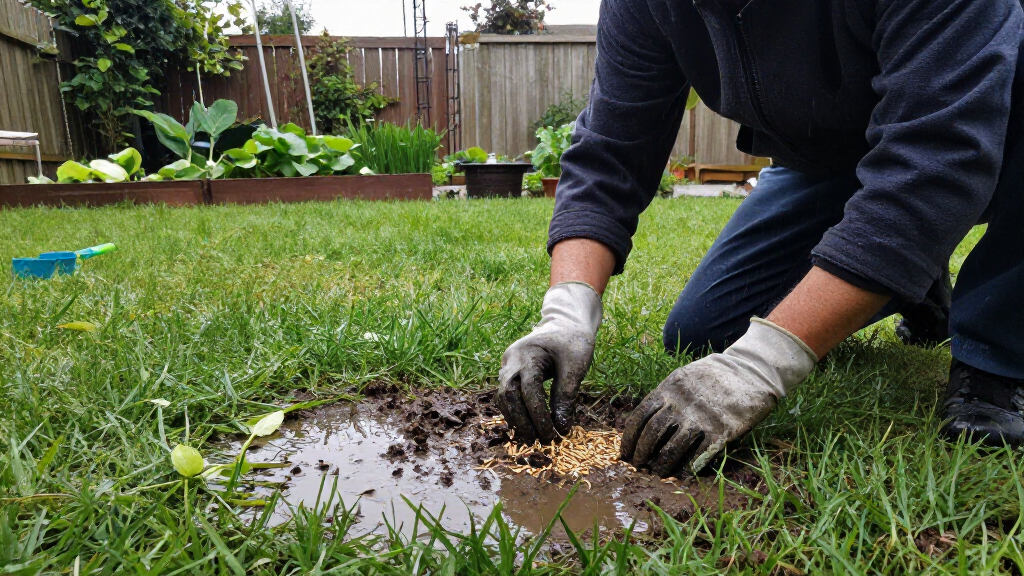
Standing water can leave seed submerged and short of oxygen, and the report says seed may rot in those conditions. Heavy rain can also move seed from where it was sown, creating dense clumps in some places and bare areas in others. The extent of the damage depends on how much water pooled, how quickly it drained and whether the seed was displaced; the report does not provide a way to predict the outcome for an individual lawn.
The three suggested responses are to rake displaced seed back across bare areas once the soil is workable, aerate waterlogged sections lightly to help water drain, and add a thin layer of topsoil or compost to help hold seed in place. Jenkins said germination typically starts within seven to 21 days. If the lawn remains patchy after that period, he advised overseeding affected areas.
How Rain Affects New Lawns
The difference between damp soil and standing water can determine whether newly sown seed stays in place and gets the conditions it needs. Gardeners who sowed before a storm do not necessarily need to start again: checking drainage and watching for bare patches can help identify whether the seed needs attention.
Timing matters for repairs. Raking or aerating saturated ground could disturb the seed, so the report advises waiting until the soil is workable before redistributing it and keeping aeration light. A check after the expected seven-to-21-day germination window can help distinguish slow growth from patchiness that may call for overseeding.
Products Worth Considering

Ring Battery Doorbell 2K Plus (2nd Gen) and Spotlight Cam Plus Battery Bundle

Dyson Cyclone V10 Origin Cordless Vacuum

Levoit Vital 100S-P Air Purifier for Home and Pets
As an affiliate, we earn on qualifying purchases.
Autumn Seeding After Storms
The Ideal Home report frames the question around autumn, which it describes as one of the best times to sow grass seed. Its advice addresses lawns sown shortly before stormy weather, when heavy rainfall can arrive before seeds have germinated or established.
The guidance is based on comments from Guy Jenkins of Johnson’s Lawn Seed and Jonathan Davis of Lawnsmith. It is practical advice rather than a report of a controlled test or a forecast for a particular lawn. Soil condition, drainage and how much seed has moved will vary from site to site.
What Each Lawn Still Needs
The report does not establish how much seed will survive a particular storm or how quickly a specific lawn will recover. Drainage, the duration of pooling and seed movement all affect the outcome, and those details have to be assessed on site. The seven-to-21-day estimate is a typical germination period, not a guarantee that every seed will sprout within that time.
It is also unclear from the report how much topsoil or compost is appropriate for different seed mixes and soil types. Its recommendation is to use a thin layer. Gardeners should avoid working saturated ground and should not assume that an area is beyond repair before allowing time for germination.
Check, Then Repair Bare Patches
After rain, check whether water is still pooling and whether seed has collected in clumps or left bare soil. Wait until the ground is workable before raking seed across affected areas or lightly aerating waterlogged sections. A thin covering of topsoil or compost may help keep seed in place, according to the experts cited in the report.
Watch the lawn over the next seven to 21 days for germination. If noticeable bare patches remain after that period, Jenkins recommends overseeding those areas. The report gives no further forecast or follow-up for lawns affected by the storms.
Key Questions
Will grass seed grow after heavy rain?
It can. Seed is more likely to germinate if rain drains away and the soil stays moist rather than waterlogged, according to experts quoted by Ideal Home.
What happens if water pools over newly sown seed?
Seed left in standing water may rot or lack oxygen. Heavy rain can also wash seed away or gather it into clumps, leaving other areas bare.
How long should I wait to see germination?
Guy Jenkins of Johnson’s Lawn Seed said gardeners typically start to see germination within seven to 21 days. That is an estimate, not a guarantee for every lawn.
What can I do about seed washed into patches?
Once the ground is workable, rake displaced seed across bare areas. If the lawn is still noticeably patchy after the usual germination period, overseed the affected sections.
Should I aerate a waterlogged lawn?
The report recommends light aeration focused on waterlogged areas to create channels for drainage. Avoid disturbing the seed by working the ground while it is saturated.
Source: idealhome.co.uk