
To keep your workshop safe and efficient, you need to use capture, cleanup, and timing strategies. Capture systems like hoods and dust collectors trap contaminants at their source, preventing dispersion. Cleanup methods, such as regular filtering and surface cleaning, remove residual pollutants. Proper timing guarantees ventilation runs during active work, reducing health risks and improving tool performance. Mastering these techniques helps maintain a healthier environment, and you’ll discover even more ways to optimize your workspace as you explore further.

Get garden gear delivered free — and shop member deals
- Fast, free delivery on millions of items
- Access to Prime Big Deal Days deals on October 6–7
- Prime Video, Amazon Music and more included
Key Takeaways
- Capturing contaminants at their source prevents airborne particles from dispersing and improves overall air quality.
- Regular cleanup removes residual dust and fumes, maintaining a safer, healthier workspace.
- Proper timing of ventilation systems ensures effective removal of contaminants during and after work activities.
- Using capture strategies reduces strain on ventilation systems and enhances their efficiency.
- Combining capture, cleanup, and timing strategies creates a safer, healthier, and more productive workshop environment.
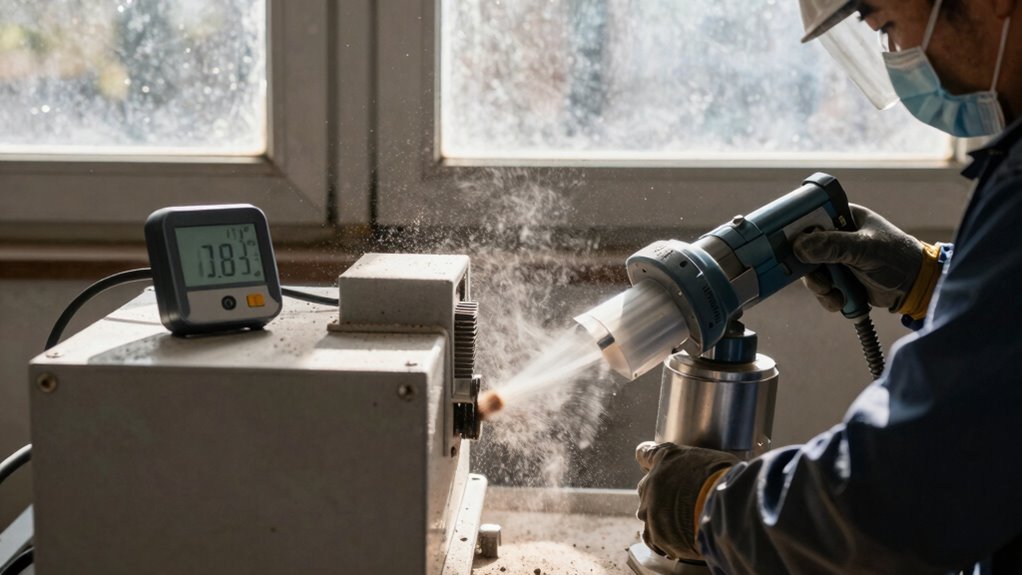
Ensuring clean air in your workshop is essential for safety and productivity, especially when working with dust, fumes, and airborne contaminants. Good air quality directly impacts your health, reduces fatigue, and keeps your tools operating smoothly. To achieve this, you need to focus on effective capture, cleanup, and timing strategies. These elements work together to improve ventilation efficiency, ensuring that harmful particles don’t linger and cause long-term issues.
Maintaining clean air in your workshop ensures safety, enhances productivity, and protects your tools and health through effective strategies.
Capture is the first step in maintaining a safe workshop environment. You must have proper extraction systems in place—such as local exhaust hoods or dust collectors—that trap contaminants at their source. When dust or fumes are quickly captured right where they originate, you prevent them from dispersing into the broader workspace. This not only improves air quality but also reduces the burden on your ventilation system, making it more efficient. The goal is to minimize airborne particles before they spread, which keeps the environment safer and your work area cleaner.
Cleanup involves removing residual contaminants from the air and surfaces after initial capture. Even with good extraction, some particles settle on surfaces or remain suspended temporarily. Using high-efficiency filters and regular cleaning routines ensures that these airborne particles are filtered out effectively. HEPA filters, in particular, are excellent for capturing fine dust and fumes. Additionally, maintaining your equipment and replacing filters regularly ensures that your cleanup process remains effective over time. This continuous effort helps sustain optimal air quality and prevents the buildup of harmful substances that could compromise safety. Incorporating ventilation efficiency practices can further enhance the removal of airborne contaminants.
Timing plays a crucial role in managing your workshop’s air quality and ventilation efficiency. You need to operate your capture and cleanup systems at the right moments—during active work and immediately afterward. Running extraction systems continuously might be unnecessary and energy-consuming, but turning them on before starting work and keeping them running during tasks ensures contaminants are captured promptly. After work is done, allowing systems to run briefly longer helps clear lingering fumes and dust, preventing accumulation. Proper timing maximizes the efficiency of your ventilation, reduces unnecessary energy use, and maintains a healthier environment.
Incorporating these strategies—capture, cleanup, and timing—ensures your workshop maintains excellent air quality and high ventilation efficiency. When you focus on trapping contaminants at their source, removing residual particles promptly, and operating your systems at optimal times, you create a safer, more productive workspace. Good air quality isn’t just about compliance; it’s about your health, your tools, and your overall work experience. By paying attention to these key elements, you’ll enjoy a cleaner, safer workshop environment every day.
dust collection system for workshop
As an affiliate, we earn on qualifying purchases.
As an affiliate, we earn on qualifying purchases.
Frequently Asked Questions
How Often Should Workshop Air Quality Be Tested?
You should test your workshop air quality regularly, ideally every 3 to 6 months, to guarantee safety and compliance with ventilation standards. Conduct air sampling during different working conditions to get accurate readings. Consistent testing helps identify pollutants early, allowing you to adjust ventilation systems effectively. Staying proactive with air quality checks safeguards your health, maintains compliance, and keeps your workspace safe and productive.
What Are the Health Risks of Poor Workshop Air Quality?
Poor workshop air quality can quietly impact your health, leading to respiratory discomfort, headaches, and long-term problems. Inefficient ventilation allows airborne contaminants to disperse unevenly, increasing exposure risks. Over time, this can weaken your immune system and cause chronic conditions. Ensuring proper capture, cleanup, and timing improves ventilation efficiency, reducing harmful contaminant dispersion. Protect yourself by maintaining good air quality, which supports overall well-being and a safer, healthier workspace.
Can DIY Air Filtration Systems Be Effective?
DIY air filtration systems can be effective if you carefully select the right filters and guarantee proper setup. However, their effectiveness depends on addressing filtration challenges like airflow, filter quality, and coverage area. You need to monitor and maintain your system regularly to keep it working efficiently. While DIY solutions can improve air quality, they may not match professional systems’ performance, especially in larger or more complex workshops.
How Does Humidity Affect Airborne Contaminants?
Humidity control considerably impacts airborne particles, as higher humidity levels can cause particles to settle faster, reducing airborne contaminants in your workshop. Conversely, low humidity allows particles to stay suspended longer, increasing inhalation risks. Maintaining ideal humidity helps manage airborne contaminants effectively, making your air filtration efforts more efficient. By controlling humidity, you create a safer environment where airborne particles are less likely to linger, protecting your health and workspace quality.
What Are the Latest Technologies in Air Capture and Cleanup?
You should explore the latest air capture and cleanup technologies like advanced air filtration systems and localized pollutant removal devices. These innovations use high-efficiency filters, electrostatic precipitators, and UV sterilization to effectively trap airborne contaminants and improve air quality. By implementing such cutting-edge solutions, you can guarantee safer workshop environments, reduce health risks, and maintain compliance with safety standards while keeping the air clean and breathable.
Conclusion
To keep your workshop safe, you need to capture hazards before they spread, clean the air to breathe easier, and time your efforts to maximize efficiency. By doing so, you protect your health, improve your work quality, and maintain a safer environment. Capture the dust, clean the fumes, and time your actions—because when you prioritize these steps, you create a workspace that’s healthier, safer, and more productive. Your workshop, your safety, your success.
Fall yard work Picks
leaf blowers
As an affiliate, we earn on qualifying purchases.