
The best whole house ventilation system overall in this lineup is the QuietCool QC CL-5400 RF, a strong fit for buyers seeking high airflow and wireless control in a whole-house fan. For balanced, year-round air exchange, the Aggrfine ERV stands out for its higher airflow settings and PM2.5 filtration, while the Panasonic FV-12ESC1 suits buyers prioritizing a compact energy recovery ventilator from an established ventilation brand. The main tradeoff is that whole-house fans rapidly exhaust indoor air when outdoor conditions are favorable, while ERVs exchange air with less direct energy loss but move far less air. A through-wall HEPA fan serves a more targeted need and is not a direct substitute for either system type. Read on for the full breakdown and help matching capacity, filtration, and installation style to your home.

Get garden gear delivered free with Prime
- Fast, free delivery on millions of items
- Prime Video, Amazon Music and more included
- Member-only deals all year
Complete the kit


Key Takeaways
- Whole-house fans and ERVs solve different problems: the QuietCool models move thousands of CFM for rapid air flushing, while the ERVs in this lineup are designed for controlled, lower-volume air exchange.
- The CL-5400 RF is the strongest all-around fan pick: its 5,024 CFM rating places it between smaller 4,195–4,415 CFM options and the larger 6,878–6,924 CFM models.
- Airflow is not the only ERV differentiator: Aggrfine lists 180/250 CFM and PM2.5 filtration, while Panasonic’s 120 CFM units and the VENTS-US models serve lower-airflow needs.
- Large fan capacity can be a mismatch: the CL-7000 RF and ES-7000 RF offer the highest listed airflow, but home layout, attic ventilation, and safe makeup-air paths matter as much as the headline number.
- The Weiworld is a focused room-level option: its through-wall HEPA design and Wi-Fi control may suit targeted ventilation, but it should not be treated as equivalent to a whole-home ERV or high-capacity attic fan.
| QuietCool QC CL-2250 RF Whole House Fan, 2465 CFM, Wireless Control |  | Best Quiet Pick for Smaller Homes | Airflow: Up to 2,465 CFM | Motor: 250 W PSC | Speeds: 2 | VIEW LATEST PRICE | See Our Full Breakdown |
| QuietCool QC CL-5400 RF Whole House Fan, 5,024 CFM, Wireless Control |  | Best Mid-Size Home Fit | Airflow: 5,024 CFM high; 4,406 CFM low | Listed coverage: Up to 2,510 sq. ft. | Motor: PSC | VIEW LATEST PRICE | See Our Full Breakdown |
| Solatube Whole House Fan, 1400 CFM, 7-Speed, for Rooms up to 1,200 Sq Ft |  | Best for Adjustable, Lower-Capacity Ventilation | Airflow: 1,400 CFM | Recommended room size: Up to 1,200 sq. ft. | Motor: EC brushless | VIEW LATEST PRICE | See Our Full Breakdown |
| QuietCool QC CL-6000 RF Whole House Fan, 5665 CFM, Wireless Control | | Best for Larger Homes on a Two-Speed Budget | Airflow: 5,665 CFM high; 4,289 CFM low | Listed home size: Up to 2,840 sq. ft. | Motor: PSC | VIEW LATEST PRICE | See Our Full Breakdown |
| QuietCool QC ES-7000 RF Whole House Fan, 6,878 CFM | 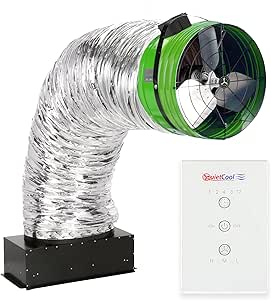 | Best High-Capacity ECM Pick | Airflow: 6,878 CFM high; 4,304 CFM low | Listed coverage: Up to 3,440 sq. ft. | Motor: ECM brushless | VIEW LATEST PRICE | See Our Full Breakdown |
| VENTS-US Frigate ERV 150 Whole-House Ventilation System, 180 CFM |  | Best for Simple, Fixed-Rate Ventilation | Airflow capacity: 180 CFM | Noise level: 1.9 sones | Power: 189 W | VIEW LATEST PRICE | See Our Full Breakdown |
| Aggrfine ERV Whole-House Ventilation System, 180/250 CFM, PM2.5 Filtration |  | Best for Flexible Mounting and Odor Filtration | Listed airflow capacity: 250 CFM; description also lists 180/250 m³/h | Speeds: 2 | Filtration: Primary mesh, HEPA filter, and activated-carbon layer | VIEW LATEST PRICE | See Our Full Breakdown |
| Panasonic FV-12ESC1 Intelli-Balance Elite Plus Energy Recovery Ventilator, 120 CFM |  | Best for Adjustable, Higher-Grade Filtration | Airflow range: 30–120 CFM | Motor: Dual brushless ECM | Speeds: 4 | VIEW LATEST PRICE | See Our Full Breakdown |
| VENTS-US Frigate ERV 120S Energy Recovery Ventilator, 162 CFM |  | Best for Multiple Operating Modes | Airflow capacity: 162 CFM | Operating modes: LOW, MED, STANDBY | Power consumption: 19 W on LOW; 94 W listed | VIEW LATEST PRICE | See Our Full Breakdown |
| QuietCool QC ES-4700 RF Whole House Fan, 4,195 CFM, Wireless Control |  | Best for High-Volume Seasonal Cooling | Airflow: 4,195 CFM high; 2,304 CFM low | Motor: 415 W high; 75 W low, ECM brushless | Recommended coverage: Up to 2,098 sq ft | VIEW LATEST PRICE | See Our Full Breakdown |
| Panasonic BalancedHome Elite 120 Energy Recovery Ventilator, Top-Port Design, 30–120 CFM |  | Best for Balanced Whole-Home Fresh Air | Airflow capacity: 30–120 CFM | Sensible recovery efficiency: Up to 87% SRE | Ports: Four 6-inch top ports | VIEW LATEST PRICE | See Our Full Breakdown |
| QuietCool QC CL-4700 RF Whole House Fan, 4415 CFM, Wireless Control |  | Best for Mid-Size Homes | Airflow capacity: 4,415 CFM high; 3,402 CFM low | Recommended home area: Up to 2,210 sq. ft. | Motor: 551 W PSC motor high; 415 W low | VIEW LATEST PRICE | See Our Full Breakdown |
| QuietCool QC ES-5400 RF Whole House Fan, 5,003 CFM, Wireless Control | 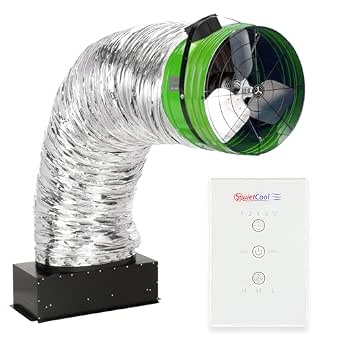 | Best ECM Motor Upgrade | Airflow capacity: 5,003 CFM | Recommended home area: Up to 2,502 sq. ft. | Motor and power: Brushless ECM motor; 497 W | VIEW LATEST PRICE | See Our Full Breakdown |
| QuietCool QC CL-7000 RF Whole House Fan, 6,924 CFM | | Best for Large Homes | Airflow: 6,924 CFM high; 5,518 CFM low | Recommended home area: Up to 3,470 sq. ft. | Motor and power: PSC motor; 1,147 W high and 794 W low | VIEW LATEST PRICE | See Our Full Breakdown |
| Weiworld VT501F-WF Through-Wall HEPA Ventilation Fan with Wi-Fi and Remote |  | Best Compact Filtered Wall-Mount Option | Airflow capacity: 60 cubic meters per hour | Installation and mounting: Through-wall; wall mount | Filtration: Pre-filter, HEPA filter, and activated carbon | VIEW LATEST PRICE | See Our Full Breakdown |
| whole house ventilation system | Mounting | Voltage | Warranty | Motor |
|---|---|---|---|---|
| QuietCool QC CL-2250 RF Whole | Ceiling mount | 120 V | 10-year manufacturer warranty | 250 W PSC |
| QuietCool QC CL-5400 RF Whole | — | — | 10-year manufacturer warranty | PSC |
| Solatube Whole House Fan | Attic mount | 120 V | 15 years motor; 10 years mechanical parts; 5 years electrical components | EC brushless |
| QuietCool QC CL-6000 RF Whole | Ceiling mount | — | 10-year manufacturer warranty | PSC |
| QuietCool QC ES-7000 RF Whole | Ceiling mount | — | 10-year manufacturer warranty | ECM brushless |
| VENTS-US Frigate ERV 150 Whole | Permanent ceiling mount | 120 V | — | — |
| Aggrfine ERV Whole-House Venti | Wall or ceiling | 110 V | — | — |
| Panasonic FV-12ESC1 Intelli-Ba | Wall, ceiling, or floor | 120 V | — | Dual brushless ECM |
| VENTS-US Frigate ERV 120S Ener | — | 120 V | — | — |
| QuietCool QC ES-4700 RF Whole | Ceiling mount | — | — | 415 W high; 75 W low, ECM brushless |
| Panasonic BalancedHome Elite 1 | — | — | — | — |
| QuietCool QC CL-4700 RF Whole | — | 120 V | 10-year manufacturer warranty | 551 W PSC motor high; 415 W low |
| QuietCool QC ES-5400 RF Whole | Ceiling mount | 120 V | 10 years | — |
| QuietCool QC CL-7000 RF Whole | — | 120 V | 10-year manufacturer warranty | — |
| Weiworld VT501F-WF Through-Wal | — | — | 1 year | — |
More Details on Our Top Picks
QuietCool QC CL-2250 RF Whole House Fan, 2465 CFM, Wireless Control
The QC CL-2250 RF suits buyers who want whole-house air exchange without stepping up to a large, heavy ceiling unit. Its 2,465 CFM airflow is more modest than the QC CL-5400 RF or CL-6000 RF, so it makes more sense for smaller homes or targeted cooling than for moving air through a large floor plan. The listed 25 dB noise level is a standout for bedrooms and living areas where fan sound matters. A wireless remote and 12-hour timer make operation straightforward, while the R5 damper box helps limit the opening to the attic when the fan is off. The tradeoff is the two-speed setup and ceiling-mount installation: buyers needing finer control or an easier installation path should compare the attic-mounted Solatube WHF, though it has a higher listed noise level.
Pros:- Listed airflow of up to 2,465 CFM suits smaller-home cooling needs.
- 25 dB listed noise level is lower than the larger QuietCool models in this batch.
- Wireless remote includes a 12-hour timer for convenient scheduling.
- R5 damper box helps limit attic heat transfer when the fan is off.
Cons:- Two speeds provide less airflow adjustment than the Solatube WHF’s seven speeds.
- Ceiling-mount installation may require substantial ceiling and attic work.
- Its airflow is a less suitable match for larger homes than the QC CL-5400 RF or CL-6000 RF.
Best for: Owners of smaller homes who prioritize quiet operation, remote control, and whole-house cooling through a ceiling-mounted fan.
Not ideal for: Owners of large homes who need high airflow, or homeowners who cannot accommodate ceiling work and attic access for installation.
- Airflow:Up to 2,465 CFM
- Motor:250 W PSC
- Speeds:2
- Noise level:25 dB
- Controls:Wireless remote with 12-hour timer
- Mounting:Ceiling mount
- Damper:R5 damper box
- Voltage:120 V
- Warranty:10-year manufacturer warranty
Our verdict“Choose the QC CL-2250 RF for a quieter, lower-capacity whole-house fan in a smaller home, not for high-volume ventilation across a large floor plan.”
QuietCool QC CL-5400 RF Whole House Fan, 5,024 CFM, Wireless Control
The QC CL-5400 RF hits a useful middle ground for homes that need more airflow than the CL-2250 RF can provide but do not call for the CL-6000 RF’s larger capacity. Its rated coverage of up to 2,510 square feet gives buyers a clearer sizing reference, and the high/low settings let them choose between maximum air movement and a gentler setting. The wireless RF kit includes both a remote and a glass wireless switch, making everyday control more flexible than the CL-2250 RF’s listed remote-only setup. R5 damper doors help separate the house from the attic when idle. The cost of this extra scale is physical: at 74 pounds, it needs careful handling, and ceiling mounting limits placement. Buyers with larger homes should compare the CL-6000 RF; those seeking a smaller, quieter unit may prefer the CL-2250 RF.
Pros:- Up to 5,024 CFM is a substantial step up from the QC CL-2250 RF.
- Listed coverage of up to 2,510 square feet helps with fan sizing.
- Wireless remote, glass switch, and 12-hour timer offer flexible control.
- R5 damper doors help insulate the home from the attic when the fan is off.
Cons:- At 74 pounds, the unit may be difficult to position during installation.
- Ceiling mounting requires a suitable ceiling and attic location.
- Two speeds offer less fine adjustment than the seven-speed Solatube WHF.
Best for: Owners of homes around the listed 2,510-square-foot coverage range who want strong airflow and both remote and wall-switch control.
Not ideal for: Buyers with smaller homes, limited ceiling or attic access, or a preference for a lighter unit that is easier to handle during installation.
- Airflow:5,024 CFM high; 4,406 CFM low
- Listed coverage:Up to 2,510 sq. ft.
- Motor:PSC
- Power:634 W high; 525 W low
- Controls:Wireless RF remote and glass wireless switch
- Timer:Up to 12 hours
- Noise level:30 dB
- Weight:74 lb
- Warranty:10-year manufacturer warranty
Our verdict“Pick the QC CL-5400 RF for a mid-size home that needs more airflow than the CL-2250 RF without moving up to the heavier CL-6000 RF.”
Solatube Whole House Fan, 1400 CFM, 7-Speed, for Rooms up to 1,200 Sq Ft
The Solatube WHF is the most adjustable option in this group, with seven speeds rather than the two offered by the QuietCool models. That range gives buyers more control over airflow for changing weather or comfort preferences, while its stated capacity of 1,400 CFM and room guidance up to 1,200 square feet place it firmly in the smaller-home category. Its attic-mounted design differs from the QuietCool ceiling-mounted units, and the included grille, ducting, mounting system, and remote make the package more complete. R6 insulated damper doors are another advantage over the R5 dampers on the QuietCool picks. But the listed 50 dB noise level is higher than the CL-2250 RF’s 25 dB, and the product data calls for licensed electrical work. Skip it if you need the higher airflow of the CL-5400 RF or CL-6000 RF.
Pros:- Seven speeds provide finer airflow adjustment than the two-speed QuietCool models.
- R6 insulated damper doors offer more insulation detail than the R5 dampers on the other listed picks.
- Kit includes the remote, grille, ducting, mounting system, and fasteners.
- Warranty coverage is listed as 15 years for the motor, 10 years for mechanical parts, and 5 years for electrical components.
Cons:- At 1,400 CFM, it has far less airflow than the QuietCool CL-5400 RF and CL-6000 RF.
- Listed noise level of 50 dB is higher than the QC CL-2250 RF’s 25 dB.
- Attic mounting and licensed electrical connections add installation requirements.
Best for: Owners of smaller homes who want several airflow settings, an included installation kit, and R6 insulated dampers.
Not ideal for: Buyers who need high airflow for a large home, prioritize a low listed noise level, or cannot arrange attic mounting and licensed electrical connections.
- Airflow:1,400 CFM
- Recommended room size:Up to 1,200 sq. ft.
- Motor:EC brushless
- Speeds:7
- Noise level:50 dB
- Mounting:Attic mount
- Damper doors:R6 insulated
- Voltage:120 V
- Warranty:15 years motor; 10 years mechanical parts; 5 years electrical components
Our verdict“Choose the Solatube WHF for a smaller home where seven-speed control and R6 dampers matter more than maximum airflow or the lowest listed noise level.”
QuietCool QC CL-6000 RF Whole House Fan, 5665 CFM, Wireless Control
For buyers whose home exceeds the CL-5400 RF’s listed coverage, the QC CL-6000 RF adds capacity with airflow up to 5,665 CFM and stated suitability for homes up to 2,840 square feet. It retains the same basic two-speed approach and wireless remote, glass switch, and 12-hour timer as the CL-5400 RF, so the main reason to move up is the larger airflow target—not a more elaborate control system. The R5 damper box helps separate the attic from the living space while the fan is off. The tradeoff is its 90-pound weight, making installation more demanding than with the 74-pound CL-5400 RF. It also draws 769 W on high. Buyers needing still more stated coverage can compare the ECM-powered QC ES-7000 RF, while smaller households may find the CL-5400 RF a better-scaled fit.
Pros:- Up to 5,665 CFM supports higher airflow needs than the QC CL-5400 RF.
- Listed coverage extends to homes up to 2,840 square feet.
- Wireless remote, glass switch, and 12-hour timer provide convenient control.
- R5 insulated damper doors help limit the attic connection when the fan is idle.
Cons:- At 90 pounds, it is heavier to handle than the QC CL-5400 RF.
- High-speed power draw is listed at 769 W.
- Two speeds provide less adjustment than the seven-speed Solatube WHF.
Best for: Owners of homes up to the listed 2,840-square-foot range who want stronger airflow than the QC CL-5400 RF provides.
Not ideal for: Buyers who need a lighter unit, lower high-speed power draw, more than two speed settings, or a fan for a smaller home.
- Airflow:5,665 CFM high; 4,289 CFM low
- Listed home size:Up to 2,840 sq. ft.
- Motor:PSC
- Power:769 W high; 560 W low
- Controls:Wireless RF remote and glass wireless switch
- Timer:Up to 12 hours
- Weight:90 lb
- Mounting:Ceiling mount
- Warranty:10-year manufacturer warranty
Our verdict“Choose the QC CL-6000 RF when your home needs more airflow than the CL-5400 RF offers and you can accommodate its weight and ceiling installation.”
QuietCool QC ES-7000 RF Whole House Fan, 6,878 CFM
The QC ES-7000 RF offers the highest listed airflow in this batch, at 6,878 CFM, and its stated coverage reaches 3,440 square feet. That makes it the strongest fit here for larger homes that need substantial air movement; the CL-6000 RF is the closer alternative, but its listed high-speed airflow and coverage are lower. The ES-7000 RF also uses an ECM brushless motor, with a notable difference between its listed 727 W high-speed draw and 164 W on low. That low setting may suit longer, gentler operation, while high speed calls for more power. A wireless kit, glass switch, 12-hour timer, and R5 dampers round out the setup. Its large ceiling-mounted form still needs suitable attic and ceiling space, and buyers with smaller homes may be better served by the CL-5400 RF.
Pros:- Highest listed airflow in this batch at 6,878 CFM.
- Listed coverage of up to 3,440 square feet exceeds the QC CL-6000 RF’s coverage.
- ECM brushless motor draws 164 W on low according to the supplied specifications.
- Wireless controls, glass switch, 12-hour timer, and R5 damper box are included.
Cons:- High-speed operation draws 727 W.
- Large ceiling-mounted unit requires suitable attic and ceiling space.
- Its airflow capacity may be excessive for smaller homes compared with the QC CL-5400 RF.
Best for: Owners of larger homes, up to the listed 3,440-square-foot range, who want the batch’s highest airflow and an ECM motor with a low-power setting.
Not ideal for: Owners of smaller homes or households without adequate ceiling and attic space for a large ceiling-mounted fan.
- Airflow:6,878 CFM high; 4,304 CFM low
- Listed coverage:Up to 3,440 sq. ft.
- Motor:ECM brushless
- Power:727 W high; 164 W low
- Speeds:2
- Controls:Wireless RF control kit with glass switch
- Timer:Up to 12 hours
- Mounting:Ceiling mount
- Warranty:10-year manufacturer warranty
Our verdict“Choose the QC ES-7000 RF for a larger home that needs the greatest listed airflow here and can accommodate its substantial ceiling installation.”
VENTS-US Frigate ERV 150 Whole-House Ventilation System, 180 CFM
The Frigate ERV 150 suits buyers who want balanced fresh-air exchange with heat and moisture recovery but do not need adjustable airflow. Its enthalpy core and automatic defrost help maintain ventilation through colder weather, while washable MERV 6 filters reduce the need for routine filter replacements. Compared with the Frigate ERV 120S, this model offers higher stated airflow but gives up that unit’s three operating modes. Its single power level keeps operation straightforward, yet limits fine-tuning for changing occupancy or room needs. The slim, corrosion-resistant steel casing can help when ceiling space is tight, though the permanent ceiling mount makes installation less flexible than the Aggrfine ERV, which supports wall or ceiling mounting.
Pros:- Recovers heat and humidity while supplying and exhausting air in balance.
- Automatic electronic defrost helps protect the core in freezing conditions.
- Washable MERV 6 filters are included for both airflow paths.
- Slim, corrosion-resistant steel casing suits some confined ceiling installations.
Cons:- One power level offers no adjustment for changing ventilation needs.
- Permanent ceiling mounting limits placement and complicates installation.
- MERV 6 filtration is less fine than the Panasonic FV-12ESC1’s included MERV 13 filters.
Best for: Homeowners seeking a straightforward, ceiling-mounted ERV with washable filters and automatic frost protection.
Not ideal for: Buyers who need multiple airflow settings, flexible mounting, or a system they can install without permanent ceiling work.
- Airflow capacity:180 CFM
- Noise level:1.9 sones
- Power:189 W
- Voltage:120 V
- Mounting:Permanent ceiling mount
- Filters:Washable MERV 6
- Core:Enthalpy energy recovery core
- Dimensions:31 × 24 × 12 in
Our verdict“Choose the Frigate ERV 150 for fixed-rate, heat-and-moisture-recovery ventilation, but pick another model if you need adjustable airflow or higher-grade included filtration.”
Aggrfine ERV Whole-House Ventilation System, 180/250 CFM, PM2.5 Filtration
The Aggrfine’s strongest case is its combination of two speeds, flexible mounting, and an activated-carbon filter layer. That makes it more adaptable than the single-setting VENTS-US Frigate ERV 150, especially for households that want to vary airflow or address everyday odors along with particles. Its washable graphene core transfers heat and moisture, and a replacement filter set is included. However, the product data gives conflicting airflow units: the specifications list 250 CFM, while the description refers to 180/250 m³/h. I would verify the intended airflow before sizing it for a home. The two-speed switch also requires a hard-wired connection, which undercuts some of the convenience of its wall-or-ceiling mounting options.
Pros:- Two speeds allow more adjustment than the single-level Frigate ERV 150.
- Wall or ceiling mounting provides placement flexibility.
- Activated-carbon filtration can help address odors alongside particle filtration.
- Washable graphene core and included replacement filter set support ongoing use.
Cons:- Airflow figures conflict between the product description and specifications.
- Hard-wired connection is required to use the two-speed switch.
- The listed 40 dB noise level may matter in installations near living areas.
Best for: Homeowners who want an ERV with two airflow settings, wall-or-ceiling placement, and filtration that includes an activated-carbon layer.
Not ideal for: Buyers who need confirmed airflow figures before duct sizing or want a simple plug-in installation for the two-speed control.
- Listed airflow capacity:250 CFM; description also lists 180/250 m³/h
- Speeds:2
- Filtration:Primary mesh, HEPA filter, and activated-carbon layer
- Noise level:About 40 dB
- Power:150 W
- Voltage:110 V
- Mounting:Wall or ceiling
- Dimensions:35.1 × 9.9 × 32.1 in
Our verdict“Pick the Aggrfine if mounting flexibility and carbon filtration matter most, but confirm its airflow rating and wiring requirements before choosing it.”
Panasonic FV-12ESC1 Intelli-Balance Elite Plus Energy Recovery Ventilator, 120 CFM
The Panasonic FV-12ESC1 is the most configurable ERV in this group: airflow adjusts from 30 to 120 CFM, and the system supports balanced, positive, or negative pressure. Dual brushless ECM motors adjust airflow under static pressure, which can help maintain the selected ventilation rate as duct resistance changes. Its included MERV 13 filters provide finer filtration than the washable MERV 6 filters on both VENTS-US Frigate models. The tradeoff is a lower maximum airflow than those Frigates’ stated capacities, so it may not suit every larger home’s ventilation target. It also weighs 53 pounds, and optional Wi-Fi controls are not included. Compared with the Aggrfine, it offers clearer airflow control and filter details, but fewer mounting-style advantages are not the issue here: it can mount on a wall, ceiling, or floor.
Pros:- Adjustable 30–120 CFM range and four speeds allow more precise airflow selection.
- Supports balanced, positive, or negative pressure configurations.
- Dual included MERV 13 filters offer finer filtration than the Frigate ERV models’ MERV 6 filters.
- Wall, ceiling, or floor mounting and plug-in or hardwired installation broaden setup options.
Cons:- Maximum airflow is lower than the stated 162 CFM and 180 CFM of the two Frigate models.
- At 53 lb, the unit needs substantial installation support.
- Optional Wi-Fi module and controls are not included.
Best for: Homeowners who need adjustable, pressure-configurable ventilation and want included MERV 13 filtration for a smaller or carefully sized system.
Not ideal for: Buyers whose required airflow exceeds 120 CFM, or installers without adequate support for a 53-pound unit.
- Airflow range:30–120 CFM
- Motor:Dual brushless ECM
- Speeds:4
- Filters:Dual MERV 13 included; optional washable MERV 6
- Mounting:Wall, ceiling, or floor
- Installation:Plug-in or hardwired
- Voltage:120 V
- Weight:53 lb
Our verdict“Choose the Panasonic when adjustable pressure settings and included MERV 13 filtration outweigh its 120 CFM ceiling and heavier installation.”
VENTS-US Frigate ERV 120S Energy Recovery Ventilator, 162 CFM
The Frigate ERV 120S is a practical middle ground for buyers who want more operating choice than a single-speed ERV without moving to the Panasonic FV-12ESC1’s broader pressure and airflow controls. Its LOW, MED, and STANDBY modes let a household reduce or pause operation when full ventilation is not needed, while the enthalpy core transfers heat and moisture and electronic anti-frost protection addresses cold-weather operation. The stated 162 CFM capacity sits below the Frigate ERV 150’s 180 CFM, but the 120S has more modes and lists up to 65% apparent sensible effectiveness. Its washable MERV 6 filters are straightforward to maintain, though they do not match the Panasonic’s included MERV 13 filtration. Buyers also need to plan around its 5-inch duct connections and temporary supply-fan cycling during freeze protection.
Pros:- Three operating modes offer more choice than the Frigate ERV 150’s single power level.
- Enthalpy core transfers heat and moisture to help stabilize indoor conditions.
- Electronic anti-frost protection and washable MERV 6 filters are included.
- Listed apparent sensible effectiveness is up to 65%.
Cons:- 5-inch duct connections may constrain compatibility with existing ductwork.
- Freeze protection temporarily cycles the supply fan in freezing conditions.
- MERV 6 filtration is less fine than the Panasonic FV-12ESC1’s included MERV 13 filters.
Best for: Homeowners who want a ceiling-mounted ERV with low, medium, and standby modes and can accommodate 5-inch duct connections.
Not ideal for: Buyers seeking high-grade included filtration, continuous supply airflow during defrost cycles, or a duct layout that cannot accept 5-inch connections.
- Airflow capacity:162 CFM
- Operating modes:LOW, MED, STANDBY
- Power consumption:19 W on LOW; 94 W listed
- Voltage:120 V
- Duct connection:5 in diameter
- Filters:Washable MERV 6
- Recovery effectiveness:Up to 65% apparent sensible effectiveness
- Noise level:1.9 sones
Our verdict“Choose the Frigate ERV 120S for three simple operating modes and heat-and-moisture recovery, provided its duct size and defrost behavior suit your installation.”
QuietCool QC ES-4700 RF Whole House Fan, 4,195 CFM, Wireless Control
The QuietCool QC ES-4700 RF belongs in a different category from the ERVs above: it moves large volumes of air for whole-house cooling and ventilation, rather than recovering heat and moisture during balanced fresh-air exchange. Its 4,195 CFM high setting and 2,304 CFM low setting are far beyond the Frigate and Panasonic ERVs’ airflow figures, making it the stronger match for quickly drawing outdoor air through an open-window home when conditions are suitable. The wireless glass switch, 12-hour timer, and R5 damper box add useful control and help limit attic air exchange when the fan is off. That high-volume approach depends on open windows and favorable outdoor conditions; it does not replace filtered, heat-recovering ventilation. At 65 pounds, it also needs solid ceiling support.
Pros:- High and low settings deliver 4,195 CFM and 2,304 CFM for rapid air movement.
- Wireless RF control includes a glass switch and timer up to 12 hours.
- R5 damper doors help insulate against attic air when the fan is off.
- ECM brushless motor uses 75 W on low according to the listed specifications.
Cons:- Unlike the Panasonic FV-12ESC1 and Frigate ERVs, it does not provide energy recovery or listed filtration.
- Cooling depends on suitable outdoor conditions and open windows.
- The 65-pound unit requires substantial ceiling support and is designed for ceiling mounting.
Best for: Owners of homes up to 2,098 square feet who want high-volume seasonal cooling, wireless control, and a timer.
Not ideal for: Buyers seeking an ERV that filters incoming air and recovers heat and humidity, or homes where open-window ventilation is impractical.
- Airflow:4,195 CFM high; 2,304 CFM low
- Motor:415 W high; 75 W low, ECM brushless
- Recommended coverage:Up to 2,098 sq ft
- Controls:Wireless RF control kit with glass switch
- Timer:Up to 12 hours
- Damper:R5 damper doors
- Mounting:Ceiling mount
- Weight:65 lb
Our verdict“Pick the QuietCool for powerful, window-assisted whole-house cooling, not as a substitute for an ERV that filters and recovers heat and moisture.”
Panasonic BalancedHome Elite 120 Energy Recovery Ventilator, Top-Port Design, 30–120 CFM
I’d choose the Panasonic BalancedHome Elite 120 when the goal is steady, balanced ventilation rather than rapid whole-house cooling. Its 30–120 CFM SmartFlow range is designed to maintain airflow across varied duct layouts, while the hygroscopic membrane transfers moisture and energy between outgoing and incoming air. That recovery can make fresh-air ventilation less disruptive to indoor conditions than a simple exhaust fan. Compared with the much higher-airflow QuietCool QC CL-4700 RF, this Panasonic is built for continuous fresh-air exchange, not flushing a home with large volumes of air. Top-mounted ports and both a power cord and hardwire adapter give installers options, though the optional touchscreen control costs extra and the built-in digital panel may be less convenient for wall-based control.
Pros:- SmartFlow is designed to maintain airflow from 30 to 120 CFM across varied duct layouts.
- Hygroscopic membrane core transfers moisture and energy to temper incoming outdoor air.
- Top-port layout and included power cord and hardwire adapter offer installation flexibility.
- Integrated digital panel displays setup, operating status, and fault information.
Cons:- The FV-SCVE2 touchscreen wall control is optional rather than included.
- Its ventilation-focused airflow is not a substitute for the high-volume cooling of the QuietCool whole-house fans.
Best for: Homeowners seeking ducted, balanced fresh-air ventilation with energy and moisture recovery rather than high-volume summer cooling.
Not ideal for: Buyers who want a whole-house fan to rapidly cool rooms, or who require a touchscreen wall controller included in the package.
- Airflow capacity:30–120 CFM
- Sensible recovery efficiency:Up to 87% SRE
- Ports:Four 6-inch top ports
- Core:Hygroscopic membrane
- Installation:Built-in; wall mount
- Controls:Integrated digital control panel; optional FV-SCVE2 touchscreen wall control
- Included accessories:Power cord and hardwire adapter kit
Our verdict“Choose this Panasonic for balanced, energy-recovering whole-home fresh air, not for high-speed whole-house cooling.”
QuietCool QC CL-4700 RF Whole House Fan, 4415 CFM, Wireless Control
The QuietCool QC CL-4700 RF is a practical middle ground for buyers who want whole-house air exchange and cooling without stepping up to the larger CL-7000. Its high setting moves 4,415 CFM, and the listed home-size guidance reaches 2,210 square feet, making it a stronger fit for a mid-size home than the smaller CL-2250. The wireless kit adds a glass switch and a 12-hour countdown timer, so operation does not depend on reaching the fan in the ceiling. An R5 damper box helps limit heat loss through the attic opening when the unit is off. This is not an ERV like the Panasonic BalancedHome Elite 120: it moves much larger volumes of air, but does not provide energy recovery or filtered balanced ventilation. Ceiling installation and attic access also make it a more involved project than a wall-mounted fan.
Pros:- High-speed airflow reaches 4,415 CFM, with a listed home-size fit up to 2,210 square feet.
- Wireless RF kit includes a glass switch and a 12-hour countdown timer.
- R5 damper box helps insulate the attic opening when the fan is off.
- Two speed settings allow a lower-airflow option.
Cons:- Ceiling mounting and attic access can make installation a substantial project.
- Unlike the Panasonic BalancedHome Elite 120, it does not recover energy or moisture from exhaust air.
- Two speeds offer less airflow adjustment than a multi-speed ventilation unit.
Best for: Owners of mid-size homes with suitable attic and ceiling access who want high-volume ventilation and cooling with wireless controls.
Not ideal for: Buyers seeking energy recovery, built-in filtration, or a system that can be installed without ceiling and attic work.
- Airflow capacity:4,415 CFM high; 3,402 CFM low
- Recommended home area:Up to 2,210 sq. ft.
- Motor:551 W PSC motor high; 415 W low
- Voltage:120 V
- Speeds:2
- Controls and timer:Wireless RF control with glass switch; 12-hour countdown timer
- Damper:R5 damper box
- Warranty:10-year manufacturer warranty
Our verdict“Pick the CL-4700 RF for straightforward, high-volume cooling in a mid-size home when ceiling installation is workable.”
QuietCool QC ES-5400 RF Whole House Fan, 5,003 CFM, Wireless Control
I’d place the QuietCool QC ES-5400 RF between the CL-4700 RF and CL-7000 RF for homes needing more airflow than the mid-size model but not the biggest unit in this group. It delivers 5,003 CFM and is specified for homes up to 2,502 square feet. Its brushless ECM motor distinguishes it from the PSC motor in the CL-4700, while the included acoustical ducting, R5 damper box, grille, and installation accessories make the package more complete. Wireless control and two speeds keep operation simple, but do not offer fine-grained airflow selection. At 75 pounds, this ceiling-mounted fan needs a suitable installation location and careful handling. Like other QuietCool fans, it is for high-volume air movement, not the balanced energy recovery offered by the Panasonic BalancedHome Elite 120.
Pros:- 5,003 CFM capacity is suited to homes listed up to 2,502 square feet.
- Brushless ECM motor sets it apart from the PSC-motor CL-4700 RF.
- Package includes acoustical ducting, R5 damper box, grille, and wireless controls.
- Wireless remote and timer simplify operation from inside the home.
Cons:- The 75-pound unit requires a suitable ceiling installation and careful handling.
- Two speeds provide limited control compared with systems offering broader airflow adjustment.
- It does not recover heat or moisture like the Panasonic BalancedHome Elite 120.
Best for: Homeowners with ceiling and attic access who want a mid-to-large-capacity whole-house fan and prefer an ECM motor with installation components supplied.
Not ideal for: Buyers who need a lightweight wall-mounted unit, balanced fresh-air recovery, or variable-speed airflow control.
- Airflow capacity:5,003 CFM
- Recommended home area:Up to 2,502 sq. ft.
- Motor and power:Brushless ECM motor; 497 W
- Voltage:120 V
- Speeds:2
- Mounting:Ceiling mount
- Weight:75 lb
- Included components:Acoustical ducting, R5 damper box, ceiling grille, wireless RF control kit, glass wireless switch, window locks, and 20 ft power cord
- Warranty:10 years
Our verdict“Choose the ES-5400 RF if you want an ECM-equipped whole-house fan with more capacity than the CL-4700 and can accommodate its ceiling installation.”
QuietCool QC CL-7000 RF Whole House Fan, 6,924 CFM
For a large home that needs substantial air movement, the QuietCool QC CL-7000 RF leads this batch with 6,924 CFM on high and a stated coverage recommendation up to 3,470 square feet. That capacity gives it a clear role above the CL-4700 RF and ES-5400 RF, which are aimed at smaller areas. A lower setting of 5,518 CFM, wireless controls, and a 12-hour timer add basic operating flexibility; the included R5 damper box helps reduce the attic opening’s effect when the fan is idle. The tradeoff is scale: this is a 92-pound ceiling-mounted unit drawing up to 1,147 watts, so installation and electrical planning deserve attention. It also ventilates by moving air, not by recovering energy as the Panasonic ERV does.
Pros:- 6,924 CFM high-speed airflow is specified for homes up to 3,470 square feet.
- Low setting still moves 5,518 CFM for a reduced operating option.
- Wireless RF controls include a glass switch and 12-hour countdown timer.
- R5 damper box helps insulate the attic opening when the fan is not running.
Cons:- At 92 pounds, it is heavy to handle and may require substantial installation support.
- High-speed power draw is 1,147 W.
- Unlike the Panasonic BalancedHome Elite 120, it does not recover heat or moisture from exhaust air.
Best for: Owners of larger homes with suitable ceiling and attic infrastructure who want high-volume whole-house cooling and ventilation.
Not ideal for: Small-home owners, buyers without a suitable ceiling installation, or anyone prioritizing energy recovery over high airflow.
- Airflow:6,924 CFM high; 5,518 CFM low
- Recommended home area:Up to 3,470 sq. ft.
- Motor and power:PSC motor; 1,147 W high and 794 W low
- Voltage:120 V
- Controls and timer:Wireless RF remote and glass wireless switch; up to 12 hours
- Damper:R5 damper box
- Dimensions and weight:38 × 20 × 38 in; 92 lb
- Warranty:10-year manufacturer warranty
Our verdict“Choose the CL-7000 RF for high-volume air movement in a large home if its weight, power draw, and ceiling installation fit your project.”
Weiworld VT501F-WF Through-Wall HEPA Ventilation Fan with Wi-Fi and Remote
The Weiworld VT501F-WF takes a different approach from the ceiling-mounted QuietCool models: it fits through an exterior wall and combines fresh-air intake, exhaust, and circulation with a three-stage filter that includes HEPA and activated carbon. Wi-Fi, buttons, and a remote provide several ways to control its three speeds, while the detachable magnetic panel makes filter access more direct. Its stated airflow is only 60 cubic meters per hour, far below the thousands of CFM listed for the CL-4700 RF and CL-7000 RF, so I’d treat it as a room-level ventilation option rather than a whole-home system. At 9 watts and 6 pounds, it is comparatively compact, but its 230 V requirement and one-year warranty may narrow its fit. It also does not provide balanced ERV-style energy recovery.
Pros:- Offers fresh-air intake, exhaust, and circulation modes in one wall-mounted unit.
- Pre-filter, HEPA filter, and activated carbon provide multiple filtration stages.
- Wi-Fi app, physical buttons, and remote provide flexible control.
- Magnetic detachable panel makes filter access easier.
Cons:- Airflow of 60 cubic meters per hour is far below the whole-house fan options in this roundup.
- 230 V electrical specification may not suit every installation.
- One-year warranty is shorter than the 10-year warranties listed for the QuietCool fans.
Best for: People seeking a compact through-wall unit for a room or limited-area ventilation, especially when HEPA and carbon filtration and app control matter.
Not ideal for: Buyers who need high-capacity whole-home airflow, a ducted balanced ERV, or a unit matched to a 120 V supply.
- Airflow capacity:60 cubic meters per hour
- Installation and mounting:Through-wall; wall mount
- Filtration:Pre-filter, HEPA filter, and activated carbon
- Operating modes:Fresh-air intake, exhaust, and circulation
- Speeds:3
- Controls:Wi-Fi app, buttons, and remote
- Motor and power:Brushless EC motor; 9 W
- Voltage and noise:230 V; 30 dB
- Warranty:1 year
Our verdict“Pick the Weiworld for compact, filtered room ventilation, but skip it if you need whole-home airflow or balanced energy recovery.”

How We Picked
I compared these systems by the job they perform, rather than treating every product labeled for whole-house ventilation as interchangeable. For whole-house fans, I weighed listed airflow, control style, and how clearly each model’s capacity can be matched to a home. For ERVs, I focused on airflow, filtration information, and the role of energy recovery in planned fresh-air exchange. The Weiworld through-wall unit was judged as a targeted room ventilation option because its installation format and intended coverage differ from ducted whole-home systems.
The order favors practical fit and clarity over the largest specification alone. The CL-5400 RF ranks ahead of the smaller QuietCool fans as a balanced high-airflow choice, while the largest models suit buyers with a specific capacity need and suitable installation conditions. ERVs are ranked for buyers seeking controlled fresh-air exchange, not for rapid cooling; within that group, stated airflow and filtration details separate the options. I also considered the tradeoffs buyers will face around installation, climate, filtration, and matching airflow to the home, while avoiding unsupported claims about performance beyond the listed specifications.
| whole house ventilation system | Mounting |
|---|---|
| QuietCool QC CL-2250 RF Whole | Ceiling mount |
| QuietCool QC CL-5400 RF Whole | — |
| Solatube Whole House Fan | Attic mount |
| QuietCool QC CL-6000 RF Whole | Ceiling mount |
| QuietCool QC ES-7000 RF Whole | Ceiling mount |
| VENTS-US Frigate ERV 150 Whole | Permanent ceiling mount |
| Aggrfine ERV Whole-House Venti | Wall or ceiling |
| Panasonic FV-12ESC1 Intelli-Ba | Wall, ceiling, or floor |
| VENTS-US Frigate ERV 120S Ener | — |
| QuietCool QC ES-4700 RF Whole | Ceiling mount |
| Panasonic BalancedHome Elite 1 | — |
| QuietCool QC CL-4700 RF Whole | — |
| QuietCool QC ES-5400 RF Whole | Ceiling mount |
| QuietCool QC CL-7000 RF Whole | — |
| Weiworld VT501F-WF Through-Wal | — |
Factors to Consider When Choosing Best Whole House Ventilation Systems
Before choosing a model, decide what you want ventilation to do: cool the house quickly when outdoor air is comfortable, provide steady fresh-air exchange, or ventilate one particular room. That decision narrows the field far more than comparing CFM figures alone.
Choose the ventilation job before comparing airflow
A whole-house fan and an ERV are not competing versions of the same appliance. A fan such as the QuietCool CL or ES models draws outdoor air through open windows and sends indoor air into the attic, making it useful when outdoor conditions support that approach. An ERV brings in and exhausts air through a more controlled system, with energy recovery suited to routine ventilation. A through-wall unit focuses on a single room or zone. Buying by the largest CFM number can leave you with the wrong kind of ventilation for your everyday needs.
Size for the home and the installation path
CFM only becomes useful when considered alongside the home’s floor area, ceiling heights, room layout, and available airflow paths. A large fan needs adequate open windows and a way for air to pass through the home; restricted openings can limit how well the setup works. Attic exhaust capacity and installation details also matter, so do not assume a higher-rated unit is automatically a better match. For an ERV, have the planned duct layout and required ventilation rate checked rather than sizing from a whole-house fan chart. When specifications do not establish fit, get guidance from a qualified installer before choosing.
Account for climate, humidity, and seasonal use
Whole-house fans depend on outdoor air being suitable to bring indoors, so their usefulness varies with weather, humidity, air quality, and the season. They are a poor answer when outdoor air is smoky, very humid, or otherwise undesirable. An ERV can provide a more regular ventilation strategy, though it does not make outdoor pollution disappear and still needs suitable filtration and maintenance. Buyers in climates with long periods of unsuitable outdoor conditions should weigh controlled ventilation more heavily than peak fan airflow. Consider how often you will use the system, not just the conditions on an ideal evening.
Treat filtration and ventilation as separate questions
Filtration affects the particles entering with outdoor air, while ventilation governs how air is exchanged; one does not automatically replace the other. Aggrfine lists PM2.5 filtration, and the Weiworld identifies a HEPA filter, but buyers should verify filter specifications, replacement availability, and the system’s actual coverage. A room-level HEPA fan may help with a particular space without supplying balanced whole-home ventilation. Likewise, an ERV should not be assumed to provide a desired level of particle removal unless its filter details support that expectation. Match filtration to local air concerns and keep the filter maintenance burden in view.
Compare controls, noise expectations, and daily operation
Remote or wireless control can make a fan easier to operate, but it does not answer whether its sound level or installation location fits your household. Check the product documentation for sound data, control functions, and any settings that affect day-to-day use. The Solatube model lists seven speeds, which gives buyers multiple operating levels, while several QuietCool models specify wireless control. ERVs are often selected for regular background ventilation, so access for filter changes and service can matter more than a feature-rich remote. Choose controls that suit who will use the system and how often it will run.
Budget for installation and ongoing care, not just the unit
Installation complexity can change the real cost and feasibility of a project, especially when ductwork, attic access, electrical work, or new wall openings are involved. A through-wall product may avoid some ducting but still requires a suitable wall location and careful attention to air sealing. ERVs need a workable supply-and-exhaust duct plan, while whole-house fans depend on adequate attic ventilation and a safe installation. Ask about filter replacement, cleaning, service access, and parts before purchasing. Paying more can make sense when it delivers the capacity or filtration your home needs, but not when the system is oversized or difficult to maintain.
Frequently Asked Questions
Should I choose a whole-house fan or an ERV for everyday ventilation?
Choose a whole-house fan if your main goal is to flush indoor heat with outdoor air when the weather is favorable. An ERV is a better match for planned, ongoing air exchange, particularly when you want to manage fresh-air supply and exhaust through a ducted system. The QuietCool fans in this lineup list airflow in the thousands of CFM, while the ERVs operate at lower stated airflow for a different purpose. Neither category automatically replaces the other. If you want both rapid cooling and steady ventilation, ask an installer whether separate systems make sense for your home.
Is the highest-CFM QuietCool model the right choice for a larger home?
Not by itself. The CL-7000 RF and ES-7000 RF have the highest listed airflow in the QuietCool group, but the right capacity also depends on home layout, usable window openings, attic exhaust, and installation conditions. A system with more airflow can be a poor fit if the house cannot provide suitable air paths or the attic cannot exhaust the air safely. Compare the CL-5400 RF and lower-capacity models against the manufacturer’s sizing guidance and your home’s details. Have a qualified installer confirm the match before selecting by CFM alone.
When is an ERV worth choosing over a simpler ventilation fan?
An ERV is worth considering when you need more controlled, regular fresh-air exchange instead of occasional high-volume air flushing. Energy recovery can help moderate the energy impact of exchanging indoor and outdoor air, though the benefit depends on climate, system design, and use. The Panasonic 120 CFM models and VENTS-US options offer lower airflow than the high-capacity QuietCool fans because they serve a different ventilation pattern. Compare the airflow requirement, duct design, and filter access before deciding. A contractor can help establish whether an ERV’s capacity suits the home and how it should operate alongside existing equipment.
Can the Weiworld through-wall HEPA fan ventilate my whole home?
The Weiworld is a through-wall unit, so it is best understood as a targeted room ventilation option rather than a direct stand-in for a ducted whole-home system. Its HEPA designation and Wi-Fi control may appeal when a particular room needs focused ventilation and filtration. Whole-home coverage depends on air movement between rooms, the unit’s actual airflow, and the layout of the house. Compare its documented capacity and installation requirements with your intended coverage before buying. For balanced whole-house air exchange, an ERV is a more direct category match.
What should I verify before installing a whole-house fan?
Confirm that the model’s capacity suits the home and that the attic has enough exhaust area for the air the fan moves. Check the manufacturer’s requirements for window openings, clearances, wiring, and installation location, and plan how the fan will be used when outdoor air is unsuitable. Also ask about noise information, controls, and any needed attic or electrical work. A fan that is easy to operate still needs a safe, well-planned air path. If your home has unusual roof, attic, or room layouts, have an installer assess the site before purchase.
Conclusion
For most buyers specifically seeking a high-capacity whole-house fan, I’d start with the QuietCool QC CL-5400 RF as the best overall: it offers a middle ground between the smaller fan choices and the highest-capacity models. The Solatube Whole House Fan is my best value-minded pick for smaller coverage needs, with a listed 1,400 CFM and seven speeds, while buyers prioritizing maximum listed airflow should compare the QuietCool QC CL-7000 RF as the best premium-capacity option against their home’s installation limits. For beginners who want a more approachable starting point, the QuietCool QC CL-2250 RF is a lower-capacity fan option with wireless control; it still requires proper sizing and installation. If your priority is controlled fresh-air exchange, choose the Aggrfine ERV for its listed PM2.5 filtration and 180/250 CFM settings, or compare the Panasonic ERVs for lower-airflow applications. For one-room ventilation, consider the Weiworld through-wall HEPA unit, but do not mistake it for whole-home coverage. The right pick comes down to whether you need fast air flushing, steady energy-recovery ventilation, or focused room-level airflow.
Black Friday Picks

Sonos One Two-Room Smart Speaker Set with Alexa, Black
As an affiliate, we earn on qualifying purchases.