Indoor pollutants like VOCs don’t stay the same once released—they undergo ongoing chemical transformations, mainly through oxidation caused by indoor ozone, hydroxyl radicals, or nitrogen oxides. This process produces secondary pollutants such as formaldehyde, acetaldehyde, and ultrafine particles, which can be more harmful than the original emissions. Factors like humidity, temperature, and ventilation influence these reactions. If you want to understand how these transformations impact your indoor air quality, there’s more to uncover.

Get garden gear delivered free — and shop member deals
- Fast, free delivery on millions of items
- Access to Prime Big Deal Days deals on October 6–7
- Prime Video, Amazon Music and more included
Key Takeaways
- Indoor pollutants like VOCs undergo chemical reactions, especially oxidation, transforming into secondary pollutants.
- Oxidants such as ozone and hydroxyl radicals drive these chemical transformations indoors.
- Secondary pollutants, including formaldehyde and ultrafine particles, often form from primary VOCs.
- Factors like ventilation, humidity, and outdoor ozone levels influence indoor chemical reactions.
- Managing sources and conditions that promote oxidation can improve indoor air quality.

Indoor air quality is heavily influenced by the chemical transformations that pollutants undergo after they are released. Once volatile organic compounds (VOCs) enter your indoor environment, they don’t just stay as they are; instead, they undergo processes like indoor pollutant oxidation, which substantially alters their nature and potential health impacts. This oxidation can turn relatively harmless VOCs into more reactive or toxic compounds, making it essential to understand how these transformations occur and how they affect your indoor air.
Indoor pollutants often transform into more harmful compounds through chemical oxidation processes.
When VOCs are emitted from sources like cleaning products, paints, or furniture, they don’t remain static. Instead, exposure to indoor oxidants such as ozone, hydroxyl radicals, or nitrogen oxides initiates chemical reactions that degrade these compounds—a process known as VOCs degradation. This degradation isn’t always beneficial. Sometimes, it produces secondary pollutants like formaldehyde, acetaldehyde, or ultrafine particles, which can be more irritating or harmful than the original VOCs. These secondary products can linger in the air, contributing to poor indoor air quality and potential health issues, especially for those with respiratory conditions or sensitivities.
Your indoor environment acts as a complex chemical reactor where these transformations happen continuously. Factors like ventilation, humidity, temperature, and the presence of other chemicals influence the rate and nature of indoor pollutant oxidation. For example, increased ozone levels indoors—often from outdoor infiltration or indoor sources—speed up VOCs degradation and the formation of secondary pollutants. As these reactions occur, the chemical composition of the air changes dynamically, sometimes making the air more hazardous without any new sources of pollution. Additionally, the presence of secondary pollutants can complicate efforts to improve air quality, as they may require targeted removal strategies.
Understanding indoor pollutant oxidation helps you grasp why simply ventilating a room may not be enough to improve air quality. While fresh air can dilute certain pollutants, it may also introduce outdoor ozone, which can accelerate VOCs degradation and secondary pollutant formation. Consequently, managing indoor air involves controlling sources of VOCs and pollutants, reducing conditions that favor oxidation, and using air purification technologies designed to target these secondary products.
As an affiliate, we earn on qualifying purchases.
Frequently Asked Questions
How Do Indoor Chemical Reactions Differ From Outdoor Ones?
Indoor chemical reactions differ from outdoor ones mainly because indoor air chemistry involves more surface reactions due to limited ventilation and higher pollutant concentrations. You’ll find that surfaces like walls and furniture actively participate in transforming pollutants, creating different reaction pathways. Outdoors, reactions are driven by sunlight and open air, leading to different chemical products. So, indoor environments tend to have more complex, surface-driven chemistry compared to the more dispersed outdoor reactions.
What Factors Influence Indoor Pollutant Transformation Rates?
Factors like ventilation effects and humidity impact how quickly indoor pollutants transform. When ventilation is low, pollutants linger longer, increasing transformation chances, while high humidity can accelerate chemical reactions. You’ll notice that in damp environments, certain pollutants change faster due to moisture-fueled reactions. These conditions, combined with temperature and the presence of other chemicals, directly influence reaction rates, making it essential to control humidity and airflow for healthier indoor air quality.
Can Chemical Transformations Create More Harmful Substances Indoors?
Yes, chemical transformations can create more harmful substances indoors. When indoor pollutants interact, they often form chemical byproducts that may be more toxic than the original compounds. These interactions can occur through processes like oxidation or reactions with cleaning agents, leading to harmful chemical byproduct formation. As a result, you might unknowingly increase your exposure to dangerous substances, emphasizing the importance of proper ventilation and choosing low-emission products.
How Can We Monitor Indoor Chemical Changes Effectively?
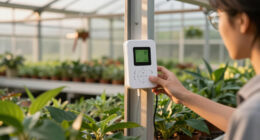
You can monitor indoor chemical changes effectively by using sensor technologies combined with data analysis. For example, a smart home installed with VOC sensors can detect sudden increases in formaldehyde levels, alerting you promptly. Regular data analysis helps identify patterns and sources of pollutant transformation. This proactive approach guarantees safer indoor environments, enabling you to take timely actions before harmful substances accumulate or cause health issues.
Are There Specific Household Products That Accelerate Pollutant Transformation?
Certain household products, like strong cleaning agents and household catalysts, can accelerate pollutant transformation indoors. For example, bleach and ammonia react with other chemicals to produce harmful compounds. Using such cleaning agents excessively or improperly can increase the formation of secondary pollutants. To minimize this, opt for natural or low-chemical cleaning products, and guarantee good ventilation during and after cleaning to reduce indoor chemical transformations.
Conclusion
Just like a skilled chef transforms raw ingredients into something new, indoor air undergoes chemical changes that can turn harmless pollutants into harmful ones. Imagine a family breathing easily until a simple cleaning product triggers a hidden reaction, creating unseen dangers. Understanding these transformations helps you become a more informed steward of your indoor environment. By staying aware, you can prevent small sparks from igniting bigger problems, keeping your home safer and healthier for everyone inside.
Fall yard work Picks
leaf blowers
As an affiliate, we earn on qualifying purchases.