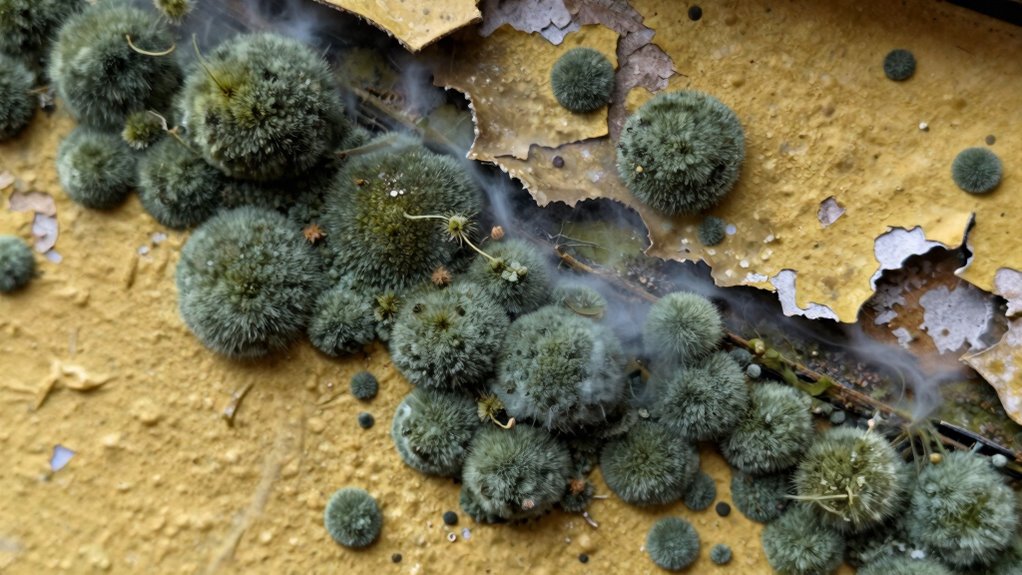

Mold spores and mildew smells need different responses because they indicate separate issues. Mildew smells usually come from surface mold caused by excess moisture, which you can often address with cleaning, drying, and ventilation. Mold spores, however, are tiny particles that become airborne and can settle deep in materials, requiring thorough cleaning, moisture control, and air filtration. Understanding their differences helps you treat the problem effectively—keep going, and you’ll find out how to manage each properly.
Key Takeaways
- Mildew smells indicate surface mold, requiring surface cleaning, while airborne mold spores need air filtration and moisture control.
- Surface mold can often be treated chemically, but spores embedded in materials demand extensive remediation.
- Addressing mildew smells focuses on ventilation, whereas managing airborne spores involves air filtration systems.
- Moisture sources causing surface mold are different from those allowing spores to become airborne and settle elsewhere.
- Preventing mold involves both cleaning surfaces and controlling humidity to stop spores from settling and growing.
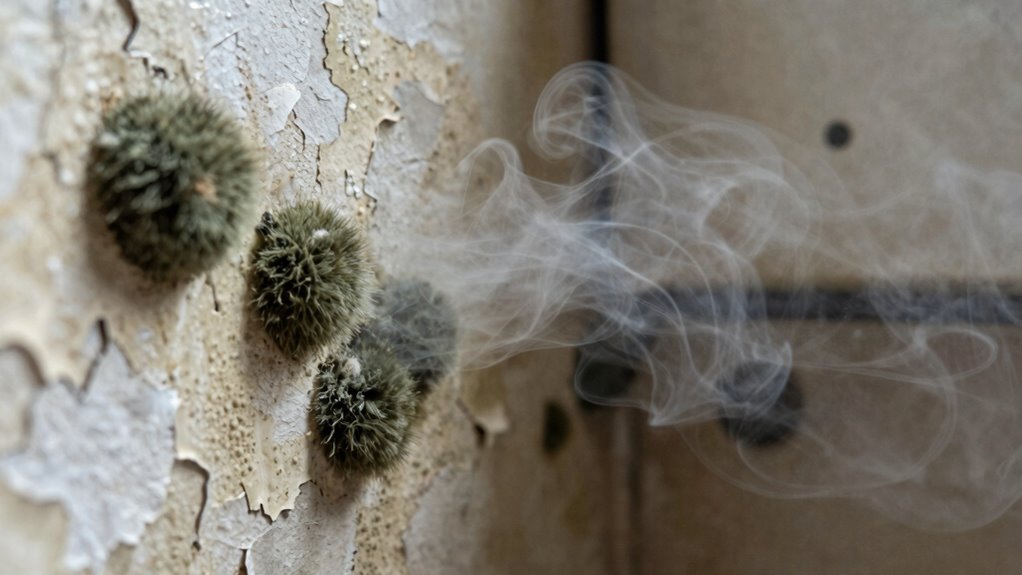
Mold spores and mildew smells can quickly turn your living space into an unpleasant environment, often signaling hidden moisture issues. While they’re both linked to mold growth, they require different responses to effectively eliminate them and prevent future problems. Recognizing their differences helps you target the root causes and choose the right methods for removal.
When you notice a mildew smell, it’s typically a sign of surface mold growth caused by excess moisture. To tackle this, you need to improve air circulation. Increasing ventilation helps dry out damp areas, reducing the chances of mold spores settling and growing. Open windows, use fans, or run dehumidifiers to keep humidity levels low. Chemical treatments, like mold and mildew cleaners, can also be effective in removing the smell and killing surface mold. These treatments contain fungicides that target visible mold colonies, but they’re only part of the solution. Without proper air circulation, the mold can return quickly.
Improve air circulation to dry damp areas and prevent mold growth effectively.
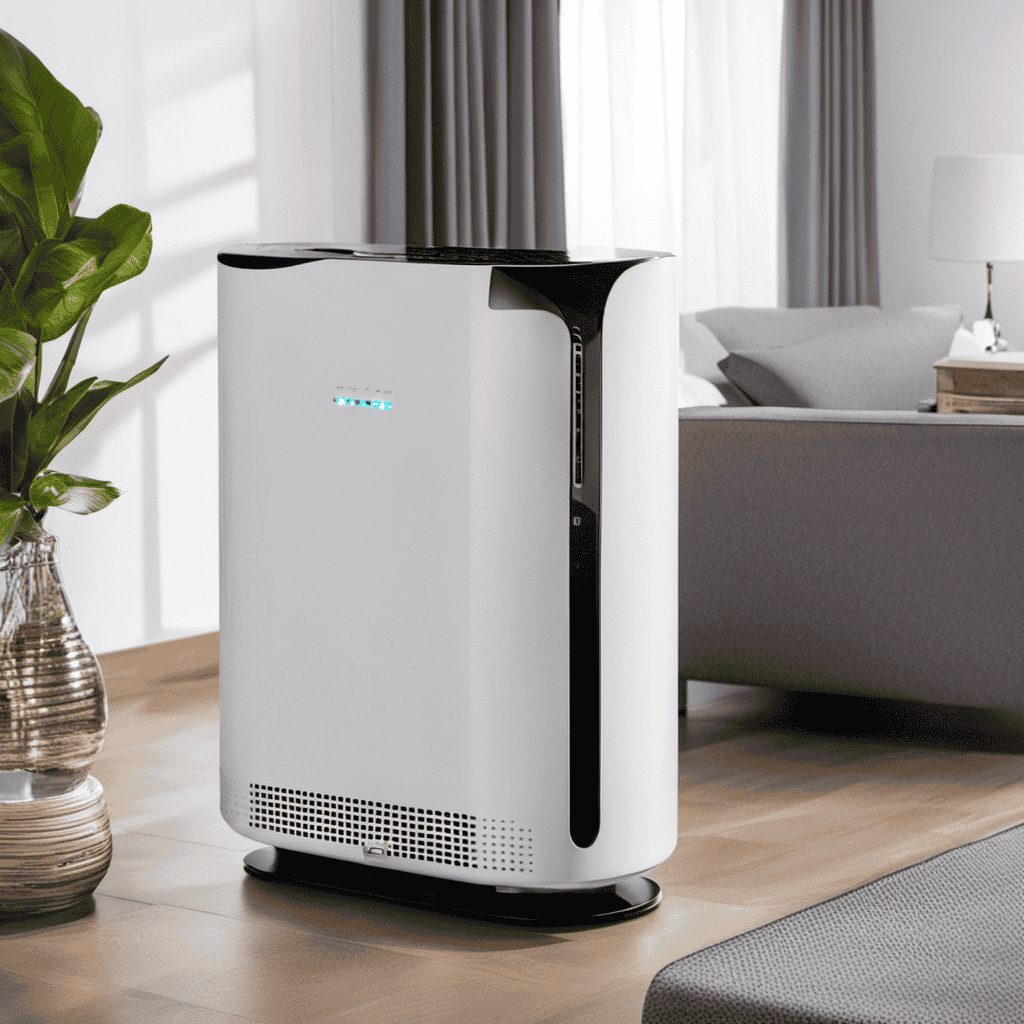
On the other hand, mold spores—especially when they’re airborne—pose a more significant health risk. They can be invisible and travel through the air, settling in hard-to-reach places and causing respiratory issues. Addressing mold spores requires a more extensive approach. First, identify and eliminate sources of excess moisture, such as leaks or poor drainage. Ventilate the affected areas thoroughly to disperse airborne spores and prevent them from settling. When necessary, use specialized air filtration systems with HEPA filters to capture spores from the air. Chemical treatments can help in areas with visible mold, but they aren’t enough to deal with spores that are already airborne. You need to focus on air circulation and thorough cleaning to reduce spore counts. Additionally, understanding the differences between mold spores and mildew smells can help you determine the appropriate remediation strategies. It’s essential to understand that mildew smells mainly indicate surface or near-surface mold, which can often be contained with good cleaning and ventilation. Mold spores, however, may be lurking deeper within materials like drywall or insulation, requiring more extensive remediation. Recognizing the signs of airborne spores and their movement patterns can help in planning effective mitigation efforts. Proper ventilation not only helps dry out moist environments but also disperses airborne spores, making it harder for mold to take hold. Being aware of the sources of moisture in your home is crucial for preventing future mold growth, especially in small or enclosed spaces like tiny homes.

Clorox HEPA Air Purifiers for Home, True HEPA Filter, Medium Rooms Up to 1,000 Sq Ft, Removes 99.9% of Mold, Viruses, Wildfire Smoke, Allergens, Pet Allergies, Dust, AUTO Mode, Whisper Quiet
CAPTURES 99.97% OF ALLERGENS AND PARTICULATES* AND 99.9% OF VIRUSES AND BACTERIA.** With the Clorox Air Purifier, you…
As an affiliate, we earn on qualifying purchases.
As an affiliate, we earn on qualifying purchases.
Frequently Asked Questions
Can Mold Spores Cause Health Problems Even Without Visible Mold?
Yes, mold spores can cause health problems even without visible mold. You might inhale these microscopic spores, leading to respiratory issues, allergies, or asthma symptoms. To protect yourself, consider air filtration systems that trap spores and get mold testing done to identify hidden mold sources. Addressing spores promptly helps prevent health problems and guarantees a safer indoor environment.
Are All Mildew Smells Caused by Mold Spores?
Ever wonder if all mildew smells are caused by mold spores? Not necessarily. A mildew odor often results from the growth of fungi, which may or may not be mold. Mold spores can produce a musty smell, but other factors like moisture and organic material can also cause mildew odors. So, while mold spores are a common culprit, it’s possible to have a mildew smell without visible mold or spores.
How Long Does It Take to Eliminate Mold Spores Completely?
It typically takes a few days to a week to eliminate mold spores completely, depending on the extent of contamination. To guarantee thorough removal, you should use air filtration systems and conduct mold testing to confirm the spores are gone. Regular cleaning, proper ventilation, and professional assessment help speed up the process and prevent future growth. Stay vigilant, and don’t skip testing to verify your efforts are effective.
Do Different Types of Mold Require Different Removal Methods?
Yes, different types of mold require different removal techniques because mold types vary in structure and toxicity. For instance, black mold (Stachybotrys) may need professional removal, while less toxic molds can sometimes be cleaned with household solutions. Ignoring this can worsen the problem or cause health issues. Understanding the specific mold type helps you choose the right removal methods, ensuring effective and safe mold elimination.
Can Humidity Control Prevent Both Mold Spores and Mildew Smells?
Humidity management and air circulation are essential to prevent both mold spores and mildew smells. By maintaining indoor humidity levels below 60%, you create an environment less conducive to mold growth and musty odors. Additionally, improving air circulation helps dry out damp areas and disperses moisture, further reducing the chances of mold and mildew. Regular ventilation and dehumidifiers are key tools to keep your space dry and fresh.
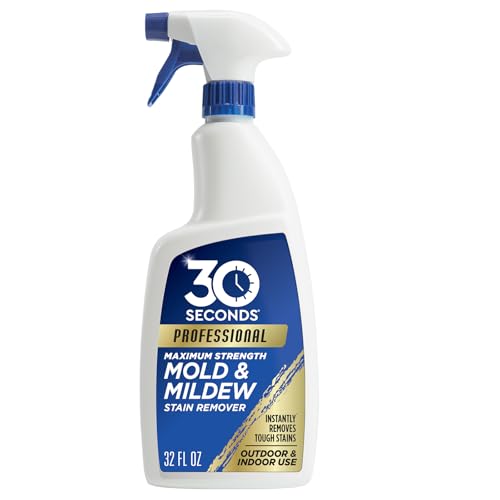
30 SECONDS Pro Mold and Mildew Stain Remover | Scrub Free | Brighter Results Instantly | Ready To Use | 32 Fl. Oz.
Use In Bathroom Tile and Grout, Bathtub, Soap Scum, Showers, Drywall, Wood, Fences, Decks, Vinyl Sidng, Concrete Floors,…
As an affiliate, we earn on qualifying purchases.
As an affiliate, we earn on qualifying purchases.
Conclusion
Understanding the difference between mold spores and mildew smells helps you respond effectively. While mold spores pose health risks and require thorough cleaning, mildew smells often just need ventilation and drying. You can’t treat them the same way, just as you wouldn’t use the same remedy for a cold and a headache. Recognize the signs, act promptly, and tailor your response. Because in the fight against indoor mold, knowledge and quick action make all the difference.
dehumidifier for moisture control
As an affiliate, we earn on qualifying purchases.
As an affiliate, we earn on qualifying purchases.

Broan-Nutone® Bathroom Exhaust Fan, 50 CFM Modern Grille, Energy Star Fan, 2.0 Sones
50 CFM BATHROOM EXHAUST FAN: 50 CFM is sufficient ventilation to remove, moisture, odor and pollutants from your…
As an affiliate, we earn on qualifying purchases.
As an affiliate, we earn on qualifying purchases.