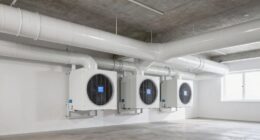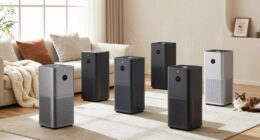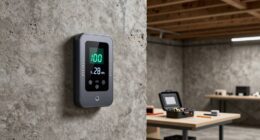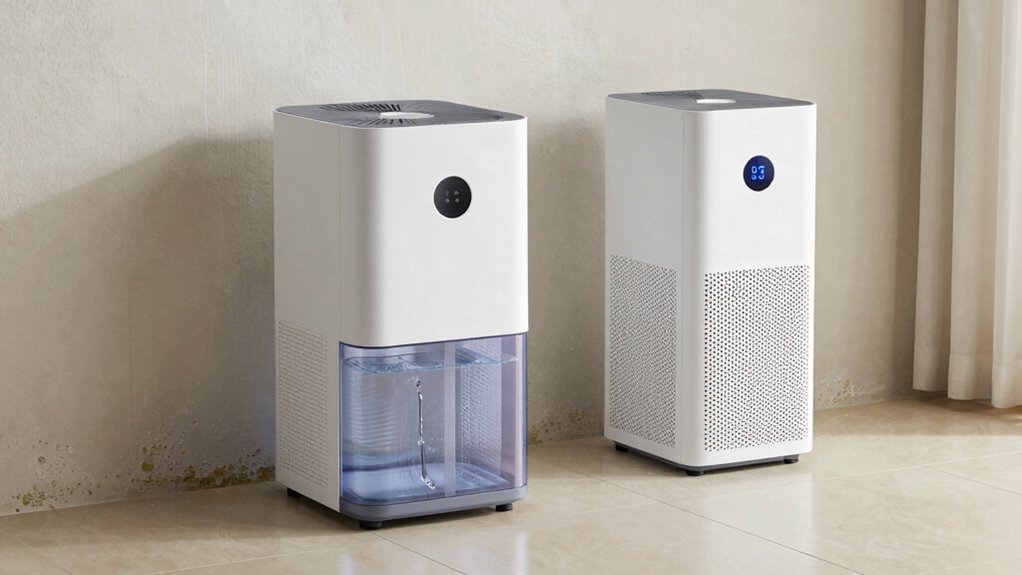

Dehumidifiers and purifiers target different indoor air issues. A dehumidifier reduces excess moisture that can lead to mold, mildew, and musty odors. On the other hand, a purifier filters airborne pollutants, allergens, and irritants to improve air quality. If you’re concerned about humidity or mold, a dehumidifier is your best choice. If allergens or pollution bother you, a purifier helps. Keep exploring to understand how both devices can work together for a healthier home.

Get garden gear delivered free — and shop member deals
- Fast, free delivery on millions of items
- Access to Prime Big Deal Days deals on October 6–7
- Prime Video, Amazon Music and more included
Key Takeaways
- Dehumidifiers reduce indoor moisture levels to prevent mold growth, while purifiers remove airborne pollutants and allergens.
- Dehumidifiers target excess humidity, whereas purifiers focus on cleaning the air of particles like dust and pollen.
- Using a dehumidifier alone controls mold risk; purifiers do not affect moisture or mold growth.
- Purifiers improve air quality but do not influence humidity or prevent mold.
- Both devices address different indoor air problems and often work best together for comprehensive air quality management.
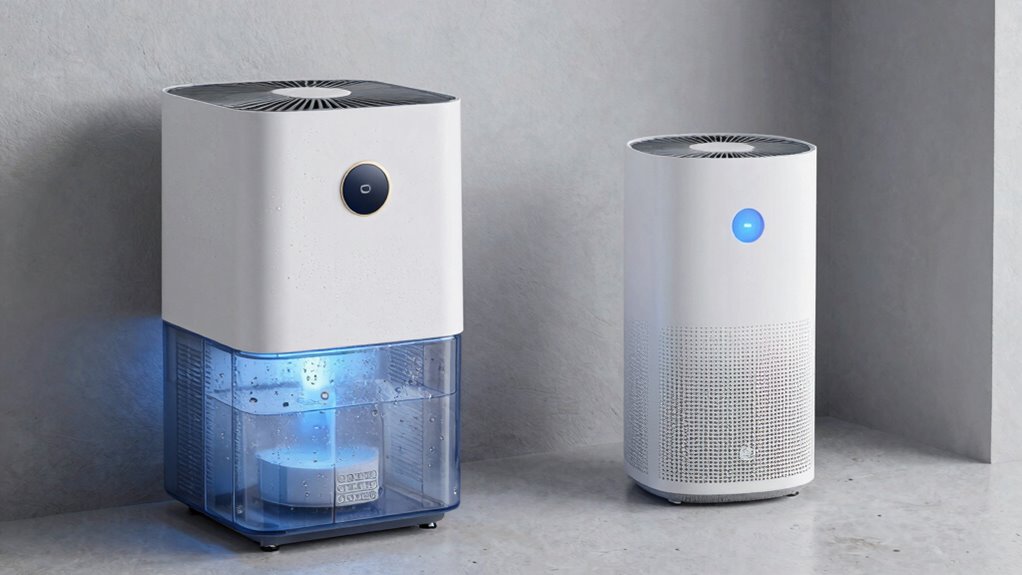
Have you ever wondered how to improve your indoor air quality and create a healthier living environment? The key lies in understanding that dehumidifiers and purifiers serve different purposes, even though both contribute to a better indoor atmosphere. If you’re tackling issues like excess moisture or mold prevention, a dehumidifier is your go-to device. It works by removing excess humidity from the air, which helps keep your living space dry and prevents mold from taking hold. Mold thrives in damp environments, so reducing moisture levels is one of the most effective ways to stop it from growing. When you use a dehumidifier, you lower the risk of mold spores spreading and multiplying, which markedly improves indoor air quality and safeguards your health.
On the other hand, air purifiers focus primarily on filtering out airborne pollutants, allergens, and particles that can compromise your indoor air quality. They capture dust, pet dander, pollen, smoke, and other microscopic contaminants, making the air safer to breathe. Purifiers are especially helpful if you suffer from allergies, asthma, or other respiratory issues. However, they don’t address the root cause of mold or excess moisture. If your home has high humidity levels, using a purifier alone won’t prevent mold growth; instead, it will simply clean the air that’s already contaminated. That’s why it’s vital to understand the specific problem you’re facing—if moisture and mold are concerns, a dehumidifier is the better choice. Additionally, understanding indoor air quality factors can help you select the most appropriate solution for your needs. Recognizing the impact of humidity on indoor environments can further clarify which device will be most effective. Controlling indoor humidity is essential for maintaining a healthy indoor climate and avoiding mold-related problems.
Both devices can work together to create a healthier living environment, but they do so by fixing different problems. A dehumidifier helps control the environment, making it less hospitable for mold and mildew to develop, which ultimately supports better indoor air quality and mold prevention. Meanwhile, a purifier improves the air you breathe by removing pollutants, allergens, and irritants. If you’re dealing with dampness, musty odors, or visible mold, investing in a dehumidifier will help you solve the underlying issue. If your concern is airborne allergens or pollution, then a purifier will improve your indoor air quality more directly.
best dehumidifier for mold prevention
As an affiliate, we earn on qualifying purchases.
As an affiliate, we earn on qualifying purchases.
Frequently Asked Questions
Can Dehumidifiers Remove Airborne Allergens Effectively?
Yes, dehumidifiers can help remove airborne allergens effectively by controlling humidity levels. When humidity is kept between 30-50%, mold, dust mites, and pet dander are less likely to thrive, reducing allergen presence. This humidity control creates a less hospitable environment for allergens, aiding allergen reduction. While purifiers target airborne particles directly, dehumidifiers complement this by making the air less conducive to allergen growth, improving overall indoor air quality.
Do Air Purifiers Eliminate Mold Spores?
Yes, air purifiers can help eliminate mold spores through air filtration. They trap airborne mold spores, reducing their presence in your indoor environment. However, while purifiers improve air quality, they don’t address underlying mold growth issues. To effectively control mold, you should also fix moisture problems and clean affected areas. Using an air purifier alongside proper moisture control creates a healthier space by reducing airborne mold spores and preventing future mold growth.
How Do Dehumidifiers Impact Humidity Levels Differently Than Purifiers?
Ever wondered how your home’s humidity regulation differs between devices? Dehumidifiers actively reduce moisture in the air, helping control excess humidity and prevent mold growth, whereas purifiers mainly filter airborne particles. With moisture control, dehumidifiers lower humidity levels, creating a less welcoming environment for mold and dust mites. Do you want to maintain a comfortable, healthy indoor climate? Then, a dehumidifier’s your best choice for managing humidity levels effectively.
Are Purifiers Effective Against Musty Household Odors?
Yes, purifiers can help improve air quality and reduce musty household odors. They work by filtering out airborne particles and contaminants that contribute to unpleasant smells, making your indoor air fresher. While purifiers are effective for odor control, they don’t directly control moisture. For moisture-related issues causing musty smells, combining a purifier with proper moisture control measures, like ventilation or dehumidifiers, offers the best results.
Can Both Devices Run Simultaneously for Better Air Quality?
Yes, you can run both dehumidifiers and purifiers simultaneously to improve air quality. This enhances air circulation, helping to remove moisture and airborne pollutants more effectively. However, keep energy efficiency in mind; running both devices together may increase energy use. To optimize performance, choose energy-efficient models, and consider setting them on timers or using smart controls to balance air quality benefits with energy consumption.
Conclusion
Think of dehumidifiers and purifiers as two skilled artisans, each with their own specialty. While one expertly tames excess moisture, the other filters out unseen pollutants. Using either without understanding their unique roles is like trying to fix a broken clock with a hammer—you might miss the mark. To truly breathe easier, choose the right tool for the problem at hand. When you do, your home becomes a sanctuary where both air and comfort flourish seamlessly.
Fall yard work Picks
leaf blowers
As an affiliate, we earn on qualifying purchases.