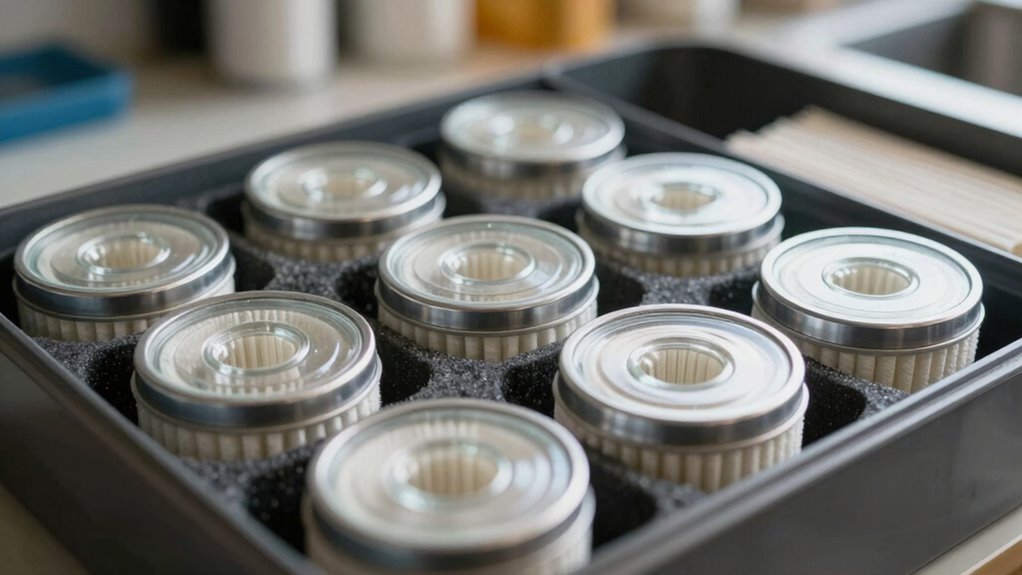
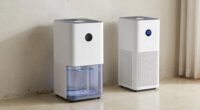
To keep spare filters from aging badly, store them in a clean, dry, and dark place away from air pollution and high humidity. Use airtight containers or vacuum-sealed bags to protect against dust and moisture, and guarantee they’re completely dry before sealing. Keep filters upright or flat, and avoid stacking heavy items on top to prevent damage. Regularly inspect and label your filters to track their condition and age, so you’re ready when needed—discover more ways to preserve them effectively.

Get garden gear delivered free with Prime
- Fast, free delivery on millions of items
- Prime Video, Amazon Music and more included
- Member-only deals all year
Key Takeaways
- Store filters in airtight, sealed containers away from light, heat, and humidity to prevent deterioration.
- Keep filters in a cool, dark place with consistent temperature and proper air circulation.
- Label filters with purchase date and type, and inspect periodically for damage or aging.
- Use silica gel packs or desiccants to absorb excess moisture and maintain dryness.
- Handle filters carefully and store upright or flat to prevent deformation or damage.

Storing spare filters properly is crucial to guarantee they stay clean and effective until you need them. The way you handle their storage directly impacts the longevity and performance of the filter material, so paying attention to storage conditions is key. First, always keep filters in a clean, dry environment to prevent contamination. Moisture can cause mold growth or degrade certain filter materials, rendering them less effective. Avoid areas with high humidity, such as basements or garages, and consider using silica gel packs or desiccants in storage containers to absorb excess moisture.
Store filters in a clean, dry environment to prevent contamination and preserve effectiveness.
The choice of storage container matters just as much as the location. Use airtight, sealed containers to protect filters from dust, dirt, and airborne pollutants. Plastic bins with secure lids or vacuum-sealed bags are ideal because they create a barrier against environmental contaminants. When sealing filters, ensure they are completely dry and free of any residues or oils, which can compromise their integrity over time. Proper storage conditions are essential to maintaining filter efficacy over extended periods. Additionally, storing filters away from sources of air pollution can help preserve their filtering capabilities. Implementing consistent storage techniques can further prevent accidental damage and ensure the filters remain in optimal condition.
Filter material is delicate to exposure to light, so store filters away from direct sunlight or fluorescent lighting that could cause deterioration. A dark, cool spot helps maintain the quality of the filter material and prevents premature aging. Temperature stability also plays a crucial role. Fluctuations in temperature can cause expansion and contraction of the filter media, leading to cracks or breaks. Keep filters in a consistently cool environment—ideally between 50-77°F (10-25°C)—to preserve their structure and function. Additionally, ensuring proper air circulation around stored filters can prevent stale air and humidity buildup. Regularly rotating stored filters or inspecting them helps identify potential issues before installation.
Label your stored filters clearly with the date of purchase and type. This helps you keep track of their age and determine if it’s time to replace them. Regularly inspect stored filters for signs of damage or deterioration, especially if they’ve been stored for an extended period. Look for cracks, warping, or any unusual discoloration that could indicate compromised filter material. Incorporating appropriate storage techniques can further prolong the lifespan of your filters. It’s also helpful to keep a written record to monitor how long each filter has been stored.
Lastly, avoid stacking filters under heavy items, as this can crush or deform the filter media. Instead, store them upright or flat in a way that maintains their shape and prevents deformation. By paying close attention to storage conditions—keeping filters in a clean, dry, dark, and temperature-controlled environment—you ensure they remain effective when you finally need them. Proper storage not only extends the lifespan of your filters but also guarantees peak performance every time you install a new one.
airtight storage containers for filters
As an affiliate, we earn on qualifying purchases.
As an affiliate, we earn on qualifying purchases.
Frequently Asked Questions
How Long Can Spare Filters Be Stored Before Replacement?
You can typically store spare filters for about 1 to 2 years before needing replacement, depending on the filter type and storage conditions. Proper storage shelf life is essential to maintaining filter effectiveness. Keep filters in a cool, dry place away from direct sunlight and chemicals. Regularly check for signs of aging or damage, and follow manufacturer recommendations for maximum filter lifespan to guarantee your air quality stays high.
Should Filters Be Stored in Their Original Packaging?
Yes, you should store filters in their original packaging to protect them from dust, moisture, and damage. Keep the packaging intact and label it clearly if you’re storing multiple filters, so you know their specifications and replacement dates. Use airtight storage containers for added protection, especially in humid environments. Proper storage maintains filter integrity, ensuring they perform effectively when you need them, and prevents premature aging.
What’s the Ideal Humidity Level for Storing Filters?
Think of ideal humidity like a vintage typewriter—too much moisture, and it rusts; too little, and it dries out. For filter durability, keep your storage environment at 40-50% humidity. This range prevents mold and deterioration, ensuring your filters stay effective longer. Maintaining consistent humidity levels helps preserve filter quality, making sure they’re ready when you need them, without risking damage from excessive moisture or dryness.
Can Temperature Fluctuations Damage Stored Filters?
Yes, temperature fluctuations can damage stored filters by accelerating filter degradation and reducing storage longevity. When temperatures vary widely, materials in the filters expand and contract, leading to potential warping or damage. To protect your filters, keep them in a stable environment, ideally with consistent temperatures. This helps maintain their integrity, extends their storage longevity, and ensures they remain effective when you need them.
Do Different Filter Types Require Different Storage Conditions?
Yes, different filter types require specific storage conditions based on their filter material. For example, paper filters should stay dry and away from humidity, while carbon filters need cool, dark environments to prevent chemical degradation. Always store filters in airtight storage containers to protect them from dust, moisture, and contaminants. Proper storage prolongs their effectiveness and prevents aging, ensuring your filters remain ready for use when needed.
Conclusion
Storing spare filters properly keeps them effective and ready when you need them. Just keep them in a cool, dry place, away from direct sunlight and moisture. Some might worry about space, but even a small box in a closet works. Remember, it’s better to have a filter ready than to scramble for a replacement when it’s urgently needed. Proper storage saves money and guarantees your filters perform their best whenever you need them.
Fall Picks
fall essentials
As an affiliate, we earn on qualifying purchases.