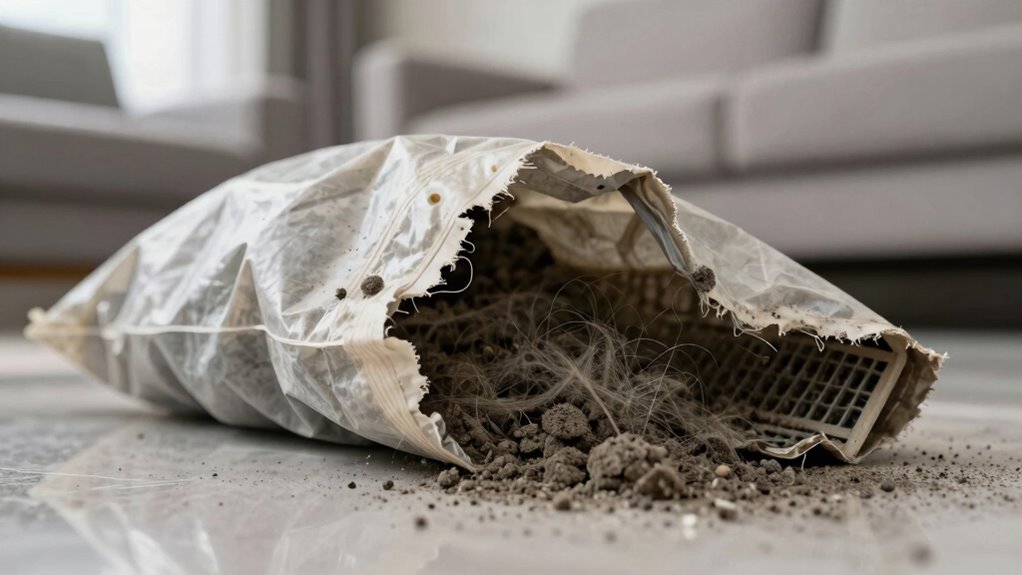
Old vacuum bags can undermine your allergy control because they lose their ability to trap airborne allergens effectively as they fill and wear out. When bags get old, their materials become less dense, allowing dust and allergens to escape back into the air. This can worsen allergy symptoms and decrease indoor air quality. Regularly replacing your vacuum bags helps maintain filtration, but there’s more to know about keeping allergens at bay—keep exploring to learn how you can improve your allergy management.
Key Takeaways
- Old vacuum bags lose their ability to effectively trap airborne allergens, allowing them to re-enter indoor air.
- Worn or filled bags reduce airflow and suction, leading to incomplete removal of dust and irritants.
- Aging bags often use less dense materials, allowing allergens to escape during vacuuming.
- Replacing old bags with new, high-quality ones maintains optimal filtration and allergen reduction.
- Regular bag replacement prevents allergen buildup and improves overall indoor air quality.
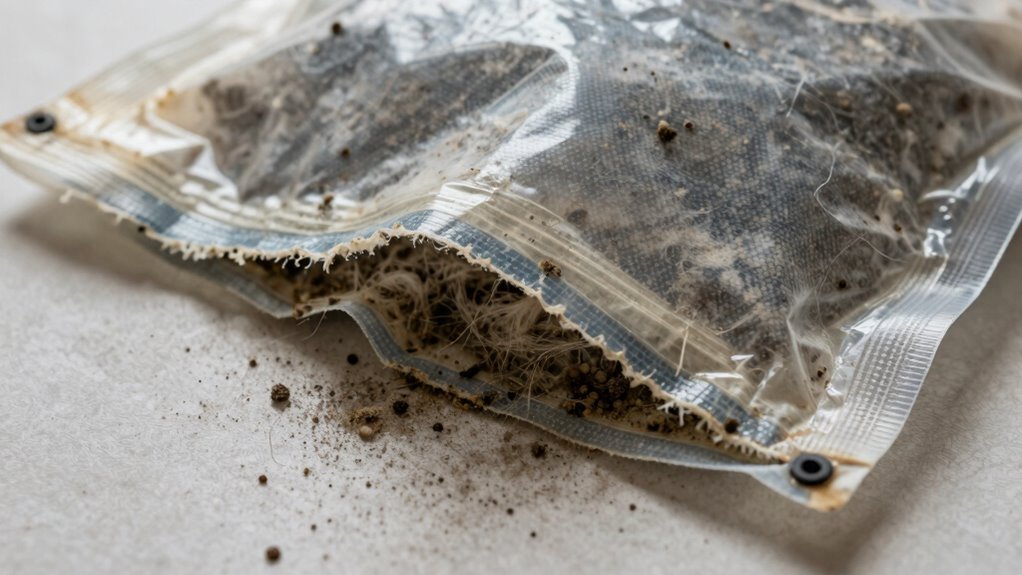
If you suffer from allergies, your choice of vacuum bags can substantially impact your indoor air quality. Old vacuum bags are a common culprit in reducing the effectiveness of allergy control because they often fail to trap airborne allergens efficiently. Over time, the filtration ability of these bags diminishes, allowing more allergens to escape back into the air you breathe. When a bag becomes filled or worn, its ability to retain dust, pet dander, pollen, and other irritants decreases markedly. This means that instead of removing airborne allergens from your home, an old vacuum bag can actually reintroduce them into your environment, making allergy symptoms worse.
Old vacuum bags reduce allergen filtration, reintroducing irritants and worsening allergy symptoms. Regular replacement improves indoor air quality.
Bag filtration is a critical factor in allergy management because it determines how well your vacuum can trap tiny particles. Modern vacuum bags are designed with advanced filtration materials that effectively trap airborne allergens, preventing them from escaping during the vacuuming process. However, older bags often lack these high-quality filters and are made from less dense materials that become less efficient as they fill up. As the bag fills, airflow decreases, and the vacuum’s suction power drops, leading to incomplete cleaning. This incomplete removal of allergens means more dust and irritants stay on your floors and furniture, increasing the likelihood of allergy flare-ups.
You might not realize that a seemingly small change, like switching to a new vacuum bag, can make a noticeable difference in your allergy symptoms. When bags are fresh, their bag filtration capabilities are at their peak, ensuring airborne allergens are effectively contained. As the bag ages, its filtration efficiency drops, and tiny particles can pass through or escape during disposal, re-entering your indoor air. This cycle can perpetuate allergy symptoms and even worsen respiratory issues. Regularly checking and replacing vacuum bags can also help prevent airborne allergen buildup and improve overall air quality.
To keep your allergy symptoms in check, it’s essential to replace vacuum bags regularly, especially when they become full or show signs of wear. Using high-quality bags with superior filtration materials ensures that airborne allergens stay trapped. Consider upgrading to vacuum models with HEPA filters, which are designed to capture even the smallest particles, improving overall air quality. Proper maintenance, including cleaning or replacing filters and bags, is essential for maximizing filtration efficiency. Remember, the key isn’t just in cleaning but in how well your vacuum system prevents allergens from escaping back into your home. Old vacuum bags undercut your efforts by allowing airborne allergens to circulate, so staying current with replacements is a simple yet effective step in allergy control.
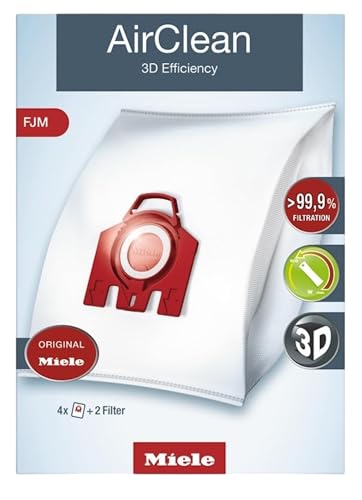
Miele Genuine FJM HyClean Air Vacuum Cleaner Bags for Miele Complete C1, Compact C1, Compact C2, S6 & S4 Vacuum Cleaners, Pack of 4 Vacuum Bags and 2 Filters
- Enhanced Dust Retention: 10x better dust retention than original bags
- Compatibility: Fits Miele C1, C2, S6, S4 vacuum cleaners
- Eco-Friendly Design: Slimmer, environmentally conscious bag design
As an affiliate, we earn on qualifying purchases.
As an affiliate, we earn on qualifying purchases.
Frequently Asked Questions
Can Vacuum Bag Color Affect Allergy Control?
Yes, vacuum bag color can affect allergy control. Different vacuum bag materials may trap allergens more effectively, regardless of color, but lighter-colored bags make it easier to monitor for dirt and allergens. While color allergy implications are minimal, choosing bags with high-quality materials designed for allergy sufferers enhances filtration. Regularly replacing bags, especially when they’re full or discolored, is essential for maintaining maximum allergy control in your home.
Do Vacuum Bags Lose Suction Over Time?
Did you know vacuum bags typically lose about 50% of their suction power after just a few uses? Over time, as the bag fills, its materials restrict airflow, reducing the efficiency of the suction mechanism. This makes it harder to pick up dirt and allergens. Regularly replacing your vacuum bag guarantees peak suction, preventing buildup of debris that can compromise allergy control. So, don’t ignore those signs of reduced performance!
Are Reusable Vacuum Bags Better for Allergies?
Reusable vacuum bags can be better for allergies because they often feature superior air filtration and allergen trapping compared to disposable bags. You can wash and reuse them, ensuring they stay clean and effective. This helps minimize airborne allergens like dust and pet dander. By maintaining a high level of air filtration, reusable bags support better allergy control, especially if you change or clean them regularly to prevent allergen buildup.
How Often Should Vacuum Bags Be Replaced?
You should replace vacuum bags when you notice a vacuum seal isn’t as tight or dust accumulation is visible. Typically, this is every 1 to 3 months, depending on use. When bags become full, they allow dust and allergens to escape, reducing allergy control. Regularly changing your vacuum bag guarantees peak suction and keeps dust trapped, helping you breathe easier and maintain a healthier home environment.
Do Vacuum Bags Trap Bacteria or Viruses?
Vacuum bags can trap bacteria and viruses, but their effectiveness depends on their filtration efficiency. When you use an old or low-quality bag, it may not capture airborne particles efficiently, allowing microbes to escape back into the air. To maintain good allergy and hygiene control, you should replace vacuum bags regularly and choose high-efficiency filters that better trap airborne particles, reducing health risks and improving indoor air quality.
Conclusion
Old vacuum bags might seem harmless, but they can undermine your allergy control efforts. While new bags trap dust and allergens effectively, worn-out ones release trapped particles back into the air. It’s a simple switch—swap out your bags regularly—and suddenly, your home breathes easier. The difference isn’t just in the bag, but in your health. Clear the air, protect your lungs, and let fresh, clean air be your everyday reality.