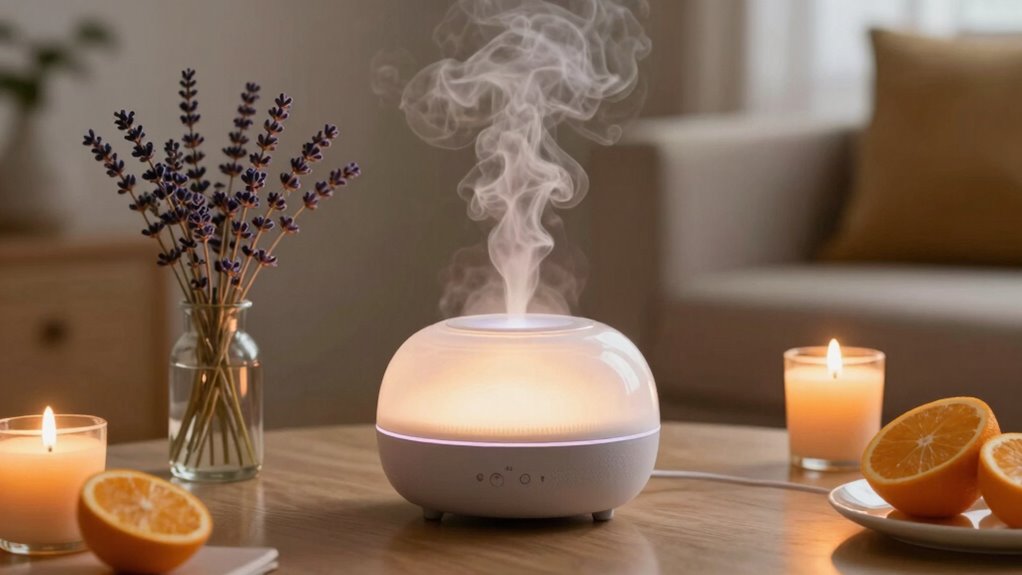

Frequent use of synthetic air fresheners and plug-in diffusers can quickly raise VOC levels in your home. These products release volatile organic compounds that impact indoor air quality and can cause headaches or respiratory issues over time. Enclosed spaces make VOC buildup worse. To keep your air safer, consider natural alternatives like herbs or essential oils. If you want to learn how to reduce these risks, there’s more to discover about healthier scent options.
Key Takeaways
- Frequent use of aerosol sprays releases high levels of VOCs quickly into indoor air.
- Plug-in air fresheners continuously emit synthetic chemicals, increasing VOC buildup rapidly.
- Using synthetic air fresheners in enclosed spaces amplifies VOC concentration fast.
- Relying on commercial chemical-based scents accelerates indoor VOC levels.
- Ignoring proper ventilation during scented product use allows VOCs to accumulate swiftly.
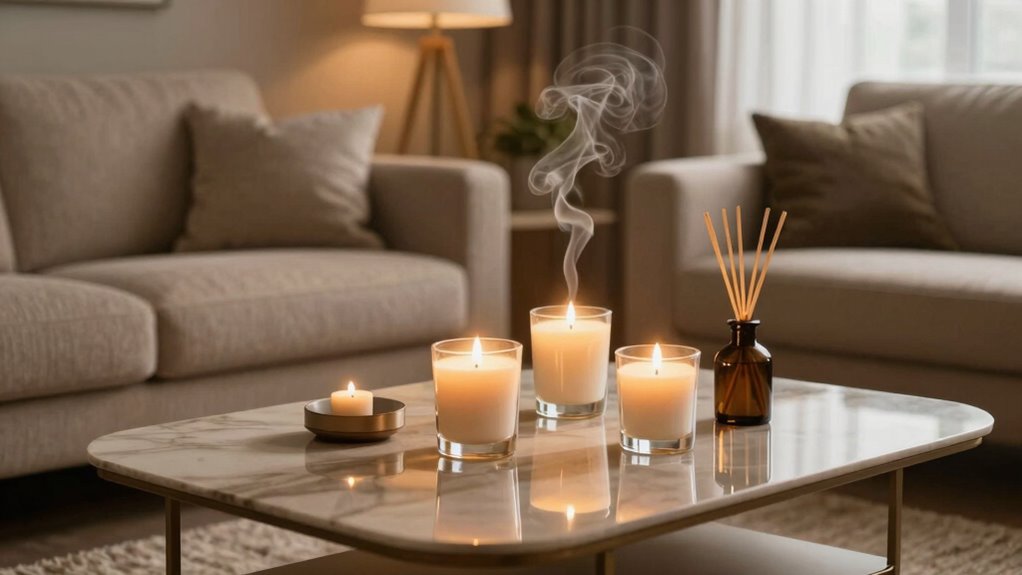
Have you ever wondered what’s lurking in your favorite home fragrances? It’s easy to get caught up in the pleasant scents that fill your space, but many popular air fresheners contain chemicals that can considerably raise VOCs—volatile organic compounds—in your home. These VOCs aren’t just harmless smells; they can impact your health, causing headaches, respiratory issues, or worse over time. The good news is that you can make smarter choices about your home scent habits by understanding air freshener safety and exploring natural scent alternatives.
Many commercial air fresheners, candles, and sprays are loaded with synthetic fragrances and chemicals that release VOCs into the air. These substances can accumulate quickly, especially when used frequently or in poorly ventilated rooms. Instead of relying solely on these products, look for ways to reduce your exposure. One effective strategy is to prioritize natural scent alternatives—things like fresh herbs, citrus peels, or essential oils. These options not only smell wonderful but also come with fewer health risks. For example, diffusing lavender or lemon essential oils can brighten your space without introducing harmful chemicals. Additionally, understanding indoor air quality** can help you identify and reduce sources of VOCs more effectively. Being aware of air quality and how it interacts with household products is crucial for maintaining a healthy environment. Incorporating air quality management** techniques can further enhance your home’s safety.
Opt for natural scents like herbs and citrus to enjoy fresh smells safely and with fewer health risks.
While it’s tempting to reach for air freshener safety labels that claim “air quality friendly,” it’s vital to read the ingredients list carefully. Many products marketed as “natural” still contain artificial fragrances or preservatives that can contribute to VOC buildup. You might find that switching to simple, homemade options works best. A bowl of cinnamon sticks, a simmering pot of orange slices, or a diffuser with tea tree oil can refresh a room naturally and safely. These natural scent alternatives are not only safer but also customizable to your preferences, allowing you to enjoy a fresh smell without the risk. Additionally, understanding air freshener safety and how certain chemicals affect indoor air quality can help you make more informed choices.
It’s also wise to reduce the frequency of using aerosol sprays or plug-ins, especially in enclosed spaces. If you still want to use air fresheners, opt for those with minimal or no synthetic chemicals. Look for products labeled as “VOC-free” or “made with natural ingredients,” and always ensure proper ventilation when using any scented product. Remember, your home’s air quality directly impacts your health, so being mindful of how you introduce fragrances is essential.
In the end, protecting your indoor air from excessive VOCs boils down to making informed choices. Prioritize air freshener safety by opting for natural scent alternatives whenever possible. By doing so, you’ll create a healthier environment—one that smells lovely without compromising your well-being.

InnoGear Essential Oil Diffuser Ultrasonic Diffusers for Home, Basic White
- Trusted Brand with Quality Assurance: Over 10 years of diffuser expertise
- Ultrasonic Nano Mist Technology: Emits fine, chemical-free mist
- Two Misting Modes: Intermittent and continuous mist options
As an affiliate, we earn on qualifying purchases.
As an affiliate, we earn on qualifying purchases.
Frequently Asked Questions
Are All Home Fragrances Equally Likely to Increase VOCS?
Not all home fragrances are equally likely to increase VOCs. Fragrance composition varies widely, with some containing volatile organic compounds that emit easily, especially if they lack chemical stability. Cheaper or synthetic fragrances often have unstable chemicals that break down quickly, releasing more VOCs into your air. To reduce VOCs, choose fragrances made with natural ingredients and stable formulations, and always check labels for harmful chemicals.
How Quickly Can VOC Levels Rise After Using Fragrances?
After using a highly scented candle, VOC levels can spike within minutes. Fragrance chemical composition greatly influences VOC emission rates, so stronger scents emit more VOCs faster. For instance, a study found VOC levels can double within just 30 minutes of lighting a scented candle. You might notice increased indoor VOCs quickly, especially with fragrances containing volatile compounds, making ventilation essential to reduce exposure.
Can Natural Fragrances Also Emit VOCS?
Yes, natural fragrances from essential oils can emit VOCs, though usually less than synthetic options. Proper essential oil safety is vital to avoid irritation or allergic reactions. While natural scents may offer longer longevity, they still release VOCs over time, especially if applied in high concentrations or stored improperly. Be mindful of ventilation and usage to keep indoor air quality safe while enjoying natural aromas.
What Are the Safest Alternatives to Synthetic Air Fresheners?
You should opt for natural alternatives like beeswax candles, essential oil diffusers, or freshly cut flowers. These options have a safer chemical composition, meaning they emit fewer volatile organic compounds (VOCs). Plus, they tend to have a lower environmental impact, unlike synthetic air fresheners that often contain harmful chemicals. By choosing these natural options, you create a healthier indoor environment without compromising on fragrance or safety.
Do Indoor Plants Help Reduce VOC Levels From Fragrances?
Indoor plants can help reduce VOC levels from fragrances through plant purification and aroma absorption. By actively filtering the air, they absorb volatile organic compounds, including those from synthetic fragrances, improving indoor air quality. You should choose plants like spider plants, peace lilies, or snake plants for their proven ability to purify air. Regularly caring for these plants enhances their effectiveness, making your home healthier and more pleasant.
Conclusion
So, next time you spritz that air freshener or light that scented candle, remember you’re inviting a silent orchestra of VOCs into your home. These invisible guests can quickly turn your cozy sanctuary into a chemical battleground. Choose natural alternatives and open your windows often—let fresh air dance through your space like a gentle breeze. Keep your home’s atmosphere clear and bright, and don’t let hidden toxins steal the serenity you deserve.