
TL;DR

Get garden gear delivered free — and shop member deals
- Fast, free delivery on millions of items
- Access to Prime Big Deal Days deals on October 6–7
- Prime Video, Amazon Music and more included
There is no single date to stop mowing: continue while the grass is actively growing and make the final cut after growth slows or stops. Mow only when the lawn is dry and frost-free, and use a height suited to the grass type.
There is no set date to stop mowing a lawn before winter, according to a Country Living report on fall lawn care. Homeowners should keep mowing while their grass is actively growing, then make a final cut once growth has slowed or stopped; the timing can range from early fall to late fall, depending on location, weather and turfgrass type.
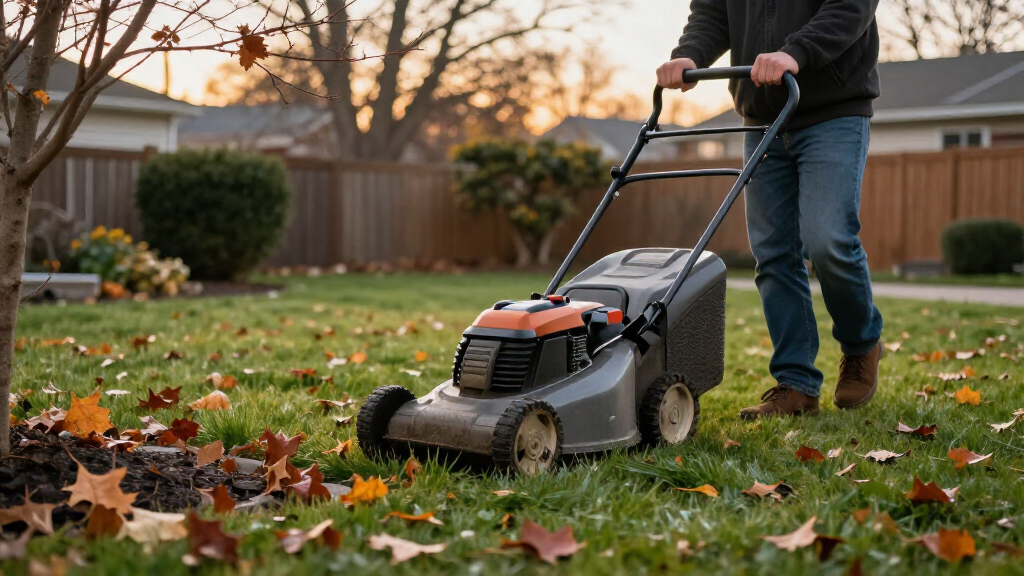
The report advises mowing on a dry, frost-free day. Mowing wet ground can compact the soil, particularly under heavy equipment, while traffic over frozen grass can damage turf. Late-season mowing is not inherently harmful if the lawn is dry and still growing. The report also recommends using a sharp blade and following the one-third rule: do not remove more than one-third of a grass blade in a single cut.
Cutting height depends on the species. Country Living lists final-cut ranges of 2½ to 4 inches for tall fescue, 2 to 3½ inches for Kentucky bluegrass, perennial ryegrass and fine fescue, and ½ to 1½ inches for Bermudagrass. Its guidance puts Zoysiagrass at 1 to 2 inches, Centipedegrass at 1½ to 2 inches, and St. Augustinegrass at 2½ to 3 inches.
Those ranges are general guidance, not a single setting for every lawn. Shady lawns may do better when mowed somewhat higher, and cultivars can have different needs. The report recommends checking with a local cooperative extension service if the grass type is uncertain.
A Final Cut That Protects Turf
The last mowing is a balance: leaving grass excessively long can cause it to mat under snow, potentially increasing the risk of snow mold and vole damage. Cutting it too short can leave less leaf surface for energy production and make turf more vulnerable to cold, drought and winter injury.
That makes growth and grass type more useful guides than a calendar date. Waiting until growth slows helps avoid unnecessary cutting, while choosing a suitable height reduces the chance of going into winter with either overly long or scalped turf. The report presents these as general lawn-care considerations; outcomes depend on local conditions and the type of grass.
Cool- and Warm-Season Lawns
Cool-season grasses—including tall fescue, Kentucky bluegrass, perennial ryegrass and fine fescue—grow most actively in spring and fall. In some regions they may continue growing until late October or later. The report says many cool-season lawns suit a final height of about 2½ to 3½ inches, while cautioning against leaving foliage long enough to mat.
Warm-season grasses such as Bermudagrass, Zoysiagrass, Centipedegrass and St. Augustinegrass slow as temperatures fall and eventually become dormant. Growth may stop before or around the first frost, though timing varies by location. The report cautions against scalping Centipedegrass or St. Augustinegrass before winter and gives the species-specific height ranges above.
Other fall tasks also depend on grass type. A thick leaf layer can block light, hold moisture and smother turf; light leaf cover can be mulched, while dense mats should be raked or removed. Fall is also a time to test soil, but lime or fertilizer should be applied only when indicated by the test. The report says cool-season lawns may benefit from regionally appropriate fall fertilization, while late nitrogen on warm-season lawns can delay dormancy and increase cold-injury risk.
Local Timing Still Varies
The report does not identify a universal cutoff date or a single final mowing height for all lawns. Local weather, growth, shade, species and cultivar affect the recommendation, and the source material does not establish a specific forecast or date for any particular region. Homeowners who do not know their turfgrass type can seek locally tailored advice from a cooperative extension service.
Watch Growth Before the Cut
As temperatures cool, check whether the lawn is still growing and wait for a dry, frost-free day to mow. Set the mower within the recommended range for the grass type, removing no more than one-third of the blade. After the final cut, clear dense leaf layers and avoid walking or driving equipment over frozen turf. Any soil amendments should follow a soil test; overseeding and aeration should be timed to the grass type, with early fall generally suited to cool-season overseeding.
Key Questions
Is there a specific date to stop mowing?
No. Keep mowing while the grass is actively growing and make the final cut after growth slows or stops. The timing varies by region, weather and grass type.
Should I mow when the lawn is wet or frosty?
No. The report advises mowing when grass is dry and frost-free. Wet soil can be compacted by mower traffic, and frozen turf can be injured by foot or equipment traffic.
How short should I cut the lawn before winter?
Use the height recommended for your grass species rather than a universal setting. For example, the report gives 2½ to 4 inches for tall fescue and ½ to 1½ inches for Bermudagrass.
Can I leave fallen leaves on the lawn?
A light layer can be mulched into the lawn. Rake or remove dense leaf mats, which can block light, hold moisture and smother grass.
Source: rss
Fall Picks
fall essentials
As an affiliate, we earn on qualifying purchases.