
TL;DR

Get garden gear delivered free with Prime
- Fast, free delivery on millions of items
- Prime Video, Amazon Music and more included
- Member-only deals all year
A Country Living report describes four common fall planting mistakes that can leave trees and shrubs struggling: failing to address circling roots, planting too deeply, not watering during establishment and piling mulch against the trunk. Its guidance is to check each plant’s roots and root flare, water according to soil moisture, and keep mulch away from the bark.
Country Living has outlined four fall planting mistakes that can leave trees and shrubs struggling after they go into the ground: leaving circling roots untreated, planting too deeply, inadequate watering during establishment and piling mulch against the trunk. The report says these errors can affect root growth, moisture and bark health, even when a plant initially appears healthy.
The first problem is circling roots, which can develop when roots hit the sides of a nursery pot and grow around the root ball. Country Living says roots left in that pattern may continue circling after planting, potentially restricting growth and contributing to nutrient problems or trunk girdling, in which roots wrap around and constrict the trunk. The report advises inspecting roots before planting, loosening them and spreading healthy roots outward; it says some large, tight roots may need to be cut.
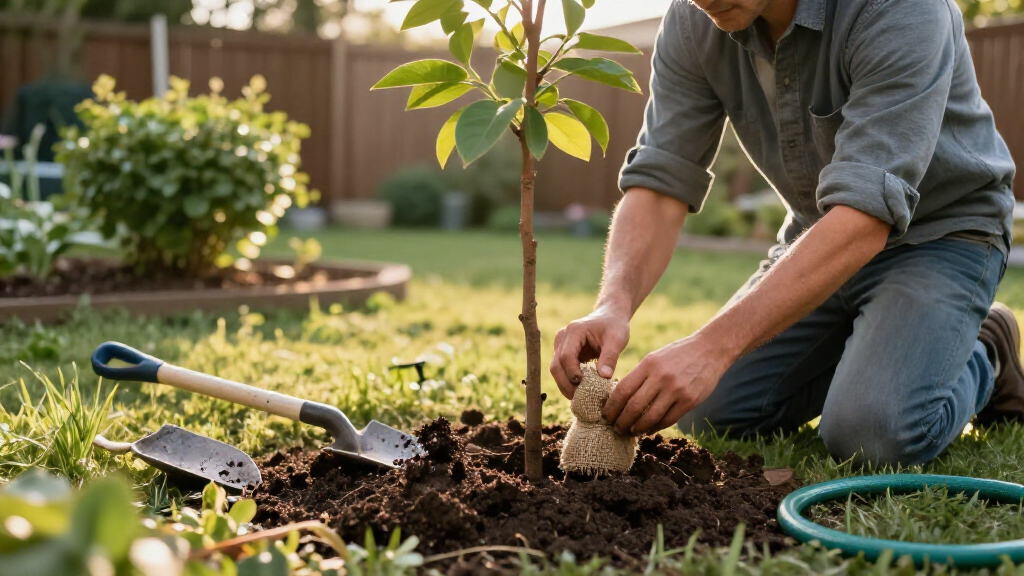
A second mistake is burying the plant too deeply. The report advises locating the root flare, where the trunk widens into roots, and keeping it visible at or just above the soil line. It recommends a hole wider than the root ball but no deeper, with firm soil at the bottom to reduce the risk of the plant settling. It also warns against assuming that a new planting will get enough water from rainfall: check soil near the root ball and water slowly and deeply when it is drying, while avoiding waterlogged conditions.
The final error is volcano mulching: piling mulch against the trunk. Country Living says that can hold moisture against bark, contribute to decay, provide cover for pests and obscure the root flare. Its suggested alternative is an even layer about two to three inches deep over the root zone, kept a few inches from the trunk.
How Planting Errors Affect Establishment
These recommendations matter because problems introduced at planting can persist after the visible work is done. Roots that remain tightly circling, a buried root flare or mulch pressed to the bark may be difficult to notice once a tree or shrub is established in the landscape. The report says such conditions can interfere with healthy growth and contribute to longer-term stress.
For homeowners, the practical point is that fall planting is not simply a matter of digging a hole and waiting for rain. Root preparation, planting depth, soil moisture and mulch placement all require attention. Checking them at planting and during establishment may help avoid preventable problems, though the source does not quantify how often these mistakes occur or how much damage each causes.
Products Worth Considering

Bose TV Speaker Compact Soundbar with Bluetooth and HDMI-ARC, Black

Ring Floodlight Cam Wired Plus, 1080p HD Outdoor Security Camera with Motion-Activated Floodlights, 4-Pack, White

Philips Hue Festavia Globe Outdoor String Lights, 32 Bulbs, 91 ft
As an affiliate, we earn on qualifying purchases.
Why Fall Planting Requires Care
The Country Living report describes fall as a potentially suitable time to plant trees and shrubs. Cooler weather can make planting more comfortable, while warm soil may give roots time to settle before winter. These favorable conditions do not remove the need for correct planting practices.
The article focuses on four specific errors rather than comparing fall planting with other seasons or offering a region-by-region planting calendar. Its advice centers on the plant’s condition and the soil around it: inspect the root ball, find the root flare, monitor moisture and keep mulch from touching the trunk.
“The goal is moist soil, not waterlogged soil.”
— Country Living report
What the Report Does Not Establish
The source presents general gardening guidance, not results from a new study or a quantified assessment of tree losses. It does not specify how frequently the four mistakes occur, how long resulting damage takes to appear, or how risk varies by species, soil type, climate or planting region. The exact amount and frequency of watering also depend on local conditions; the report recommends checking soil moisture rather than using a universal schedule.
Checks to Make After Planting
After planting, readers can follow the report’s practical checks: confirm the root flare remains visible, make sure mulch is not touching the trunk, and inspect soil near the root ball for dryness or excess moisture. During planting, examine the roots and spread healthy ones outward rather than leaving them tightly packed. The source gives no formal follow-up timeline, so watering should be guided by observed soil conditions and the needs of the plant and location.
Key Questions
What are the four fall planting mistakes?
The report identifies untreated circling roots, planting too deeply, inadequate watering during establishment and mulch piled against the trunk.
How can I tell whether a tree is planted too deeply?
Find the root flare, where the trunk widens into the roots. Country Living says it should remain visible at or slightly above the soil line.
How often should I water a newly planted tree or shrub?
The report does not give a fixed schedule. Check the soil near the root ball: water slowly and deeply if it is drying, and wait if it remains wet. The aim is moist, not waterlogged, soil.
How should mulch be placed around a new tree?
Spread mulch evenly over the root zone in a layer about two to three inches deep, keeping it a few inches away from the trunk so the bark and root flare remain uncovered.
Source: countryliving.com