TL;DR

Get garden gear delivered free with Prime
- Fast, free delivery on millions of items
- Prime Video, Amazon Music and more included
- Member-only deals all year
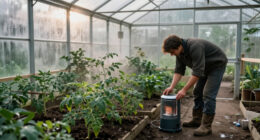
A greenhouse space heater helps maintain a crop-appropriate minimum temperature when outdoor cold threatens plant health, but the right choice depends on heat loss, fuel costs, and installation conditions. Seal drafts, use a well-placed thermostat, and choose equipment rated for a humid greenhouse before increasing heater size.
A clear winter night can turn a cozy greenhouse into a cold box before sunrise. Your tomato seedlings may look fine at dusk, then greet you with limp leaves and chilled roots after a sudden temperature drop.
A greenhouse space heater helps maintain a minimum temperature when outdoor conditions would otherwise chill plants or damage crops. The temperature you need depends on the crop, its growth stage, and whether you want frost protection or active growth.
This guide explains how to match heater type and size to your greenhouse, manage energy use, and protect people and plants. You’ll also find practical ways to check placement and controls before the first cold snap catches you off guard.
Set the heater thermostat to the minimum temperature your crop and growth stage can tolerate.
Size a heater using heat loss, including construction, drafts, wind, and local cold conditions—not floor area alone.
Compare local electricity and fuel prices alongside installation needs and how often you’ll run the heater.
Seal drafts and maintain coverings before relying on a larger heater to overcome heat loss.
Follow the heater’s instructions for damp conditions, clearances, ventilation, electrical load, and fuel handling.
Start with the temperature your plants actually need
A greenhouse heater supplies heat to maintain a target minimum temperature, but that target belongs to your crop, not to the heater. Frost protection can need less heat than keeping warmth-loving plants growing through winter, and seedlings may have different needs from mature plants. The target is a practical compromise: a higher set point can protect growth and reduce chilling stress, but every extra degree makes the heater replace more heat escaping through the greenhouse cover.
Think of your heater like a blanket: it slows the chill, but you need to know how much warmth the sleeper needs. For example, a gardener overwintering hardy greens may set a lower minimum than someone keeping tropical seedlings alive. One thermostat setting won’t suit both jobs, and holding a growth temperature when plants only need frost protection can spend energy without producing a useful benefit.
Write down the lowest temperature your plants can tolerate and decide whether you’re protecting them from frost or aiming for steady growth. Check crop-specific guidance and consider the coldest local nights, rather than choosing a setting based on a mild afternoon. A separate minimum-temperature alarm can alert you if the heater fails while you’re away; that matters because a heater can stop working during a cold night, when there may be little time to save sensitive plants.
Heat should reach the crop zone. If a thermometer sits high near the roof, it may report warm air while leaves at bench height stay cold. Place the thermostat sensor near the plants and away from direct heater airflow or radiant heat, which could make it shut off before the rest of the crop is warm enough. A small fan can mix warm and cool layers, reducing cold pockets that surprise you at dawn. Check temperatures in more than one spot initially, since a single sensor only represents the air around it.
Products Worth Considering

Blueair Blue Pure 511i Max Air Purifier

eufy Security Essential 7-Piece Alarm System

Ring Alarm 5-Piece Wireless Security System
As an affiliate, we earn on qualifying purchases.
Choose a heater that fits your fuel, space, and setup
Greenhouse space heaters come in several types, and each trades purchase cost, running cost, heat distribution, and installation needs. Electricity, fuel availability, greenhouse size, and how often you heat all shape the best choice. A heater used only during occasional frost protection may justify a different upfront cost from one that must run every night for months.
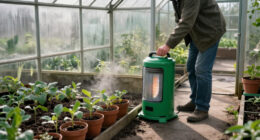
An electric resistance heater is simple to control and releases no combustion gases inside the greenhouse, though electricity can make frequent use expensive. A propane or natural-gas unit can deliver strong heat quickly, but an unvented model releases combustion products and water vapor indoors. That extra moisture can add to condensation, while poor combustion or inadequate ventilation can create safety hazards. Vented units send exhaust outside, but require suitable installation and exhaust routing. A grower with a small greenhouse near a reliable electrical supply may value a thermostat-controlled electric model; a larger operation may compare fuel systems or hot-water distribution, weighing fuel cost against the added equipment and installation.
Heat pumps move heat rather than creating it directly, so under suitable conditions they can provide more heat per unit of electricity than resistance heaters. Their output and efficiency fall in very cold weather, so a cold-climate grower may need backup heat sized for the nights the heat pump cannot cover. Hot-water systems spread warmth through pipes or radiators and can suit permanent, larger installations, though they cost more to set up and may be difficult to justify for a small greenhouse. Infrared heaters warm surfaces and plants directly, making placement and coverage especially important: an exposed area may get useful warmth while shaded plants remain cool.
Portable kerosene and other liquid-fuel heaters need careful ventilation, fuel storage, and maintenance. Before buying, compare local energy prices and check whether the equipment is rated for damp conditions and unattended operation. Consider the whole setup, including fuel delivery, electrical capacity, ventilation, and maintenance—not just the purchase price. A unit that looks inexpensive in the shop can cost more to run or prove unsuitable for a humid greenhouse.
Size the heater by heat loss, not floor area alone
Heater size depends on how quickly your greenhouse loses heat on a cold night, so floor area alone cannot tell you what output you need. The calculation also depends on height, covering, drafts, insulation, wind exposure, outdoor design temperature, and your indoor target. These factors matter because the heater has to replace heat as it escapes; a larger exposed surface or a bigger difference between indoor and outdoor temperatures increases that ongoing demand.
Imagine two greenhouses with the same footprint. One has tight double-wall panels and a nighttime curtain; the other has single glazing, gaps around the door, and an exposed corner location. The second can lose heat much faster, even though both cover the same number of square feet. That’s why no universal watts-or-BTUs-per-square-foot rule works reliably for every greenhouse. Height matters too: a taller space can have more covering through which heat escapes, and warm air can collect above the crop where it does little to protect plants.
A heater that’s too small may run constantly and still fail to reach the set temperature, leaving crops exposed during the coldest weather. An oversized heater can cost more to buy and may cycle on and off frequently, which can create uneven temperatures and make temperature control less steady. Ask a greenhouse supplier or heating professional to estimate heat loss using your dimensions, construction, local winter conditions, and crop target. Their estimate is useful only if those inputs reflect the cold nights and minimum temperature you actually need to plan for.
Before the coldest weather arrives, check for obvious air leaks and record overnight temperatures at plant height. If your unit runs nearly nonstop during a moderately cold night, that observation can help a professional assess the setup. It doesn’t prove the heater is undersized: a damaged covering or open draft can also be the culprit. Comparing the outside temperature, thermostat reading, and plant-zone temperatures helps distinguish a capacity problem from heat escaping through a repairable gap.
Cut heat loss before you buy a larger heater
Reducing heat loss can lower heating demand regardless of the heater type you choose. A sealed gap, sound covering, and well-managed thermal screen help keep warmth around the plants instead of letting it slip into the night air. This can reduce both the heater output you need and the time it runs, although improvements have to suit the greenhouse structure and the local climate.
Start with practical checks: close drafts around doors, repair damaged greenhouse covering, and consider suitable insulation for walls or foundations. A thermal screen or nighttime curtain can help retain heat. Picture warm air rising toward the roof like steam from a mug; a closed screen can slow that escape and leave more warmth around the benches. Sealing a gap is often a direct fix, while insulation and screens involve cost and may reduce light or usable space, so consider how they affect the crops as well as heat retention.
Accurate controls matter too. A thermostat should measure conditions where plants are, and a fan can reduce warm air pooling overhead while cold air lingers near the floor. Heating only to the crop’s required minimum, especially overnight, can save energy when plants tolerate that schedule. For example, a gardener protecting hardy greens may use a frost-protection setting instead of holding summer temperatures through the night. The benefit depends on the crop: a lower setting that saves energy can still harm plants that need steady warmth.
Don’t seal a greenhouse or rearrange equipment in a way that blocks required ventilation or creates unsafe heater clearances. Improving efficiency means controlling unwanted heat loss while keeping the ventilation and spacing that the heater’s instructions require. Ventilation can remove humid air and combustion products, but it also lets warmth escape, so follow the heater’s requirements and manage ventilation without compromising safe operation. If the cover leaks, fix that first; a more powerful heater can end up warming the outdoors.
Keep heat, humidity, and safety in balance
Safe heating depends on correct equipment, clear space around the unit, suitable ventilation, and controls placed where they measure plant conditions. A warm greenhouse can still create trouble if combustion gases build up, electrical equipment faces moisture, or leaves sit too close to a hot surface. These conditions affect both safety and crop health, so a heater’s temperature setting alone cannot show whether the setup is working well.
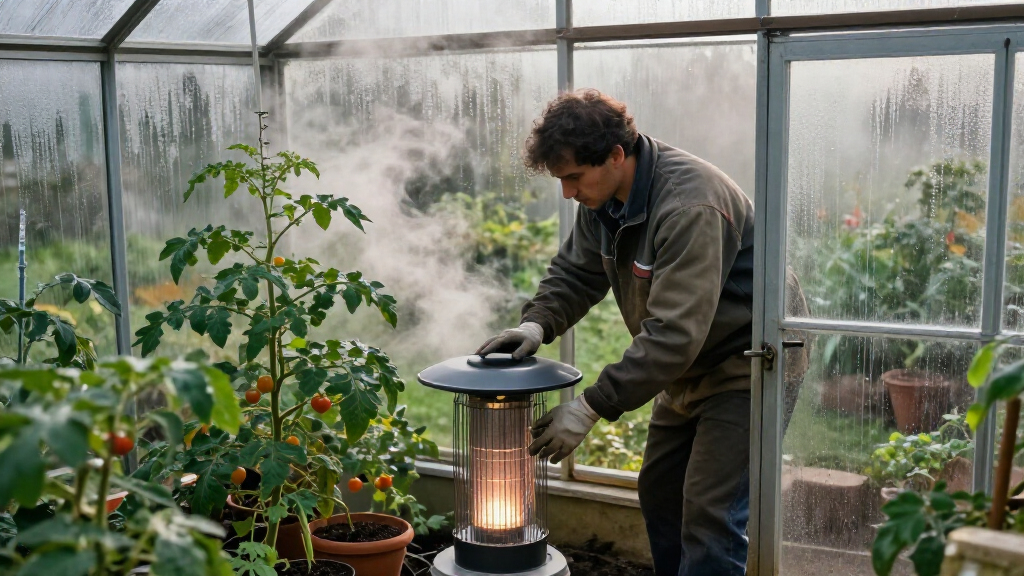
Combustion heaters that exhaust into the greenhouse add water vapor, and poor combustion or insufficient ventilation can create hazards for people and plants. High humidity and condensation can encourage fungal disease; heating also lowers relative humidity as air warms, which can stress some plants. If you see water beading along the inside of the cover each morning, review ventilation, watering, and heater setup rather than assuming more heat will solve everything. More heat may reduce relative humidity temporarily, but it does not remove moisture from the greenhouse; ventilation or moisture management may still be needed.
Follow the manufacturer’s installation and clearance instructions. Keep heaters away from plastic film, foliage, irrigation water, and flammable materials. Use electrical equipment suited to wet or humid locations and circuits rated for the load. Moisture can affect electrical equipment, while an overloaded circuit can create a hazard, so both the heater rating and the supply matter. Never use an outdoor-only heater inside an enclosed greenhouse, and use fuel-burning equipment only as designed, with required ventilation. Carbon-monoxide alarms can protect nearby occupied areas where appropriate.
For instance, a propane heater installed beside a damp bench needs more than a convenient outlet for fuel: the grower must follow its ventilation requirements and keep the unit clear of leaves and water. Wear any protective equipment the product label or instructions require when handling fuel or servicing the heater. Children and pets should stay away from hot equipment and stored fuel. Regular checks help catch blocked vents, damaged cords, or fuel leaks before they turn an otherwise useful heat source into a risk.
Use newer controls and backup heat where they make sense
Automated thermostats, sensors, thermal curtains, heat pumps, and hybrid systems can help growers match heating to the time of day, crop zone, and weather. These tools can trim waste, but they work best when the greenhouse itself has sound coverings and reliable heat distribution. Controls can adjust when and where heat is used; they cannot make a heater produce enough output for a poorly insulated structure on the coldest night.
A sensor near a seedling bench can help a grower protect young plants without overheating a storage corner. A hybrid setup might use a heat pump for regular conditions and a backup heater for unusually cold nights. That backup matters when a failure could wipe out valuable plants, but its size and type still need to suit the greenhouse and follow safe installation rules. Sensors also need sensible placement and occasional checking: if one is warmed by direct sunlight or heater airflow, automation may respond to the sensor rather than the conditions the crop is experiencing.
Solar-assisted heat, geothermal or ground-source systems, biomass, and recovered waste heat can reduce fossil-fuel use at suitable sites. Each comes with tradeoffs: installation costs, local energy prices, space, and dependable output all matter. Solar panels, for example, can supply power during the day while producing little during the cold night when heat demand peaks; storage, grid supply, or backup heat may be necessary. A system with low operating costs can still be a poor fit if its upfront cost is hard to recover or it cannot supply reliable heat when crops need it.
Product availability, efficiency ratings, incentives, and regulations vary by location and change over time. Before committing to a newer system, check current local information and ask how it performs in your coldest expected weather. A sensor or efficient heater cannot compensate for a design that fails when frost arrives.
Frequently Asked Questions
What size heater do I need for my greenhouse?
Estimate heat loss from the greenhouse’s dimensions, covering, insulation, air leakage, wind exposure, local winter design temperature, and desired indoor temperature. A greenhouse supplier or heating professional can help calculate the required heat output. Two greenhouses with the same floor area can need different sizes.
How many watts or BTUs per square foot should I use?
There is no reliable universal figure because covering, construction, exposure, and temperature goals change heat loss. For example, a drafty single-glazed greenhouse can need more output than a tight structure with a nighttime curtain. Base the estimate on your specific building and climate.
Can I use a space heater in a greenhouse?
Some heaters are suitable if they’re rated for the environment and installed as directed. Check moisture protection, electrical capacity, clearances, and whether the unit is designed for unattended operation. Avoid household heaters that aren’t approved for damp locations.
Are propane heaters safe for greenhouses?
They can be used safely when selected, installed, maintained, and ventilated according to the manufacturer’s directions and local requirements. Unvented combustion can add moisture and may create harmful gases if combustion or ventilation is poor. Keep the unit clear of plants and flammable materials.
What is the cheapest greenhouse heater to run?
That depends on local electricity and fuel prices, climate, heater efficiency, and how much heat your greenhouse loses. A heat pump can provide more heat per unit of electricity than resistance heating under suitable conditions, but performance drops in very cold weather. Sealing drafts and using accurate controls can reduce energy use across heater types.
Do plants need heat all night?
Not always. Many gardeners aim for a crop-specific minimum temperature instead of holding daytime warmth overnight. A thermostat setback or frost-protection setting may reduce energy use if the plants tolerate it.
Conclusion
Choose a greenhouse heater by starting with your plants’ minimum temperature, then match the unit to your greenhouse’s heat loss and local energy costs. Seal drafts, position the thermostat at plant height, and follow the equipment instructions for ventilation, clearances, and moisture protection.
On a frosty morning, the best heater is the one that quietly kept your plants safe without warming the empty winter sky.