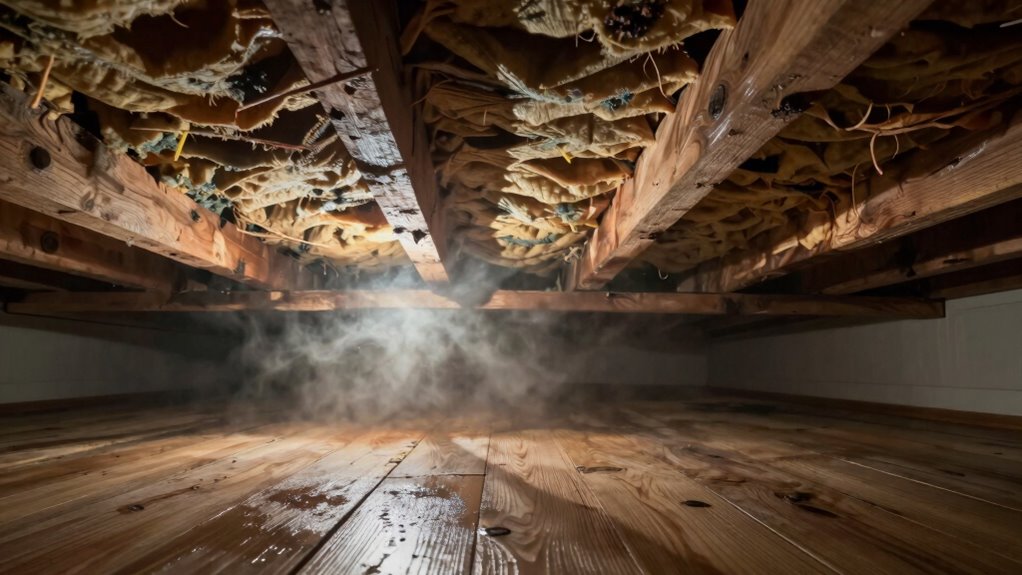

If your crawlspace has excess moisture, it can cause humid air to rise into your upstairs living areas, leading to musty odors, mold signs, and increased humidity. Poor ventilation, unsealed spaces, and moisture seepage worsen the problem, making it harder to control indoor air quality. Installing vapor barriers, sealing leaks, and using dehumidifiers can help. Understanding how moisture migrates is key—keep exploring to learn how to effectively manage this hidden issue and improve your home’s air.

Get garden gear delivered free — and shop member deals
- Fast, free delivery on millions of items
- Access to Prime Big Deal Days deals on October 6–7
- Prime Video, Amazon Music and more included
Key Takeaways
- Moisture from the crawlspace can migrate upward through unsealed gaps, increasing indoor humidity and causing upstairs air to feel damp.
- Poor crawlspace ventilation allows moist air to enter living spaces, spreading mold spores and musty odors upstairs.
- Elevated humidity levels in the crawlspace promote mold growth, which can release airborne spores into the upstairs air.
- Warm, moist air rising from the crawlspace during winter months can lead to condensation and increased upstairs humidity.
- Sealing and insulating the crawlspace prevents moisture migration, reducing upstairs air moisture issues.
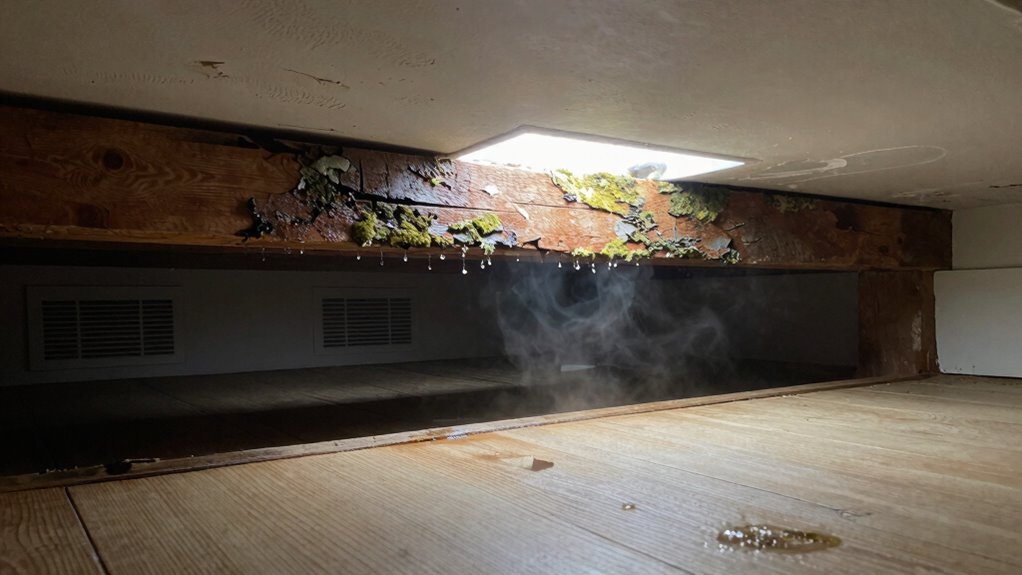
Are you noticing musty odors or signs of mold in your home? If so, the culprit might be a moisture problem lurking beneath your floors. Crawlspace moisture issues are sneaky because they often go unnoticed until they start affecting the upstairs air. You may not realize it, but high indoor humidity levels and poor ventilation strategies are common causes. Moisture from the crawlspace seeps into your living areas through walls, floors, and air vents, gradually raising the humidity levels inside your home.
The key to preventing this problem is understanding how moisture travels from the crawlspace to the rest of your house. When the crawlspace isn’t properly sealed or ventilated, damp air rises and mixes with the indoor air, leading to increased indoor humidity. This excess moisture creates an ideal environment for mold growth and musty smells, which then permeate your living space. Managing indoor humidity is crucial; ideally, it should be kept between 30% and 50%. If it’s higher, moisture becomes more problematic, especially in the winter when warm, moist air rises from the basement or crawlspace. Proper ventilation strategies play a vital role in controlling moisture levels and preventing these issues.
Ventilation strategies are your primary tools in controlling crawlspace moisture. If your crawlspace relies solely on passive vents, it might be doing more harm than good, allowing moist air in during humid weather. Upgrading to a conditioned or sealed crawlspace can significantly reduce moisture infiltration. Installing a vapor barrier on the ground helps block ground moisture from rising into the space, while a dehumidifier can keep indoor humidity levels stable. Proper ventilation isn’t just about opening vents; it’s about creating a balanced system that removes excess moisture without letting in too much outdoor dampness. Additionally, understanding moisture migration can help you develop more effective moisture control measures tailored to your home. Employing moisture barriers is an essential part of this process, as they prevent ground moisture from seeping into the crawlspace. Regular maintenance and monitoring can also help detect early signs of moisture issues before they become severe.
You should also pay attention to your home’s airflow patterns. If warm, moist air from the crawlspace rises and reaches the upper floors, it can cause condensation and promote mold growth on walls and ceilings. Sealing air leaks and insulating properly can prevent this upward migration of moisture. Additionally, regular inspections of your crawlspace can catch issues early—look for standing water, mold, or wood rot. Addressing water leaks and drainage problems outside your home can also reduce moisture levels inside. Proper home sealing techniques are essential for preventing moisture-laden air from migrating upward and affecting your living spaces.
Ultimately, controlling crawlspace moisture isn’t a one-time fix but an ongoing process. By managing indoor humidity, improving ventilation strategies, and maintaining proper insulation and sealing, you can prevent moisture from reaching upstairs air. This not only improves your home’s air quality but also protects your health and preserves the integrity of your structure.
As an affiliate, we earn on qualifying purchases.
Frequently Asked Questions
Can Crawlspace Moisture Cause Health Issues in Upstairs Rooms?
Yes, crawlspace moisture can cause health issues in upstairs rooms. When crawlspace ventilation is poor, excess humidity promotes mold growth, which can release spores into your home’s air. You might experience allergy symptoms, respiratory problems, or asthma flare-ups. Ensuring proper ventilation and controlling moisture levels in the crawlspace help prevent mold growth and keep the upstairs air healthier and safer for everyone in your home.
How Quickly Can Moisture Problems in the Crawlspace Affect Upstairs Air Quality?
Moisture problems in your crawlspace can quickly impact upstairs air quality, often within days to weeks. Elevated indoor humidity from crawlspace moisture can seep into your living spaces, causing mold and allergens. To combat this, you should improve ventilation strategies like installing vents or dehumidifiers. Regularly monitoring indoor humidity levels helps prevent these issues, ensuring healthier air upstairs and reducing potential health risks associated with moisture intrusion.
Are There Specific Signs Indicating Upstairs Air Is Contaminated by Crawlspace Moisture?
Yes, you might notice a musty smell or increased allergy symptoms upstairs, indicating possible contamination from crawlspace moisture. You could also see visible mold or damp spots on walls and ceilings. Improving ventilation strategies helps reduce humidity, while installing moisture barriers in your crawlspace prevents excess moisture from rising. These steps can considerably improve indoor air quality and prevent moisture-related issues from affecting your upstairs living spaces.
What Are Cost-Effective Ways to Prevent Moisture Transfer From Crawlspace to Upstairs?
You can prevent moisture transfer by installing vapor barriers in your crawlspace, which blocks humidity from seeping upstairs. Additionally, using dehumidification systems helps control moisture levels effectively and affordably. To maximize results, seal any gaps or vents in your crawlspace to prevent humid air from escaping. These solutions are cost-effective and straightforward to implement, substantially reducing the risk of moisture reaching your upstairs air and improving your home’s overall air quality.
Does Insulation Type Influence Moisture Migration From Crawlspace to Upper Levels?
Think of insulation like a shield, blocking moisture from sneaking upward. The type you choose greatly influences moisture migration; for example, spray foam offers high insulation effectiveness and acts as a vapor barrier, stopping humidity from passing through. Proper vapor barrier installation on your crawlspace floor seals in moisture, preventing it from reaching upper levels. Combining effective insulation with a well-installed vapor barrier keeps upstairs air dry and your home healthier.
Conclusion
Addressing crawlspace moisture isn’t just about preventing mold or structural damage; it directly impacts your indoor air quality upstairs. Did you know that over 50% of homes with crawlspace issues experience higher humidity levels in living spaces? By sealing and ventilating your crawlspace properly, you can reduce upstairs humidity by up to 15%. Taking these steps not only protects your home but also creates a healthier environment for you and your family. Don’t wait—tackle the moisture problem today!
Fall yard work Picks
leaf blowers
As an affiliate, we earn on qualifying purchases.