“Commercial grade” in air cleaning means systems designed for larger spaces, handling heavy pollutants continuously. You’ll find durable parts built for heavy use, capable of running 24/7 without wear. These units feature multiple filtration stages like HEPA filters, activated carbon, and UV sterilization to target particles, microbes, and odors effectively. They also include user-friendly interfaces and maintenance alerts. To learn how these factors combine for best air quality, keep exploring the details.
Key Takeaways
- Designed for larger spaces and higher pollutant loads than residential units.
- Built with durable components for continuous, 24/7 operation.
- Incorporates advanced multi-stage filtration including HEPA, activated carbon, and UV sterilization.
- Suitable for industrial, healthcare, and commercial environments requiring high airflow and reliability.
- Requires regular maintenance and filter replacement to sustain performance and longevity.
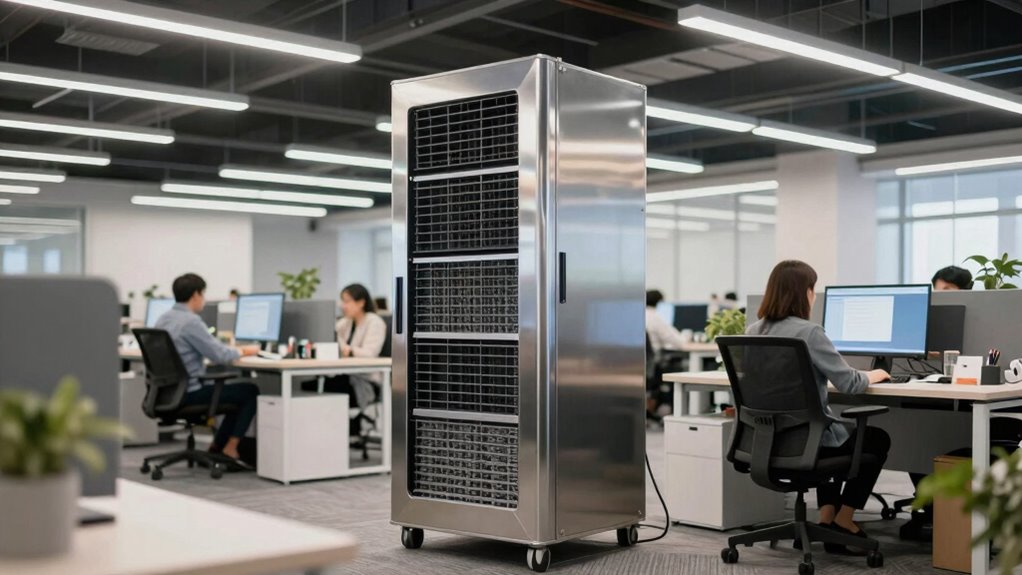
When it comes to maintaining a healthy indoor environment, commercial-grade air cleaning systems stand out as a reliable solution. These systems are designed to handle larger spaces and heavier pollutants than typical residential units, making them essential for businesses, healthcare facilities, and industrial settings. At the core of their effectiveness is advanced air purifier technology, which combines multiple filtration stages to remove particles, microbes, odors, and volatile organic compounds. This technology often includes HEPA filters, activated carbon layers, and sometimes UV sterilization, all working together to ensure the air you breathe is as clean as possible. This multi-stage filtration technology enhances the system’s ability to target a wide range of airborne contaminants, providing comprehensive air purification. Unlike small-scale units, commercial-grade systems are built for continuous operation, providing a consistent level of air quality that supports healthier indoor environments.
Understanding what ‘commercial grade’ means in air cleaning involves recognizing the robustness and capacity of these systems. They’re constructed with durable components capable of handling high airflow rates and larger volumes of contaminated air. This translates into more frequent use, often 24/7, without significant wear and tear. Because of this heavy-duty design, maintenance requirements tend to be higher compared to residential models. Regular filter replacements are critical to maintain optimal performance, and some systems may also need periodic inspections and cleaning of internal parts. Staying on top of these maintenance tasks ensures the air purifier technology continues to operate efficiently, preventing issues like reduced airflow or compromised filtration that could diminish air quality. Additionally, Durable components are a key feature that support the longevity and consistent performance of these systems. Incorporating robust construction materials further enhances their ability to withstand continuous operation and environmental stresses.
Furthermore, commercial-grade systems often feature user-friendly interfaces that make routine maintenance straightforward. Many come with indicators or alerts signaling when filters need changing or when system components require servicing. This helps you stay proactive rather than reactive, ensuring your indoor air remains safe and clean without unexpected downtimes. Proper maintenance extends the lifespan of the system, saving you money in the long run and maintaining the high standards of air purifier technology you rely on. It’s also worth noting that choosing a system with accessible filters and simple cleaning procedures can reduce downtime and simplify ongoing upkeep. Selecting systems with reliable filtration and accessible filters ensures sustained effectiveness over time.
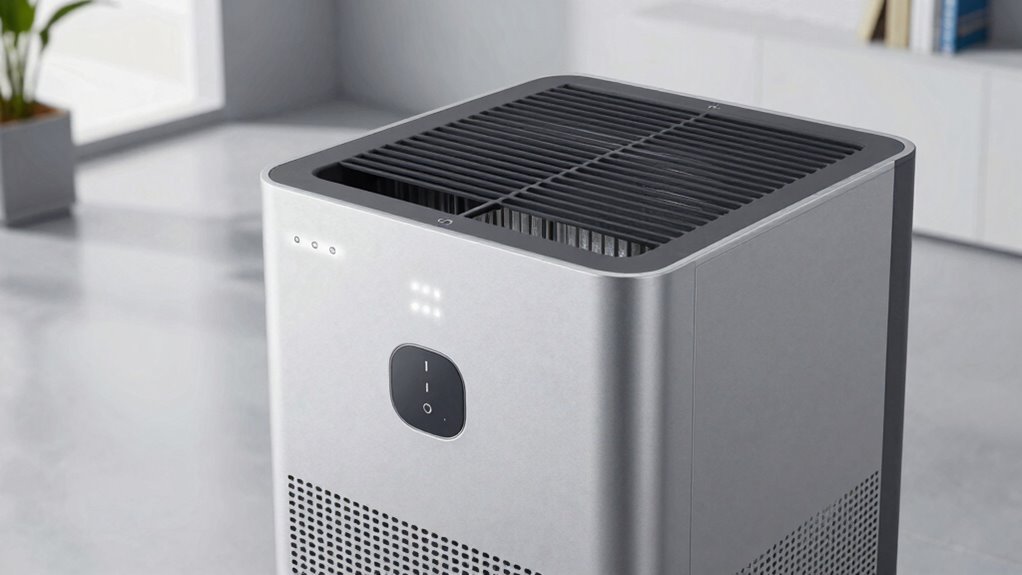
commercial air purifier with HEPA and activated carbon filters
As an affiliate, we earn on qualifying purchases.
As an affiliate, we earn on qualifying purchases.
Frequently Asked Questions
How Does Commercial Grade Air Cleaning Compare to Residential Systems?
Commercial grade air cleaning systems typically outperform residential ones by offering industrial efficiency and heavy-duty filtration. You’ll notice they handle larger spaces and more pollutants, making them ideal for businesses or industrial environments. These systems often have higher airflow capacity, longer-lasting filters, and are built for continuous operation. If you need reliable, powerful air purification in demanding settings, commercial grade units deliver superior performance compared to standard residential options.
Are Commercial Grade Air Purifiers Suitable for Home Use?
You can definitely use commercial-grade air purifiers at home, but keep in mind, they’re often built to handle larger spaces and intense air quality issues. While they excel at removing pollutants, they can be noisy and might be overkill for small rooms. Think of it as bringing a sledgehammer to crack a nut—great for big needs, but not always necessary if your main concern is quiet operation and standard air quality.
What Certifications Define ‘Commercial Grade’ in Air Cleaning?
Commercial grade air cleaning is defined by certifications that meet strict industrial standards. You’ll want to look for certifications like UL, ETL, or ISO, which guarantee the purifier complies with rigorous safety and performance benchmarks. These certification processes verify the device’s effectiveness in large-scale or professional environments, giving you confidence that it’s built for heavy-duty use. Always check for these labels to confirm the air purifier’s commercial-grade quality.
How Often Should Commercial Grade Air Filters Be Replaced?
You should replace commercial-grade air filters every 3 to 6 months, depending on usage and environment. Some experts believe they last longer, but consistent maintenance schedules guarantee maximum filter lifespan and air quality. Regularly inspecting filters for dirt buildup helps prevent airflow issues. If you notice reduced airflow or increased dust, it’s time for a replacement. Staying on top of maintenance guarantees your system functions efficiently and keeps indoor air clean.
Do Commercial Grade Air Purifiers Target Specific Pollutants?
Yes, commercial grade air purifiers often target specific pollutants due to industrial standards and pollutant specificity. You’ll find models designed to remove allergens, chemicals, or airborne bacteria effectively. These purifiers use specialized filters or technologies to focus on particular contaminants, ensuring better air quality tailored to your needs. By understanding pollutant specificity, you can choose the right commercial-grade unit to address your environment’s unique air quality challenges.
Conclusion
So, when you see “commercial grade” in air cleaning, don’t think it’s just a fancy label—it’s like the superhero of air purifiers, ready to tackle the toughest pollutants and dominate airborne enemies! It’s built tough, designed to last forever, and will turn your space into an impenetrable fortress of pure, fresh air. Honestly, trusting a commercial-grade cleaner is like having the secret weapon against allergens and odors—your air’s new best friend!