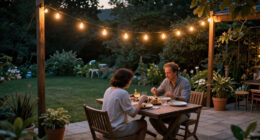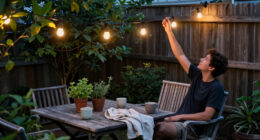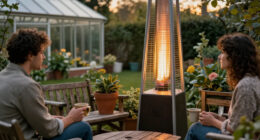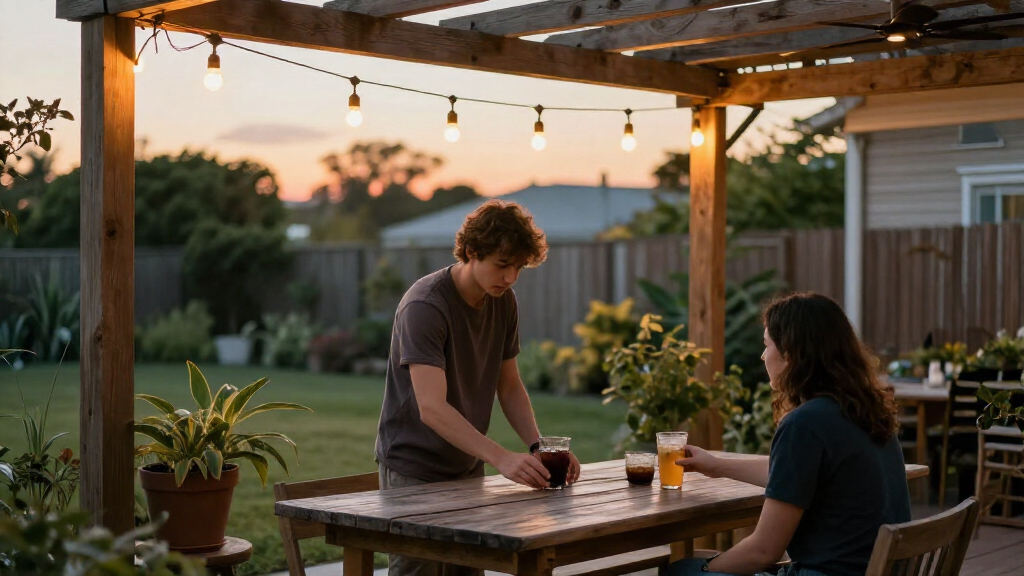
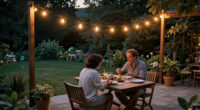
Solar-powered and plug-in string lights can both make a patio more inviting, but they solve different problems. The choice is mainly between putting lights where you want them without running a cord and having dependable illumination whenever you switch them on. Solar lights suit patios with good daytime sun and modest evening lighting needs. Plug-in lights suit longer evenings, shaded yards, and gatherings where consistent brightness matters. The differences show up in charging, installation, weather exposure, and long-term value, so the best choice depends on how you use the space and where its power sources are.

Get garden gear delivered free with Prime
- Fast, free delivery on millions of items
- Prime Video, Amazon Music and more included
- Member-only deals all year

MGVIH 100 ft Outdoor LED String Lights with Remote, Dimmable ST38 Bulbs
- ✔ Length: 100 feet
- ✔ Installed bulbs: 37 ST38 LED bulbs; 2 spares
- ✔ Bulb base: E12

Brightever 100 ft Outdoor String Lights with 52 Shatterproof LED Bulbs
- ✔ Length: 100 feet
- ✔ Bulbs: 50 installed ST38 LEDs; 2 spares
- ✔ Bulb base: E12

55-Foot Outdoor G40 LED String Lights, 25 Bulbs, IP65 Waterproof
- ✔ Length: 55 feet
- ✔ Installed bulbs: 25 G40 LED bulbs; 2 spares
- ✔ Bulb spacing: 2 feet
At a Glance
| Criteria | Solar-powered outdoor string lights | Plug-in outdoor string lights | Winner |
|---|---|---|---|
| Brightness and consistency | Brightness depends on the model and stored solar charge; output can fade as the battery runs down. | Usually provides steadier output while connected to power; bulb type and product design determine brightness. | B |
| Daytime sun and shade | Needs a well-positioned solar panel and enough daylight; shade can reduce nighttime performance. | Works in shaded areas and does not rely on daytime charging. | B |
| Installation and placement | No electrical outlet or long power cord is needed, though the panel must receive sun. | Needs an outdoor outlet or an appropriately installed power source, plus safe cord routing. | A |
| Runtime and control | Often turns on automatically at dusk; runtime varies with charging conditions and battery condition. | Can stay lit as long as power is available; switching and timers depend on the model or setup. | B |
| Weather and upkeep | The panel and battery need suitable outdoor placement and occasional cleaning or replacement. | Outdoor-rated lights and protected connections are needed; cords must be routed away from damage and standing water. | Depends |
| Operating cost and value | No electricity draw while operating, but purchase price and eventual battery replacement affect value. | Uses electricity, but avoids dependence on sunlight and rechargeable light batteries. | Depends |
MGVIH 100 ft Outdoor LED String Lights with Remote, Dimmable ST38 Bulbs
For a patio where lighting should be easy to adjust after installation, the MGVIH 100-foot strand is our most balanced pick. Its remote changes brightness across four levels, switches among three lighting modes, and offers 3- or 5-hour timers. Those controls make it easier to adapt the same setup for dinner, quiet evenings, or a little more visual activity without walking to a plug-in controller. The 2700 K warm white tone also lands in a familiar range for outdoor seating.Coverage is generous, but the 37 ST38 bulbs are more widely distributed across 100 feet than Brightever’s 50 installed bulbs on a strand of the same length. That distinction matters if we want a more continuous line of light or need sockets spaced throughout a longer patio edge. The MGVIH’s built-in hanging hooks help with placement, and its shatterproof PET bulbs and IP65 rating support outdoor use. We still need to plan a corded power route, and the remote requires two AAA batteries. Choose MGVIH for control and convenience; choose Brightever when denser bulb coverage and connecting more strands are higher priorities.
Pros:
- Remote offers four brightness levels and three lighting modes.
- 3- and 5-hour timer settings support a set-and-forget routine.
- IP65-rated, shatterproof PET bulbs are suited to outdoor placement.
- Built-in hooks simplify hanging along patio edges or overhead supports.
Cons:
- Requires a corded electrical outlet.
- Remote needs two AAA batteries.
- Has fewer installed bulbs than Brightever across the same stated length.
Best for: Patio owners who want 100-foot coverage with remote brightness settings and automatic shutoff timers.
Not ideal for: Buyers who want the densest bulb spacing in a 100-foot run or want a battery- or solar-powered setup.
Bottom line: We recommend MGVIH for patios where remote control and timers make a longer lighting run easier to live with.
“We recommend MGVIH for patios where remote control and timers make a longer lighting run easier to live with.”
Brightever 100 ft Outdoor String Lights with 52 Shatterproof LED Bulbs
When a patio needs a long, more densely populated run, Brightever’s 100-foot strand has the clearest advantage in this group: 50 installed ST38 bulbs across 50 sockets. Compared with MGVIH’s 37 installed bulbs over the same stated length, that gives us more points of light along a fence, pergola, or roofline. The 2700 K glow is similarly warm, but the denser arrangement can make the overall line feel more consistently illuminated.Brightever also connects end to end with up to 15 strands, one more than the 55-foot G40 set’s stated maximum of 14, and its built-in hooks aid hanging. The tradeoff is less convenient brightness control out of the box: although the lights are dimmable, a compatible dimmer is sold separately. This is also a corded, 120-volt setup, so outlet access and routing matter. Compared with MGVIH, Brightever gives us more bulbs and a higher stated connection limit but no included remote or timer features. Pick it when the patio layout benefits from bulb density and possible expansion, and skip it if ready-to-use remote adjustments are central to the plan.
Pros:
- 50 installed bulbs provide denser coverage than MGVIH’s 37 bulbs over 100 feet.
- Can connect up to 15 strands for larger layouts.
- Shatterproof bulbs and weatherproof construction support outdoor use.
- Built-in hanging hooks and two spare bulbs aid installation and upkeep.
Cons:
- Compatible dimmer is sold separately.
- Requires a plug-in AC power source.
- Its 50 sockets still need a considered layout across the full 100 feet.
Best for: Owners of long patios or pergolas who value a denser bulb layout and the option to connect multiple strands.
Not ideal for: Anyone who wants remote controls, timer modes, or dimming without buying an additional compatible dimmer.
Bottom line: We’d choose Brightever when a broad patio needs more installed bulbs and room to extend the run.
“We’d choose Brightever when a broad patio needs more installed bulbs and room to extend the run.”
55-Foot Outdoor G40 LED String Lights, 25 Bulbs, IP65 Waterproof
Not every patio needs a 100-foot strand. This 55-foot G40 set is the compact choice for a defined seating nook, balcony-sized patio, or shorter run where larger strings would need awkward excess. Its 25 installed bulbs sit two feet apart, leaving a more open pattern than Brightever’s 50 sockets across 100 feet. The warm 2200 K color temperature is also the warmest specified in this lineup, which suits buyers looking for a more amber-toned evening glow than the two 2700 K options.The bulbs are shatterproof plastic, rated IP65, and operate independently if one goes out, which helps limit the impact of a single bulb failure. We can connect up to 14 strings if the patio grows or a larger layout calls for expansion. But this option offers fewer built-in conveniences than MGVIH: it has no included remote or timer, and dimming requires a compatible unit that is not included. It also needs corded power. Choose it for shorter coverage and warmer light; for a long patio, Brightever supplies more sockets, while MGVIH adds hands-off control.
Pros:
- 55-foot length suits shorter patio runs without starting with 100 feet.
- 2200 K light gives this set the warmest specified tone in the comparison.
- IP65-rated shatterproof plastic bulbs are designed for outdoor use.
- Bulbs work independently if one goes out; up to 14 strings can connect.
Cons:
- Compatible dimmer is not included.
- Corded power limits placement to a reachable outlet.
- Has fewer installed bulbs and less total reach than either 100-foot option.
Best for: Buyers lighting a smaller patio or seating area who prefer widely spaced bulbs and an extra-warm tone.
Not ideal for: People covering a long pergola or seeking included remote controls, timers, or a ready-to-use dimmer.
Bottom line: We’d pick this shorter G40 strand for compact patios where warm light and manageable coverage matter more than advanced controls.
“We’d pick this shorter G40 strand for compact patios where warm light and manageable coverage matter more than advanced controls.”
As an Amazon Associate we earn from qualifying purchases.
Key Differences
The most important difference is power reliability. Plug-in lights get their power from the outlet, so their brightness is less affected by the weather that preceded the evening. Solar lights store energy during the day, making their performance dependent on both sunlight and battery condition. On a sunny patio with short, relaxed evenings, that tradeoff may barely matter. In a shaded yard or during a long dinner, it can decide whether the lights stay useful through the evening.
Placement creates the reverse advantage. Solar lights can reach seating areas, garden edges, or pergolas that lack nearby outlets, provided the panel can receive sunlight. Plug-in lights make more sense when the patio already has an outdoor outlet or when the owner can route a cord safely. They also suit users who want more control over when lights turn on and how long they remain lit. Neither power source guarantees weather durability: outdoor ratings, protected connections, and sound installation matter for both.
Value depends on the inconvenience each option removes. Solar can avoid electrical use and simplify installation, but a shaded location or worn battery can make inexpensive lights frustrating. Plug-in lights add ongoing electricity use and may require a suitable outlet, yet their steady power can be worth paying for when patio lighting is used often or for extended periods. A slightly higher upfront cost is justified only when it delivers the brightness, controls, or durability the patio actually needs.
Detailed Comparison
Brightness and consistency (Plug-in outdoor string lights wins — moderate)
Plug-in lights win by a moderate margin for consistent output. Their supply does not depend on how much sun reached a panel earlier that day, so they are a safer choice for dinners, parties, or routine evening use. Solar models can provide pleasant ambient light, but brightness and runtime vary with charge, battery condition, and design. Check product specifications and reviews for the intended use rather than assuming every solar set is dim or every plug-in set is bright. If the lights are decorative accents, solar may be sufficient; if they need to illuminate a large area, plug-in is the more reliable bet.
Daytime sun and shade (Plug-in outdoor string lights wins — major)
Plug-in lights win by a major margin when the patio is shaded or the solar panel cannot be placed in direct sun. A solar set only performs as well as its charging conditions allow, and a bright patio location does not help if the panel sits under an eave or tree canopy. Solar wins on sunny sites where the panel can be positioned separately from the bulbs. That flexibility lets owners keep the lights over a seating area while placing the panel in a sunnier spot, subject to the product’s cable length and mounting options.
Installation and placement (Solar-powered outdoor string lights wins — moderate)
Solar wins by a moderate margin for straightforward setup. There is no long power cord to route and no need to place the lights near an outlet, which helps with detached pergolas, garden seating, and rental patios. The panel still needs a stable, sunny position, so the set is not entirely location-free. Plug-in lights win when an outdoor outlet is already close and the cord can be secured safely. Without that outlet, placement can take more planning, and a cord crossing a walkway or exposed to damage is a poor solution.
Runtime and control (Plug-in outdoor string lights wins — moderate)
Plug-in lights win by a moderate margin for long or predictable use. They can remain on while power is available, and users can choose a separate timer or switch when the set does not include one. Many solar lights turn on automatically at dusk, which is convenient but can offer less control; their runtime also depends on the stored charge. Choose solar if automatic evening accent lighting is enough. Choose plug-in if you regularly host late gatherings or want lighting to operate on a schedule independent of daylight.
Weather and upkeep (moderate difference)
This is a tie because the power source alone does not establish whether a set can handle outdoor conditions. Both options need an appropriate outdoor rating, and plugs, connectors, and extension cords need protection suited to their placement. Solar adds a panel that should be kept clear enough to charge and a battery that may eventually need attention or replacement. Plug-in sets avoid panel maintenance but add cords and powered connections to manage. For either type, follow the maker’s installation guidance and check the ratings of every connected component, not just the bulbs.
Operating cost and value (moderate difference)
There is no universal value winner. Solar avoids electricity use during operation and can save the cost and effort of setting up power in a location without an outlet. That advantage weakens if shade leaves the lights undercharged or if the battery needs replacing sooner than expected. Plug-in lights use electricity, but frequent use may justify the expense when their reliable output better serves the patio. Paying more for a plug-in set makes sense for regular, longer evenings; paying more for solar makes sense only if its outdoor rating, panel placement, and expected brightness fit the site.
Solar-powered outdoor string lights: Pros and Cons
Pros:
- Can be placed away from an outlet without routing a power cord.
- Uses stored solar energy during operation.
- Automatic dusk activation is common and can simplify everyday use.
Cons:
- Needs a sunny position for reliable charging.
- Brightness and runtime can vary with conditions and battery age.
- The panel and battery add upkeep and may limit where the set can be installed.
Plug-in outdoor string lights: Pros and Cons
Pros:
- Provides steadier power regardless of daytime sunlight.
- Works well for long evenings and shaded patios.
- Can offer more predictable switching and scheduling when paired with suitable controls.
Cons:
- Needs a nearby outdoor outlet or a suitable power arrangement.
- Cord placement requires care around walkways, moisture, and potential damage.
- Uses electricity while on.
Who Should Choose What
Choose Solar-powered outdoor string lights if:
- Your patio gets enough sun to charge the panel and you want simple, cord-free placement.
- You need ambient decorative lighting rather than dependable illumination for long evenings.
- There is no convenient outdoor outlet and running a cord would be awkward.
Choose Plug-in outdoor string lights if:
- Your patio is shaded, or the panel would sit under a roof or tree canopy.
- You host late dinners or want the lights to stay consistently bright for extended periods.
- You already have a suitable outdoor outlet and can route the cord safely.
Skip both if: Skip both if you need bright task lighting for cooking or steps; use dedicated, properly installed outdoor fixtures for those areas.
Value for Money
Paying more for plug-in lights is worthwhile when steady output and long runtime matter more than avoiding a cord or modest electricity use. Frequent evening users, shaded patios, and people who host gatherings often get more practical value from that reliability. Solar can be better value when the panel has a sunny location, the lighting is mainly decorative, and a nearby outlet would require extra work. Compare the outdoor rating, replaceable-bulb or battery details, and warranty alongside the price. A lower purchase price does not compensate for a set that cannot charge or last through the evenings you care about.
Final Verdict
For most patios that already have a safely accessible outdoor outlet, plug-in string lights are the more dependable choice: they suit shade, long evenings, and regular entertaining. Choose solar if your priority is flexible placement without a cord and the panel will receive enough sun; for short, atmospheric use, that convenience can outweigh variable runtime. The deciding factor is whether you need lights to perform predictably every evening. If yes, pay for plug-in reliability. If no, and the site is sunny, solar is a sensible value choice.
Frequently Asked Questions
Are solar or plug-in string lights better for a shaded patio?
Plug-in lights are generally the better fit because they do not depend on daylight to charge. Solar can still work if its panel can be placed in a sunnier spot within the product’s reach, but a panel left in deep shade may deliver shorter runtime or weaker light.
Do solar patio lights stay on all night?
Some may, but no set should be assumed to do so. Runtime depends on its battery, charging conditions, light output, and condition over time. Check the manufacturer’s stated runtime and treat it as dependent on a good charge. Plug-in lights can stay on while connected to power, subject to their controls and safe operating instructions.
Are plug-in string lights safe to leave outdoors?
Use sets and connections rated for outdoor conditions, and follow the maker’s instructions for installation and use. Keep cords secured away from walkways and damage, and protect connections as their ratings require. An indoor-rated extension cord or light set is not a suitable substitute for outdoor-rated equipment.
Is the higher price of plug-in patio lights worth it?
It can be worth it if you use the lights often, need steady brightness, or want them to stay on for a long evening. Solar may offer better value when the panel gets ample sun and the lights are mainly decorative. Compare expected performance and replacement needs, not purchase price alone.
Veterans Day Picks

Shark Matrix Plus 2-in-1 Robot Vacuum and Mop with 60-Day Self-Emptying Base
As an affiliate, we earn on qualifying purchases.