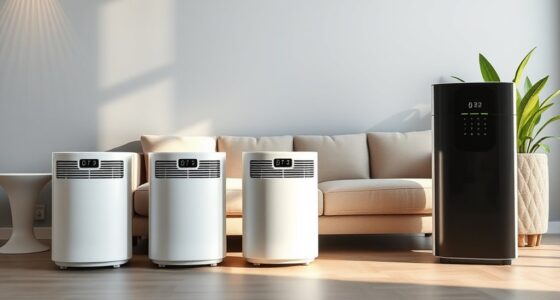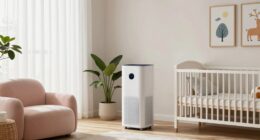

Air purifiers can markedly reduce airborne dust and allergens, but they won’t eliminate them entirely. HEPA filters trap most particles like pollen, pet dander, and mold spores, while activated carbon filters help with gases and odors. However, dust can settle on surfaces and be stirred up again. To improve indoor air quality fully, you need regular cleaning, proper humidity control, and good ventilation. Keep going to discover more about making your environment healthier.
Key Takeaways
- Air purifiers with HEPA filters remove up to 99.97% of particles as small as 0.3 microns, reducing airborne dust and allergens.
- They do not eliminate the sources of dust and allergens or prevent new particles from entering the environment.
- Air purifiers alone cannot fully remove all dust or allergens, especially those settled on surfaces.
- Regular cleaning, dusting, and proper ventilation are necessary to complement air purifier use.
- Complete allergen elimination requires an integrated approach, not solely relying on air purifiers.

Dust allergens can substantially worsen allergy symptoms, especially for those sensitive to airborne particles. When you’re trying to breathe easier, air purifiers can seem like a promising solution. But it’s important to understand their capabilities and limitations. Many air purifiers are equipped with HEPA filters, which are highly effective at trapping tiny particles like dust mites, pollen, pet dander, and mold spores. These filters can remove up to 99.97% of particles as small as 0.3 microns, markedly reducing airborne allergens in your space. However, while HEPA filters excel at capturing dust and allergens, they don’t eliminate the root causes of indoor pollution. For example, dust particles often originate from sources like fabric, paper, and outdoor infiltration, which continue to introduce allergens into your environment even after filtration.
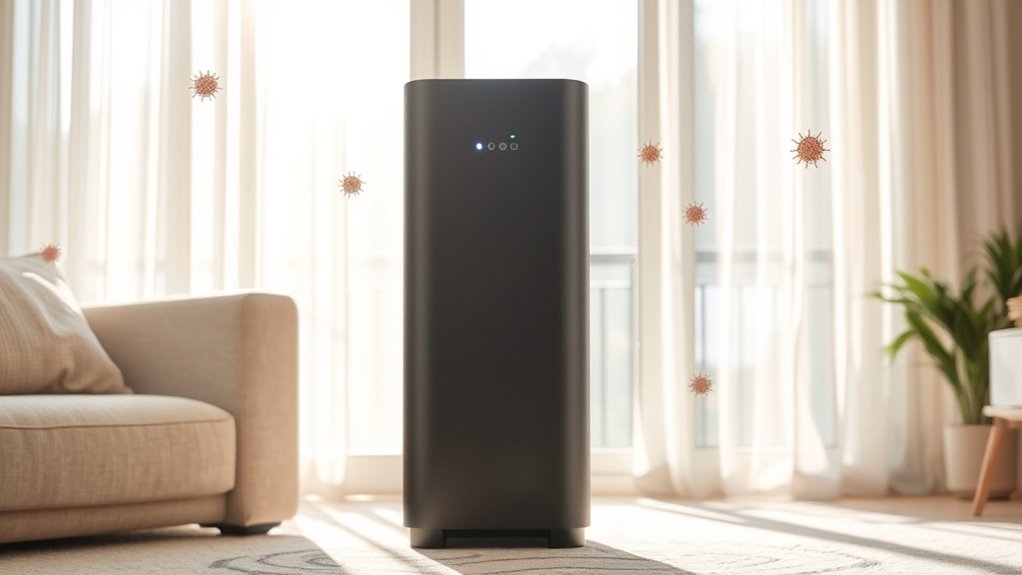
HEPA filters trap airborne dust and allergens but don’t eliminate their sources or prevent new particles from entering.
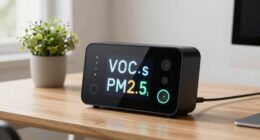
In addition to HEPA filtration, some advanced air purifiers feature activated carbon filters that provide VOC removal. Volatile Organic Compounds, or VOCs, are emitted by household products, paints, cleaning supplies, and building materials. These gases can contribute to indoor air pollution and cause symptoms like headaches, respiratory irritation, or dizziness. An air purifier with VOC removal capability can help reduce these gases, making the air healthier to breathe. However, it’s essential to recognize that VOC removal doesn’t directly target dust or allergens. Instead, it addresses chemical pollutants that may compound allergy symptoms or cause other health issues.
Even with high-quality HEPA filters and VOC removal features, air purifiers aren’t magic bullets. They markedly improve indoor air quality but don’t eliminate all dust or allergens completely. Some particles settle quickly on surfaces and can be stirred up by movement, cleaning, or airflow, meaning your environment remains dynamic. Regular cleaning, dusting, and vacuuming with a HEPA-filter-equipped vacuum are essential complements to air purifier use. Also, maintaining proper humidity levels helps prevent dust mites and mold growth, which are common triggers. Additionally, understanding the limitations of air purifiers can help set realistic expectations for their impact.
Ultimately, an air purifier can dramatically reduce airborne allergens and chemical pollutants, making your environment more comfortable. But it’s not a one-stop solution. To truly minimize dust and allergens, combine the use of a quality air purifier with good cleaning practices, humidity control, and proper ventilation. This integrated approach offers the best chance of creating a healthier indoor space where allergy symptoms become more manageable.
Frequently Asked Questions
Do Air Purifiers Remove Pet Dander Effectively?
Yes, air purifiers can effectively remove pet dander, improving your air quality. They trap tiny dander particles with HEPA filters, reducing allergens that cause allergies or asthma. Keep in mind, though, that no device completely eliminates all pet dander. Regular cleaning and grooming are essential complements to an air purifier’s efforts. By using one consistently, you’ll notice a significant improvement in your indoor air quality and overall comfort.
Can Air Purifiers Eliminate Mold Spores Completely?
Think of your air purifier as a vigilant gatekeeper, but even the best can’t block every mold spore. While it considerably reduces mold spore filtration, air purifier limitations mean some spores may slip through. It doesn’t eliminate mold spores completely, especially if mold persists in hidden areas. To improve air quality, combine the purifier with moisture control and cleaning. You’re better off with an all-encompassing approach rather than relying solely on the device.
How Often Should Filters Be Replaced for Optimal Dust Removal?
You should replace your air purifier’s filters every 3 to 6 months, depending on usage and air quality. Regular filter maintenance guarantees ideal dust removal and keeps your device functioning efficiently. Follow the manufacturer’s recommended replacement schedule, and check filters monthly if you have pets or high dust levels. Prompt filter replacement prevents buildup, maintaining cleaner indoor air and reducing allergens effectively.
Are Air Purifiers Safe for Children and Allergy Sufferers?
Air purifier safety is generally high for children and allergy sufferers, especially when you choose allergy-friendly devices designed to remove common allergens. You should always follow manufacturer instructions and guarantee filters are regularly replaced to maintain effectiveness and safety. These devices can substantially reduce airborne dust and allergens, creating a safer environment for vulnerable individuals. Just make sure the air purifier has appropriate certifications and features tailored for sensitive users.
Do Air Purifiers Address All Types of Indoor Airborne Allergens?
Imagine a gentle breeze sweeping through your home, catching floating dust and allergens. While air purifiers target many airborne allergen types, their limitations mean they can’t eliminate all. Some allergens, like certain VOCs or pet dander, may slip through or linger despite filtration. You need to understand these allergen types and the specific capabilities of your air purifier to truly improve your indoor air quality.
Conclusion
While air purifiers considerably reduce dust and allergens, they can’t eliminate every tiny particle, leaving some traces behind. Think of them as your helpful ally in battling indoor pollutants, yet not a perfect shield. You still need to dust regularly and keep your home clean. Ultimately, they improve your air quality, but complete elimination is a myth. So, enjoy cleaner air, knowing a purifier is a step forward, not a magic fix.