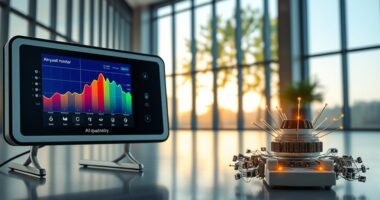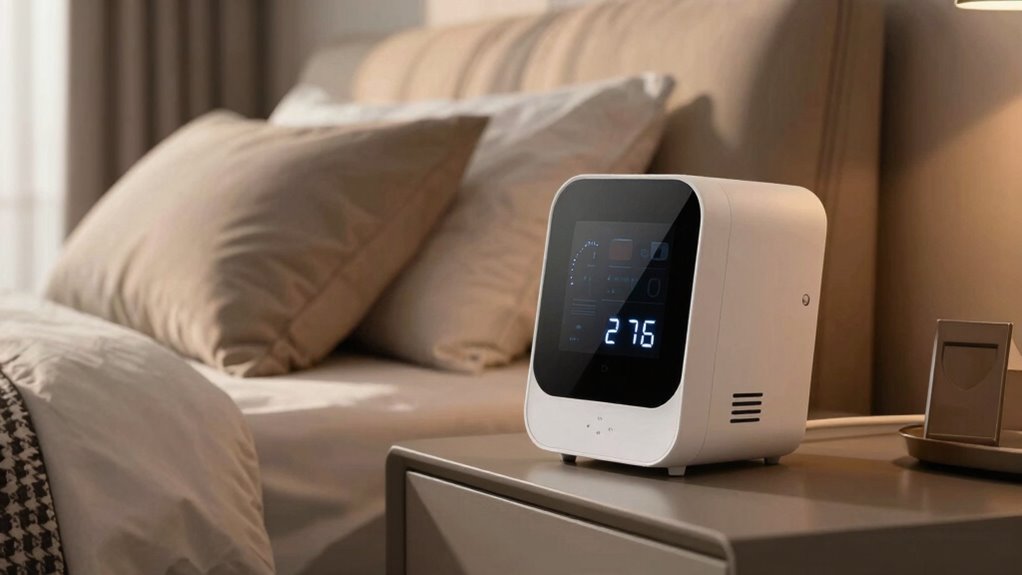

You need a different placement strategy for your bedroom air monitor because environment and airflow patterns greatly influence its accuracy. Placing it near windows, vents, or sources of external airflow can give a false sense of clean air or pollutant levels. To get reliable data, position it at face level, away from drafts or heaters, and consider how air circulates in your room. Keep in mind, proper placement can make all the difference in understanding your air quality—if you keep going, you’ll find out more.

Get garden gear delivered free with Prime
- Fast, free delivery on millions of items
- Prime Video, Amazon Music and more included
- Member-only deals all year
Key Takeaways
- Bedrooms often have unique airflow patterns that require strategic placement for accurate readings.
- Personal sleeping areas may have different pollutant levels, needing targeted monitor positioning.
- External sources like nearby windows or vents can skew data, necessitating careful placement.
- Ambient factors such as humidity or drafts influence sensor accuracy, requiring tailored positioning.
- Proper placement ensures the monitor reflects typical breathing conditions during sleep for better health insights.

Proper placement of bedroom air monitors is essential for accurately tracking air quality and ensuring a healthy sleeping environment. When you set up your device, you want to make sure that the air quality sensors are positioned correctly to provide reliable data. These sensors are sensitive to their surroundings, and even slight differences in placement can lead to inaccurate readings. If your monitor isn’t placed properly, it might underestimate or overestimate pollutants, which can affect your decisions about improving air quality. That’s why understanding why a different placement strategy is often necessary is so important.
Proper placement of air monitors ensures accurate readings for a healthier sleeping environment.
Air quality sensors work best when they’re positioned in spots that reflect your typical breathing zone. Usually, this means placing the monitor at face level, around the height where you sleep. Avoid placing it near windows, vents, or sources of direct airflow, because these can cause readings to fluctuate artificially. For example, placing the sensor near an open window might make it detect cleaner air than what actually surrounds you during sleep. Conversely, placing it near a heater or a humidifier could skew the results by giving false readings of pollutants or humidity levels. The goal is to find a balance where the monitor measures the air that you’re actually breathing, not just the air in a specific corner or near a source of disturbance. Proper placement also helps optimize sensor calibration, which is vital for maintaining accuracy over time, especially since environmental conditions can affect sensor performance. Additionally, considering environmental factors during placement can help mitigate the impact of external influences on your readings.
Another key factor is device calibration. Even the most advanced air quality sensors need regular calibration to maintain accuracy over time. If your monitor isn’t calibrated correctly, or if it’s been a while since the last calibration, the data you receive might be unreliable. Proper placement helps facilitate calibration by allowing easier access to the device for maintenance or adjustments. When you position it where it’s accessible, you can verify its readings periodically and recalibrate as needed, ensuring consistent performance. Additionally, air circulation plays a crucial role in obtaining representative data, so placement should consider the airflow patterns within the room to avoid misleading readings. Recognizing airflow patterns within the room can help you choose a spot that provides a more comprehensive view of your overall air quality.
Different rooms and environments require different placement strategies because air circulation varies. In bedrooms with poor airflow, you might need to position the monitor closer to the center of the room, while in well-ventilated spaces, placing it near a window or air vent might be more representative. Remember, the goal is to keep the device in a spot that best captures your typical air quality, not just the air in a single, isolated part of the room. By thoughtfully choosing placements that consider airflow, sensor sensitivity, and calibration needs, you’ll get more accurate data, giving you better control over your sleep environment and overall air quality.
bedroom air quality monitor placement
As an affiliate, we earn on qualifying purchases.
As an affiliate, we earn on qualifying purchases.
Frequently Asked Questions
How Often Should I Recalibrate My Air Monitor?
You should recalibrate your air monitor’s sensor calibration at least once every six months to guarantee accuracy. If you notice inconsistent readings or significant changes in your environment, consider more frequent recalibration. Proper placement affects sensor calibration, so keep your monitor in a stable spot away from drafts or direct sunlight. Regularly checking and adjusting the placement frequency helps maintain reliable data, giving you better control over your indoor air quality.
Can Multiple Monitors Be Used for Better Accuracy?
Yes, using multiple monitors can improve your air quality readings. By placing them in different areas of your room, you account for variations in sensor sensitivity and environmental factors. This setup helps you identify inconsistencies and guarantees more accurate data. Remember, calibration frequency is key; regularly calibrate each monitor to maintain accuracy. Multiple monitors give you a clearer picture of your air quality, helping you make better decisions for your space.
Do Different Room Sizes Require Different Placement Strategies?
Imagine your room as a canvas, where the size influences your brushstrokes. For small rooms, place your monitor centrally, avoiding corners to prevent skewed readings. In larger spaces, position it at eye level, away from walls and drafts, to capture accurate air quality data. Different room sizes demand tailored placement techniques, ensuring your monitor truly reflects the air you breathe.
How Do Outdoor Air Quality Levels Affect Indoor Monitor Readings?
Outdoor pollution and seasonal variations profoundly impact indoor monitor readings. When outdoor pollution levels rise, especially during high-traffic times or seasonal changes like winter inversions, your indoor air quality can worsen. These fluctuations cause your monitor to detect higher pollutant levels even indoors. To get accurate readings, consider the outdoor air quality, and adjust your monitor’s placement or use filters during peak pollution seasons for more reliable indoor air quality assessments.
Are There Specific Brands Better Suited for Bedroom Placement?
When choosing a bedroom air monitor, some brands like Awair and Foobot excel because they focus on accurate indoor air quality and easy placement. In your case, consider placement considerations like avoiding direct sunlight, drafts, or humidity sources. Comparing brands helps you find one with sensors sensitive enough for your bedroom environment, ensuring reliable readings. Opt for models designed for indoor use and that allow flexible positioning to get the most precise air quality data.
Conclusion
In summary, understanding the best placement of your bedroom air monitor isn’t just a guess—it’s backed by science. Moving the device away from walls or vents actually improves its accuracy, revealing the true air quality you breathe. Don’t rely on the theory that placing it anywhere is fine; instead, test and adjust its location. Doing so guarantees you get precise readings, keeping your sleeping environment safe and healthy.
Halloween Picks
halloween
As an affiliate, we earn on qualifying purchases.