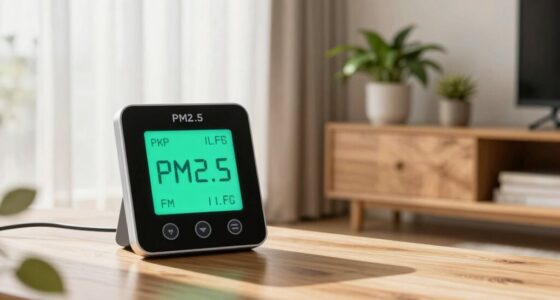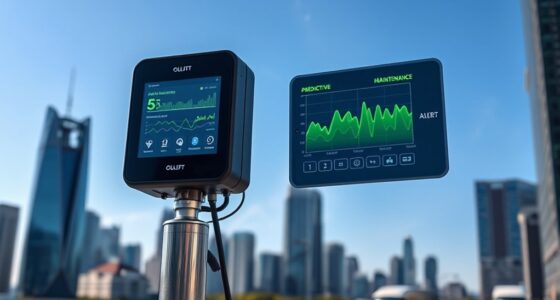

To guarantee your IAQ sensors stay accurate over time, you should perform regular calibration using certified reference gases or internal self-calibration features. Establish a routine schedule—like quarterly or semi-annual checks—and document each adjustment to track performance. Comparing sensor readings against highly accurate devices helps identify drift and correct it promptly. Keeping up with calibration maintains reliable data for indoor air quality management. Keep reading to discover more effective calibration techniques and best practices.
Key Takeaways
- Regular calibration using certified reference gases or conditions maintains sensor accuracy over time.
- Implement scheduled calibration routines (quarterly or semi-annual) to prevent drift and ensure reliable IAQ data.
- Compare sensor readings with high-precision reference instruments to identify and correct deviations.
- Use built-in self-calibration features for routine internal adjustments, complemented by external verification.
- Document calibration activities and monitor performance trends to proactively address sensor drift and sustain accuracy.
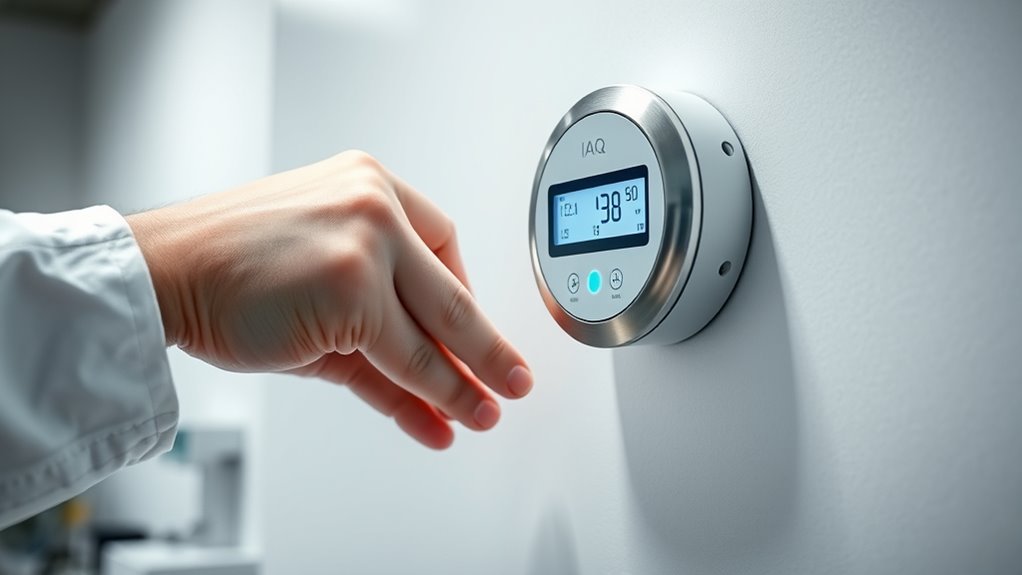
Calibrating Indoor Air Quality (IAQ) sensors is fundamental for ensuring accurate readings and maintaining a healthy environment. Over time, these sensors can experience sensor drift, which causes their measurements to deviate from true values. This drift can result from various factors, such as environmental conditions, aging components, or exposure to pollutants. If left unchecked, sensor drift compromises the reliability of your IAQ data, potentially leading to poor decision-making about ventilation, filtration, or other air quality controls. That’s why regular calibration is essential to keep your sensors functioning correctly and providing trustworthy data.
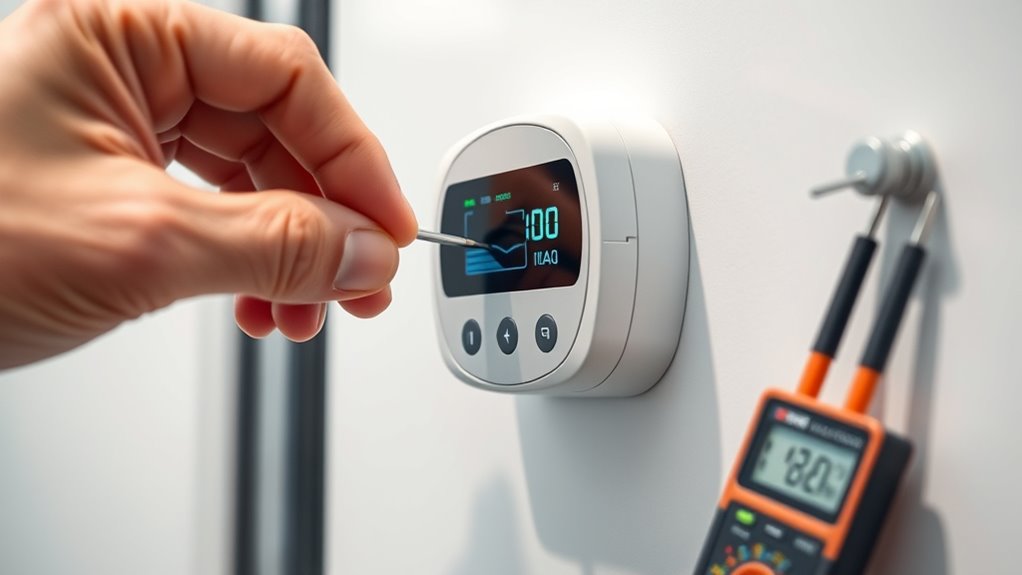
When it comes to calibration methods, you have a few options, depending on your setup and resources. One common approach is manufacturer calibration, where you send your sensors back to the manufacturer for professional calibration. While this method offers high accuracy, it can be costly and time-consuming, especially if you have multiple sensors. Alternatively, field calibration allows you to calibrate your sensors on-site, which is more convenient and cost-effective. This involves exposing your sensors to known reference gases or environmental conditions and adjusting them accordingly. For example, you might use calibration gases with certified concentrations of pollutants like CO2 or VOCs to set a baseline for your sensors.
Another effective calibration method involves using reference instruments or secondary sensors that are already calibrated and highly accurate. You compare your IAQ sensors’ readings against these reference devices, then adjust your sensors to align with the reference data. This process helps correct sensor drift in real-time and ensures ongoing accuracy. Some advanced sensors come with self-calibration features, which periodically perform internal adjustments based on baseline measurements, reducing the need for manual calibration. However, even with these, periodic checks against external references are recommended to verify their performance. Additionally, understanding the impact of contrast ratio on sensor readings can help improve calibration accuracy by accounting for image quality variables.
No matter which calibration method you choose, establishing a routine schedule is indispensable. Regular calibration, whether quarterly or semi-annually, helps catch sensor drift early and maintains the integrity of your IAQ monitoring. Keep records of each calibration, noting any adjustments made and environmental conditions during the process. This documentation can help identify trends in sensor performance and anticipate when future calibrations might be needed. Ultimately, investing time in proper calibration methods and addressing sensor drift ensures your IAQ sensors deliver precise data, empowering you to make informed decisions for a healthier indoor environment.
Frequently Asked Questions
How Often Should IAQ Sensors Be Calibrated for Optimal Accuracy?
You should calibrate your IAQ sensors every 6 to 12 months to prevent sensor drift from affecting accuracy. Regular calibration ensures that your sensors provide reliable readings, especially as environmental conditions change. Keep an eye on calibration intervals recommended by the manufacturer, and consider more frequent checks if you notice inconsistent data. Proper calibration maintains sensor performance, helping you make informed decisions about indoor air quality.
What Are Common Signs Indicating a Need for Sensor Recalibration?
You’ll notice a need for sensor recalibration when you observe sensor drift, where readings gradually become unreliable, or false alarms that don’t match real conditions. If your IAQ sensors suddenly show inconsistent data or trigger alarms without cause, it’s a clear sign they need recalibration. Regular checks help maintain accuracy, preventing false alarms and ensuring your sensors provide trustworthy indoor air quality readings over time.
Can Calibration Procedures Be Performed by Non-Experts?
Did you know that over 60% of IAQ sensor inaccuracies stem from improper calibration? You can perform DIY calibration if you follow clear instructions, but professional calibration guarantees precision. While some simple adjustments are possible for non-experts, complex sensor calibration often requires expert knowledge and specialized equipment. For critical measurements, it’s best to seek professional calibration to maintain sensor accuracy and ensure reliable indoor air quality monitoring.
What Are the Costs Associated With Regular IAQ Sensor Calibration?
Regular IAQ sensor calibration involves costs like professional service fees, calibration equipment, and potential downtime. You should budget for these expenses to maintain sensor accuracy, as neglecting calibration can lead to inaccurate readings and costly mistakes. The cost implications vary depending on sensor type, calibration frequency, and whether you perform it in-house or hire experts. Investing in proper calibration guarantees reliable data and long-term savings.
How Does Environmental Change Affect IAQ Sensor Calibration Stability?
Environmental fluctuations can cause sensor drift, impacting your IAQ sensor’s calibration stability. Changes in temperature, humidity, or pollutants can make sensors less accurate over time. You’ll notice deviations from actual air quality readings, which means calibration needs to be checked more frequently. To maintain accuracy, monitor environmental conditions regularly and recalibrate your sensors as needed, especially after significant environmental shifts, ensuring reliable IAQ data.
Conclusion
Just like a master painter fine-tunes their brush strokes, regularly calibrating your IAQ sensors keeps your indoor air quality true to life. Don’t let your sensors become the static in your air’s symphony; instead, maintain their accuracy over time. Remember, even Sherlock Holmes knew the importance of details—so trust in routine calibration to uncover the secrets of a healthier, safer environment. Keep your sensors sharp, and breathe easy knowing you’re always in control.