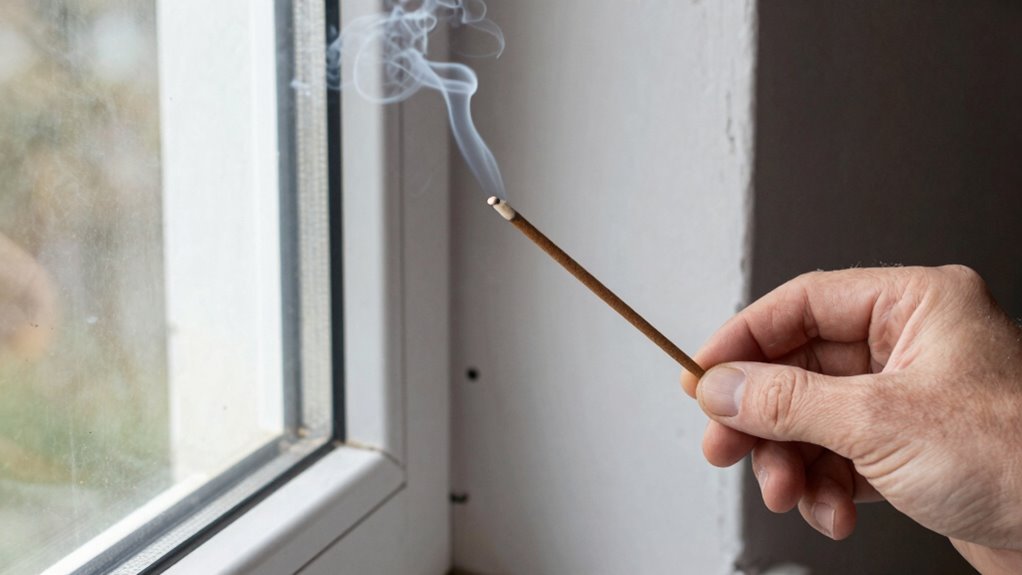
To check for air leaks around windows and doors, start by closing all openings and turning off fans. Use a lit candle or incense stick near edges and watch for flickering or smoke movement, indicating a leak. You can also feel for drafts with your hand. Be thorough and check around gaskets, frames, and sills. If you want to learn more tips to make your home more energy-efficient, keep exploring these methods.

Get garden gear delivered free with Prime
- Fast, free delivery on millions of items
- Prime Video, Amazon Music and more included
- Member-only deals all year
Key Takeaways
- Close all windows and doors, then turn off fans to prevent airflow interference during inspection.
- Use a lit candle or incense stick near edges to detect flickering or smoke movement indicating leaks.
- Conduct visual inspections for gaps, cracks, or damaged weatherstripping around windows and doors.
- Perform a draft test by feeling for air movement with your hand around edges and seals.
- Regularly repeat inspections, especially during seasonal changes, to maintain effective sealing and energy efficiency.
Air leaks around windows and doors can silently drain your home’s energy and increase utility bills. When you don’t detect and seal these leaks, your heating and cooling systems work harder than they should, wasting energy and money. The first step in addressing this issue is to check for leaks accurately, which involves a simple but effective process. By doing so, you can improve your home’s insulation and boost overall energy efficiency.
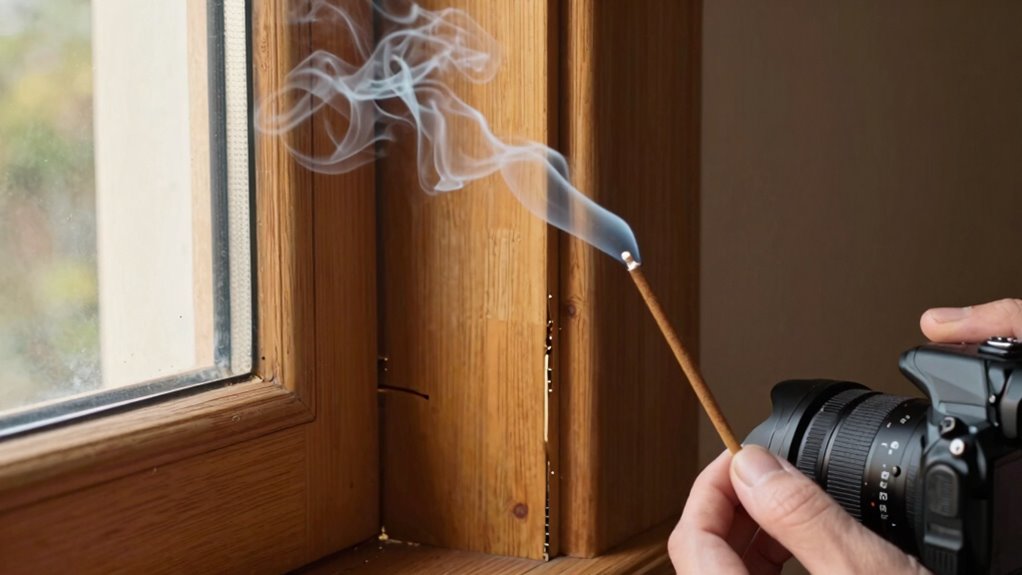
Start by examining your windows and doors from the inside. Close all windows and doors, then turn off any fans or exhaust vents to avoid airflow disturbances. Light a candle or hold a lit incense stick near the edges of the window frames and door jambs. As you move the candle or incense slowly around the perimeter, watch for flickering or smoke movement. If you notice the flame flickering or the smoke wavering, it indicates a leak. This simple visual test helps you identify areas where air may be slipping through gaps or cracks. Performing a comprehensive inspection regularly can also help you catch potential issues early before they worsen. Regular inspections can also help you spot wear and tear, which might cause additional leaks over time. Additionally, understanding how to properly identify leaks allows for more targeted sealing efforts, ultimately improving your home’s energy efficiency.
Check for air leaks by gently moving a candle or incense around window and door edges to spot flickering or wavering smoke.
Once you locate leaks, it’s essential to take action. Seal gaps with weatherstripping, caulking, or door sweeps. Weatherstripping is especially useful around moving parts, while caulking works well for stationary cracks. This process is vital for insulation improvement, as it prevents drafts and maintains a consistent indoor temperature. When your home is better sealed, your heating and cooling systems operate more efficiently, directly enhancing your energy efficiency. Regularly inspecting for air leaks can help you stay ahead of potential issues and ensure ongoing energy savings. Remember, proper sealing techniques play a crucial role in maintaining a comfortable home environment.
It’s also a good idea to periodically repeat these checks, especially during seasonal changes. Over time, weatherstripping may wear out or cracks can develop, diminishing your insulation efforts. Regular inspections help maintain energy efficiency and keep utility bills in check. Remember, tackling air leaks isn’t just about sealing gaps; it’s about creating a more comfortable, energy-efficient home. By following these straightforward steps, you guarantee your home stays cozy in winter and cool in summer, all while saving money on energy costs. Properly checking for air leaks around windows and doors is a simple yet powerful way to improve your home’s insulation and overall energy performance.
window and door weatherstripping kit
As an affiliate, we earn on qualifying purchases.
As an affiliate, we earn on qualifying purchases.
Frequently Asked Questions
How Often Should I Check for Air Leaks in My Home?
You should check for air leaks at least twice a year, during seasonal maintenance in spring and fall. Regularly inspecting your windows and doors helps maintain energy efficiency and prevents drafts. If you notice increased energy bills or cold spots, it’s a sign to reexamine. Staying proactive ensures your home stays comfortable and energy-efficient, saving you money and reducing your carbon footprint over time.
Can I Use Household Items to Temporarily Seal Leaks?
Think of household remedies as your home’s quick band-aid, ready for a temporary fix. Yes, you can use DIY solutions like weatherstripping tape, caulk, or even plastic wrap for windows and doors. These household remedies help seal leaks quickly, saving energy until you can get a more permanent fix. Just remember, while handy, they’re temporary, so plan for proper repairs to truly seal your home.
Are There Specific Tools Recommended for Detecting Leaks?
You should use detection devices like smoke pencils or thermal cameras to find leaks accurately. These tools help you spot drafts that are hard to see. When sealing leaks, consider different sealant types such as caulk, weatherstripping, or foam tape, depending on the gap size and location. Using the right tools and sealants guarantees you effectively seal leaks, improving energy efficiency and comfort in your home.
How Do Weather Conditions Affect the Accuracy of Leak Detection?
Weather conditions are like a double-edged sword for leak detection. High humidity can mask leaks or cause false alarms, while low humidity makes leaks more visible. Temperature influence also plays a role; cold drafts are easier to spot on chilly days, but heat can make leaks harder to detect. Always check during mild, dry conditions for the most accurate results, as weather can muddy the waters.
What Are the Long-Term Solutions for Persistent Leaks?
To address persistent leaks long-term, focus on regular caulking maintenance and upgrading to better window insulation. You should inspect and reapply caulk when it cracks or deteriorates, ensuring a tight seal. Consider installing energy-efficient window insulation or storm windows for added protection. These steps will improve your home’s energy efficiency, prevent drafts, and reduce long-term repair costs, keeping your home more comfortable year-round.
Conclusion
Now that you know how to check for air leaks around your windows and doors, it’s time to take action. Seal gaps to save energy, improve comfort, and reduce costs. Seal gaps to prevent drafts, keep out unwanted pests, and enhance your home’s efficiency. Regular checks guarantee your home stays cozy year-round. By maintaining airtight seals, you protect your home, save money, and enjoy comfort—all through simple, proactive steps.
Fall yard work Picks
leaf blowers
As an affiliate, we earn on qualifying purchases.