Data analytics platforms for air quality management help you monitor pollution in real time by integrating data from sensors across urban areas. They process vast amounts of information quickly to detect patterns and anomalies, allowing you to identify hotspots before problems worsen. Advanced algorithms forecast future air quality trends, supporting proactive interventions. By learning from new data continuously, these platforms improve accuracy over time. Keep exploring to discover how these systems can transform your city’s air quality efforts.
Key Takeaways
- Integrate real-time sensor data for comprehensive and instant air quality monitoring across urban environments.
- Utilize advanced analytics and algorithms to detect patterns, anomalies, and forecast future pollution levels.
- Employ machine learning techniques that improve accuracy over time through continuous data input and model refinement.
- Enable proactive pollution management with predictive modeling to identify hotspots before issues escalate.
- Support public health by providing timely alerts, targeted interventions, and actionable insights for city officials and residents.

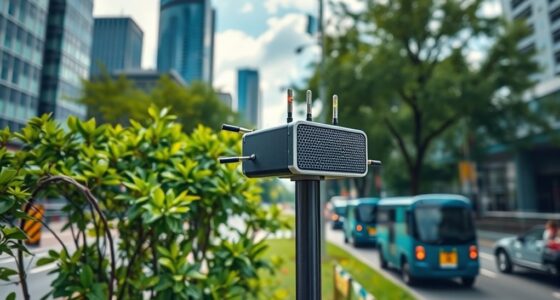
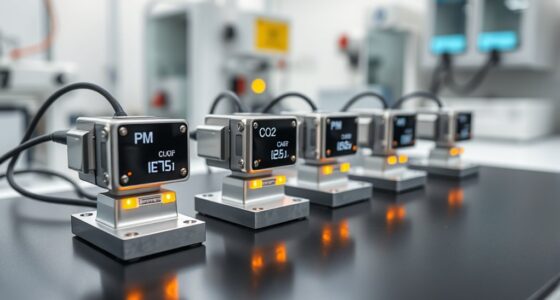
Have you ever wondered how cities monitor and improve air quality in real time? It all begins with the integration of sensors scattered throughout urban environments. These sensors continuously gather data on pollutants like nitrogen dioxide, particulate matter, and ozone levels. Sensor integration is essential because it guarantees that data from various sources—traffic cameras, weather stations, industrial sites—flows seamlessly into the central platform. This interconnected system allows you to see an all-encompassing picture of air quality conditions instantly, rather than relying on sporadic or manual measurements. Once this data is in place, predictive modeling comes into play, transforming raw numbers into actionable insights. Predictive modeling uses historical data, current sensor readings, and algorithms to forecast future air quality trends. If pollution levels are rising during rush hour, for instance, the platform can alert authorities to take preemptive actions, like adjusting traffic flow or issuing health advisories. This proactive approach helps mitigate health risks and keeps residents informed.
By leveraging sensor integration, data analytics platforms can process vast amounts of data in real time, making it possible to detect patterns and anomalies swiftly. For example, if a sudden spike in particulate matter occurs near a construction site, the platform can immediately flag the issue, prompting rapid response. This capability is essential because air quality can change quickly, influenced by weather conditions, traffic, or industrial activities. Predictive modeling enhances this process by analyzing historical trends and current conditions to provide forecasts that help city officials plan better. It’s like having a crystal ball that predicts potential pollution hotspots before they happen, allowing for targeted interventions. Additionally, the use of machine learning techniques enables these platforms to improve their accuracy over time as they learn from new data.
You’ll find that these platforms often incorporate advanced machine learning techniques, which improve their accuracy over time as they learn from new data. They also allow for customization, meaning you can set specific thresholds for alerts based on health standards or local policies. This flexibility guarantees the system remains relevant and effective across different urban settings. Furthermore, integrating sensor data with predictive models creates a feedback loop; as new data flows in, the models get smarter, continuously refining their forecasts. This iterative process guarantees that air quality management is not just reactive but anticipatory, helping cities stay ahead of pollution spikes and protect public health more efficiently.
Frequently Asked Questions
How Do Analytics Platforms Ensure Data Privacy and Security?
You guarantee data privacy and security on analytics platforms by using data encryption, which protects information during transmission and storage. You also control user access, assigning permissions based on roles to prevent unauthorized data viewing or editing. Regular security audits and authentication protocols help maintain safety. By actively managing these measures, you safeguard sensitive air quality data and maintain trust in your platform.
What Are the Costs Associated With Implementing These Platforms?
Implementation costs for analytics platforms vary based on features, data volume, and integration needs, but they typically include software licensing, hardware, and training expenses. You’ll want to weigh these costs against the expected return on investment, such as improved air quality insights and regulatory compliance. While initial investments can be significant, the long-term benefits often outweigh the costs by enabling more informed decision-making and proactive environmental management.
How Do Platforms Integrate With Existing Air Quality Sensors?
You connect your air quality sensors to platforms through APIs or direct integrations, ensuring seamless data flow. First, you perform sensor calibration to maintain accuracy and use data standardization to align different sensor outputs. This process helps the platform interpret data correctly, making real-time analysis possible. Regular calibration and standardization are vital for reliable insights, enabling you to monitor air quality effectively and respond promptly to pollution issues.
Can These Platforms Predict Future Air Quality Trends?
Yes, these platforms can predict future air quality trends through predictive modeling and trend forecasting techniques. You input historical data, and the platform analyzes patterns to forecast future conditions. This helps you proactively address pollution issues, plan mitigation strategies, and improve public health. By leveraging advanced algorithms, you gain insights that enable you to make informed decisions and stay ahead of potential air quality challenges.
What Training Is Required for Staff to Use These Platforms Effectively?
You need staff training focused on platform proficiency, data interpretation, and system navigation to guarantee effective use. Training sessions should include hands-on exercises, tutorials, and ongoing support to build confidence. You also benefit from refresher courses and updates as platforms evolve. By investing in extensive staff training, you empower your team to leverage data analytics platforms fully, making informed decisions and improving air quality management outcomes.
Conclusion
By leveraging advanced data analytics platforms, you can markedly improve air quality management. Did you know that cities using these platforms have seen up to a 30% reduction in pollution levels? Embracing these technologies empowers you to make informed decisions, optimize interventions, and protect public health. Staying ahead with data-driven insights ensures a cleaner, safer environment for everyone. Don’t wait—start integrating analytics today for a healthier tomorrow.