
In your home office, pollutants like VOCs from furniture, cleaning products, and electronics can quickly build up if you keep windows closed and rely on poor airflow. Dust, allergens, and airborne chemicals settle on surfaces or stay suspended in the air, especially during long workdays. Without proper ventilation or air circulation, these pollutants accumulate, leading to health issues like headaches and fatigue. Keep exploring to discover simple ways to improve your indoor air quality.

Get garden gear delivered free with Prime
- Fast, free delivery on millions of items
- Prime Video, Amazon Music and more included
- Member-only deals all year
Key Takeaways
- Limited ventilation causes pollutants from furniture, cleaning products, and electronics to accumulate indoors.
- Poor airflow allows dust, allergens, and VOCs to settle on surfaces and remain suspended in the air.
- Closed windows during work hours trap airborne contaminants, increasing indoor pollutant levels.
- Extended periods of stagnation prevent pollutants from dispersing naturally, leading to buildup.
- Inadequate air circulation exacerbates health risks like headaches, fatigue, and respiratory issues.
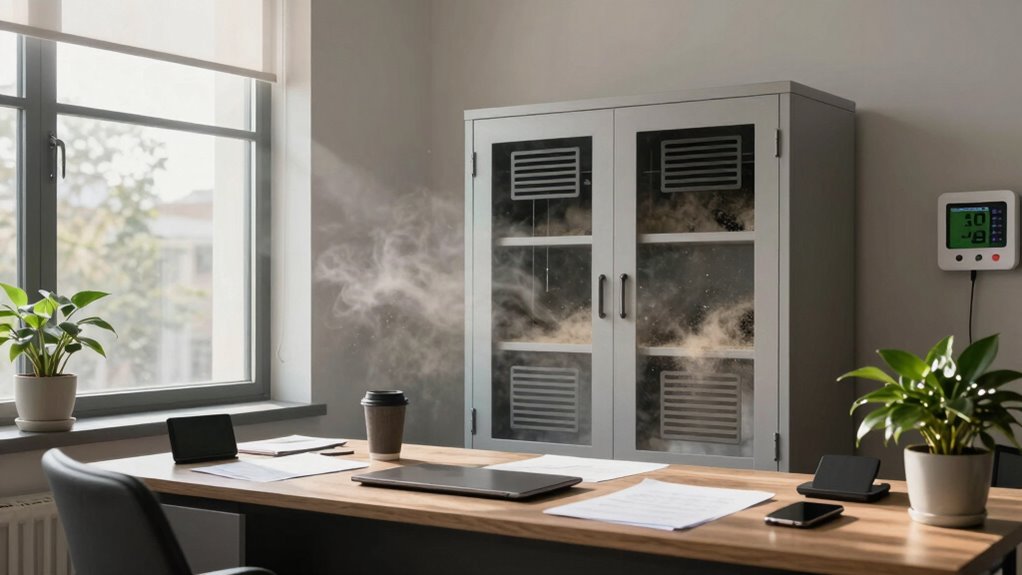
Working from home has become more common than ever, but many people overlook the potential pollutants lurking in their home office. One key factor in maintaining a healthy workspace is understanding how air circulation impacts indoor air quality. When your home office is poorly ventilated, pollutants from various sources can accumulate quickly, creating a less-than-ideal environment for concentration and health. Without proper air circulation, stale air stays trapped, and pollutants such as dust, pet dander, volatile organic compounds (VOCs), and other airborne contaminants build up over long workdays. This can lead to headaches, fatigue, or even respiratory issues if not managed properly.
You might not realize that many pollutant sources are right in your own home. Common culprits include cleaning products, furniture off-gassing, electronics, and even your own habits. For example, new furniture or carpets often emit VOCs, which are invisible but harmful gases. Electronic devices like printers and computers release small amounts of chemicals during operation, adding to the indoor pollutant load. Additionally, household chores such as vacuuming or cleaning can stir up dust and allergens, further contaminating the air you breathe. If your windows remain closed during work hours, these pollutants remain trapped, compounding the problem.
Many people forget that air circulation isn’t just about opening windows. While fresh air exchange is crucial, it’s also about how well your space encourages airflow. Without good airflow, pollutants settle on surfaces and linger in the air, increasing your exposure. Using fans strategically, such as exhaust fans or portable air purifiers with HEPA filters, can help improve air movement and remove many airborne particles. Positioning these devices near pollutant sources ensures more effective clearance of contaminants. Additionally, making a habit of opening windows periodically—even for a few minutes—can markedly reduce indoor pollutant levels, especially on days when outdoor air quality isn’t compromised. Incorporating indoor air quality measures into your routine can significantly enhance the overall health of your workspace. You might also consider adding air quality sensors to monitor pollutant levels and optimize ventilation efforts. Improving air circulation is essential for preventing the buildup of indoor pollutants and maintaining a healthier environment.
Your long workdays in a home office make it easy for pollutants to accumulate if you’re not mindful of air circulation. By understanding the pollutant sources around you and actively promoting good airflow, you can create a healthier environment. This not only supports your productivity but also protects your wellbeing in the long run. Simple adjustments like adding fans, regularly cleaning your space, and ventilating your office space can make a substantial difference, ensuring you breathe cleaner air during those extended work hours. Remember, a well-ventilated home office isn’t just about comfort—it’s about safeguarding your health.
HEPA air purifier for home office
As an affiliate, we earn on qualifying purchases.
As an affiliate, we earn on qualifying purchases.
Frequently Asked Questions
How Do Pollutants Affect Long-Term Health in Home Office Environments?
Pollutants like indoor toxins can seriously impact your long-term health if you’re exposed repeatedly in your home office. Chronic exposure to these pollutants may lead to respiratory issues, allergies, or even more severe conditions over time. You might not notice immediate effects, but persistent exposure builds up, gradually affecting your overall well-being. Ensuring proper ventilation and reducing toxin sources can help protect your health during long workdays at home.
Can Air Purifiers Completely Eliminate Indoor Pollutants in Home Offices?
Like a modern-day alchemist, you might hope an air purifier can banish all indoor pollutants, but it can’t. Air purifier limitations mean they can’t remove every particle or chemical, especially if pollutant removal efficiency isn’t high or if filters aren’t maintained. While they considerably improve air quality, relying solely on them won’t fully eliminate indoor pollutants during long workdays. Keep ventilation and source control in mind for better results.
What Are Common Sources of Indoor Pollutants in Home Offices?
You encounter common indoor pollutants in your home office from sources like HVAC systems, which can circulate dust, mold, and chemicals if not maintained properly. Your cleaning routines also play a role; neglecting regular dusting and vacuuming allows allergens and pet dander to build up. To reduce pollutants, keep your HVAC filters clean and vacuum frequently, especially in areas prone to dust and pet hair. Proper ventilation and routine cleaning are key.
How Often Should Home Office Air Quality Be Tested?
Thinking back to your last summer picnic, you’d want fresh air, right? For your home office, you should perform air quality monitoring at least once every three to six months, especially if you notice odors or symptoms like headaches. Use proper ventilation strategies—like opening windows or adding air purifiers—to keep pollutants in check. Regular testing guarantees your workspace stays healthy and comfortable for long workdays.
Are Certain Home Office Layouts Better for Reducing Pollutant Buildup?
Certain home office layouts are better for reducing pollutant buildup. You should focus on furniture placement that avoids blocking vents or airflow pathways, allowing pollutants to escape easily. Incorporate effective ventilation strategies, like opening windows or using exhaust fans, to improve air circulation. This combination helps prevent harmful particles from accumulating, keeping your workspace healthier during long workdays. Proper layout and ventilation are key to maintaining good indoor air quality.
Conclusion
As you spend long hours in your home office, remember it’s like a quiet river carrying hidden pollutants beneath its surface. These invisible invaders can quietly build up, turning your workspace into a trap that’s hard to escape. Stay vigilant—ventilate regularly, keep your space clean, and choose air-purifying plants. By doing so, you’re not just working—you’re clearing the fog, ensuring your home remains a sanctuary, not a silent danger lurking in every breath.
Fall yard work Picks
leaf blowers
As an affiliate, we earn on qualifying purchases.