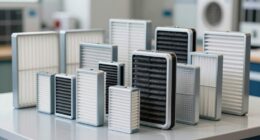
HEPA filters work through three main mechanisms: interception, impaction, and diffusion, each trapping particles of different sizes. Interception catches larger particles that follow airflow lines and brush against fibers. Impaction targets even bigger, heavier particles by causing them to collide with filter fibers, while diffusion helps trap tiny particles like bacteria and viruses by making them move erratically and collide with fibers. Understanding these processes helps you see how HEPA filters keep your air clean—more details await if you continue.
Key Takeaways
- HEPA filters utilize three main mechanisms: interception, impaction, and diffusion, to trap a wide range of airborne particles.
- Interception captures particles following airflow paths by contact with filter fibers, effective for medium-sized particles.
- Impaction targets larger, heavier particles that collide with fibers due to airflow changes or sudden velocity shifts.
- Diffusion is especially effective for tiny particles like bacteria and viruses, which move erratically and collide with filter fibers.
- The combination of these mechanisms in HEPA filters ensures high efficiency in removing diverse airborne contaminants.
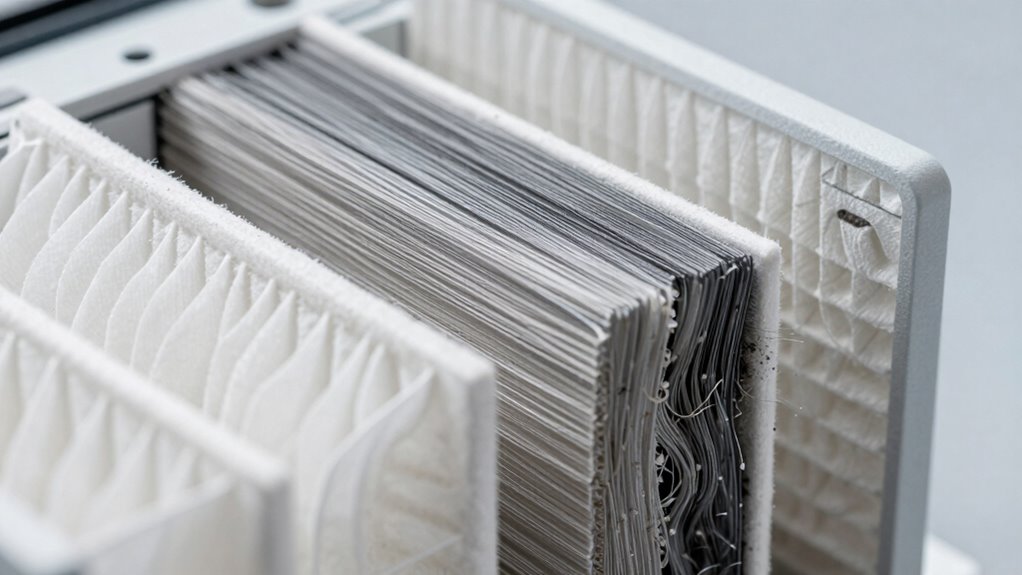
Have you ever wondered how some air purifiers trap tiny particles that other filters miss? It all comes down to their air filtration mechanisms, which are designed to target even the smallest contaminants. Understanding how these filters work can help you choose the right one and keep it functioning effectively. One key aspect is filter maintenance. Regularly checking and replacing your filters ensures they perform at their best, preventing particles from bypassing the filter or clogging it, which reduces airflow. When filters become dirty or clogged, their ability to trap particles diminishes, so staying on top of maintenance is vital for maximum air quality. Additionally, the filtration mechanisms are engineered to optimize particle removal across a range of sizes, ensuring thorough air purification. The first mechanism is interception. As air passes through the filter, larger particles come into contact with fibers and get stuck because they follow the airflow path. Think of it like a net catching debris; the particles don’t need to penetrate deep into the filter—they just need to come close enough to be captured. This process is particularly effective for medium-sized particles like dust and pollen. The second mechanism is impaction, which targets larger, heavier particles. When air speeds up or changes direction suddenly, these particles can’t follow the airflow around the fibers and collide with them directly, becoming trapped. Impaction is essential for capturing larger contaminants like pet dander and mold spores, preventing them from circulating in your indoor air. The third and most sophisticated mechanism is diffusion, which is especially effective for very tiny particles, such as bacteria or viruses. These minuscule particles move erratically due to collisions with air molecules, increasing their chances of colliding with filter fibers. When they hit a fiber, they stick, effectively removing them from the airflow. HEPA filters excel because they combine all three mechanisms—interception, impaction, and diffusion—to maximize particle removal. To keep these mechanisms working efficiently, you need to prioritize filter maintenance. Regularly replacing or cleaning filters prevents buildup that can hinder airflow and reduce filtration effectiveness. Neglecting maintenance not only compromises air filtration but may also cause the filter to become a breeding ground for bacteria or mold, which defeats the purpose of an air purifier.
Frequently Asked Questions
How Long Do HEPA Filters Typically Last Before Replacement?
You should replace your HEPA filter every 12 to 18 months, depending on usage and air quality. The filter lifespan varies based on factors like indoor pollution levels and filter maintenance. To guarantee peak performance, monitor for visible dirt or reduced airflow, which indicate it’s time for replacement. Regularly changing your HEPA filter prevents loss of efficiency and maintains healthy indoor air quality, keeping your environment safe and clean.
Are HEPA Filters Effective Against Viruses and Bacteria?
Did you know HEPA filters can remove 99.97% of particles as small as 0.3 microns? They’re highly effective against viruses and bacteria, providing excellent virus filtration and bacteria removal. This makes them a great choice for improving indoor air quality. You can trust HEPA filters to substantially reduce airborne pathogens, helping you breathe easier and stay healthier, especially during flu season or in contaminated environments.
Can HEPA Filters Remove Odors and Chemical Fumes?
HEPA filters primarily target particles like dust, pollen, and microbes, so they aren’t designed for odor elimination or chemical absorption. If you want to remove odors and chemical fumes, look for filters with activated charcoal or carbon layers. These materials excel at trapping gases and absorbing odors, providing cleaner air. HEPA filters help improve air quality but won’t effectively eliminate smells or chemical fumes on their own.
How Do I Know if My HEPA Filter Is Working Properly?
You can tell if your HEPA filter is working properly by checking its performance indicators, like airflow and filtration efficiency. Regular filter maintenance, such as replacing or cleaning it as recommended, keeps it functioning at its best. If you notice reduced airflow or increased dust around the filter, it’s a sign to inspect or replace it. Keeping up with maintenance ensures your HEPA filter continues to effectively capture airborne particles.
Are HEPA Filters Safe for Allergy Sufferers?
Yes, HEPA filters are safe for allergy sufferers and can provide effective allergy relief. They capture tiny particles like pollen, dust mites, and pet dander, reducing your exposure. You can trust their filter safety, as HEPA filters meet strict standards and don’t release harmful substances. Using a HEPA filter regularly helps improve indoor air quality and eases allergy symptoms, making your environment healthier and more comfortable.
Conclusion
Now that you understand the three mechanisms behind HEPA filters, you’re better equipped to breathe easier. Think of these filters as tireless guardians, silently battling microscopic invaders to protect your health. By choosing the right HEPA filter, you’re not just improving air quality—you’re creating a safe haven for you and your loved ones. Remember, a clean filter is your shield against invisible threats, turning your space into a fortress of fresh, pure air.