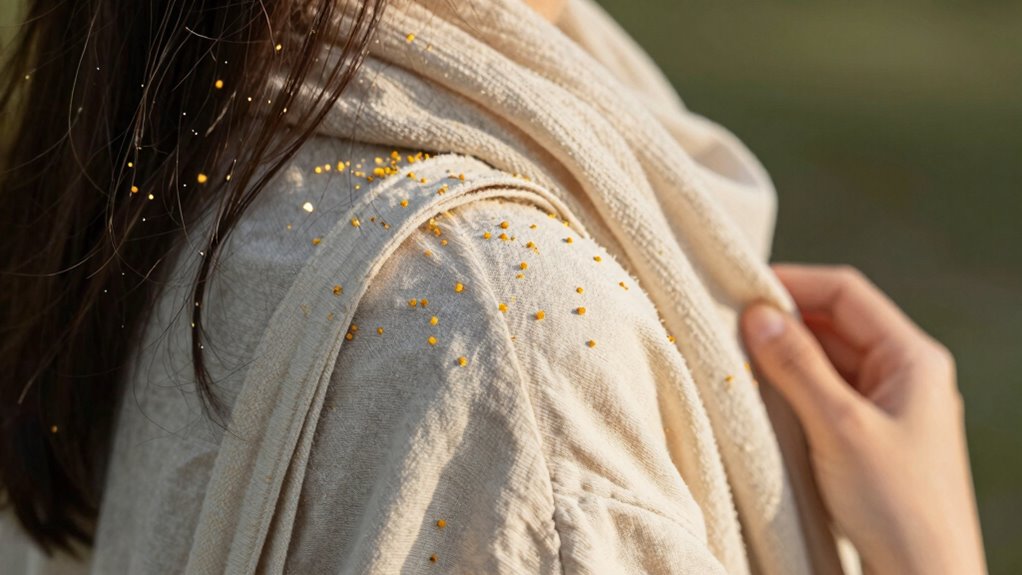

Pollen clings to your clothes, hair, and bags through contact with flowers and grasses, sticking due to static and porous fabrics. As you move through flowering areas or breezy streets, pollen detaches and transfers onto your belongings or skin, then spreads further when you handle items or walk past others. Weather conditions like wind and humidity also help disperse pollen. If you want to discover how these tiny particles continue their journey, keep exploring this fascinating process.
Key Takeaways
- Pollen grains attach to porous fabrics and hair through static charge, enabling long-lasting adherence.
- Breeze and physical contact dislodge pollen from clothes, hair, and belongings, aiding dispersal.
- Bags, especially woven or fabric types, act as carriers by trapping pollen during daily activities.
- Weather conditions like humidity and wind influence how pollen sticks or spreads on surfaces.
- Handling or washing clothes and hair naturally removes pollen, continuing its cycle of dispersal.
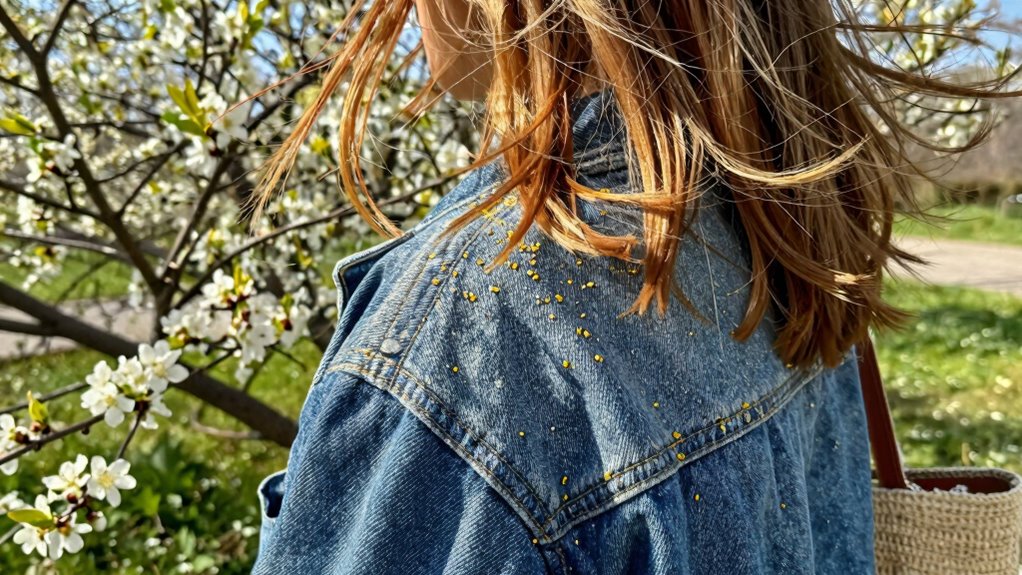
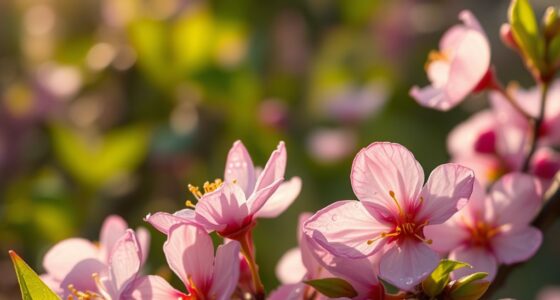
Pollen travels through the air to reach other plants, enabling reproduction across vast distances. As you walk through a blooming meadow or a city park, pollen dispersal becomes an invisible but essential process. Tiny airborne particles are released by flowers and grasses, hitching a ride on the breeze. These airborne particles can travel miles, carried by air currents, until they settle on a surface or find a receptive flower. When you move through these environments, pollen doesn’t just stay in the air—it can latch onto your clothes, hair, or bags, making it easy for it to hitch a ride further.
Pollen hitchhikes on breeze, clothes, and belongings, helping plants spread across vast distances.
When you brush past flowering plants or even just walk along a breezy street, pollen grains attach to your clothing and hair. Clothes, especially those made of porous fabrics, act like sponges, trapping these particles in tiny fibers. Your hair, with its numerous strands and static charge, provides an ideal landing pad for pollen. Once on your clothes or hair, pollen can stay attached for hours or even days, depending on the weather and fabric type. If you touch your face or rub your eyes, you might transfer these airborne particles to your mucous membranes, triggering allergic reactions or sneezing fits.
Your bags, particularly fabric or woven materials, are also hotspots for pollen dispersal. Every time you set down your bag or carry it around, pollen grains can cling to its surface. As you continue your day, these particles can dislodge and settle onto other surfaces or be transferred to new locations. This is how pollen dispersal extends beyond just the air; it uses your belongings as carriers, effectively turning you into a mobile pollen vector. Additionally, the lightweight and adaptable nature of pollen grains makes them especially effective at hitchhiking on various surfaces and being dislodged easily. Moreover, the static charge on hair can attract and hold pollen grains more firmly, increasing the likelihood of transfer. Pollen’s resilience to environmental conditions, such as humidity and wind, also plays a role in how effectively it can travel and adhere to surfaces. Recent studies have shown that pollen can also be transported by small particles, further enhancing its dispersal capabilities.
The process is quite efficient because pollen grains are designed to be lightweight and adaptable. They can cling tightly to fabrics or hair or be easily dislodged by wind or physical contact. When you return home and remove your clothes or wash your hair, the attached pollen can be washed away or fall off naturally. However, during the day, your belongings and your body become temporary carriers, helping pollen continue its journey. It’s a fascinating cycle—airborne particles are released into the environment, settle on surfaces, and hitchhike on you and your possessions, enabling plants to propagate over large areas. So, every time you touch your clothes or handle your bag, you’re unknowingly participating in the ongoing dance of pollen dispersal.
As an affiliate, we earn on qualifying purchases.
Frequently Asked Questions
Can Pollen Stick to Synthetic Fabrics More Than Natural Ones?
Yes, pollen tends to stick more to synthetic fabrics than natural ones because synthetic materials often have a smoother surface, which encourages pollen adhesion. Natural fabrics like cotton or wool are usually more textured, making it harder for pollen to cling. When you wear or carry synthetic clothes or bags during high pollen seasons, you’re more likely to carry pollen with you, increasing exposure.
How Long Does Pollen Stay Viable on Clothing?
Pollen can stay viable on your clothing for days or even weeks, depending on conditions. Your clothes’ fabric porosity affects pollen adhesion—more porous fabrics trap pollen more effectively, making it stick like glue. In dry, sunny weather, pollen’s lifespan shortens, but in humid or shady environments, it can linger longer. So, if you’re outdoors often, expect pollen to stick around on your clothes longer than you’d think.
Does Washing Clothes Remove All Pollen Particles?
Washing clothes considerably reduces pollen transfer and helps remove most pollen particles, but it may not eliminate all. Pollen can cling tightly to fabrics, especially if it’s been there for a while or if the wash isn’t thorough. Using hot water and a strong detergent improves removal. However, some pollen particles might survive, leading to clothing contamination. To minimize pollen transfer, consider rinsing clothes promptly and washing them carefully after outdoor activities.
Can Pollen Cause Allergic Reactions Through Contact With Hair?
Think of your hair as a fragile garden, vulnerable to pollen allergenicity. Yes, pollen can cause allergic reactions through contact with hair, especially when pollen lands and transfers—what we call hair pollen transfer. When you brush or touch your hair, pollen particles can be released into your environment, triggering symptoms. To protect yourself, wash your hair regularly after outdoor exposure, minimizing pollen buildup and reducing allergy risks.
How Do Different Weather Conditions Affect Pollen Transfer?
Weather conditions greatly influence pollen transfer. On windy days, wind dispersal spreads pollen farther and more widely, increasing your exposure. High humidity effects include pollen clumping together, which reduces airborne pollen but may cause it to stick to your clothes, hair, or bags more easily. Conversely, low humidity tends to dry out pollen, making it lighter and more likely to be carried by wind, consequently elevating your risk of allergic reactions during such weather.
Conclusion
Next time you head outdoors, remember that pollen hitchhikes on your clothes, hair, and bags, traveling far beyond flowering fields. Imagine a gardener, returning home after a sunny day, unknowingly bringing pollen inside. This tiny hitchhiker can settle on your furniture or even trigger allergies. By being mindful and changing clothes or washing your hair, you can minimize pollen’s journey indoors, keeping your space cleaner and your allergies in check.