To maintain good IAQ in your cabin or tiny home workspace, focus on filtering out pollutants with HEPA air purifiers and ensuring proper ventilation by opening windows or using exhaust fans. Keep humidity balanced between 40-60% with humidifiers or dehumidifiers as needed. Regularly clean and maintain your filters and ventilation system, and minimize sources of indoor pollution like harsh cleaning products or cooking fumes. Staying proactive can create a healthier, more comfortable environment—find out more ways to optimize your space.
Open a free Amazon Business account
Business pricing, bulk buying and tax-exempt orders.
As an affiliate, we earn on qualifying purchases.
Key Takeaways
- Use high-quality HEPA air purifiers and replace filters regularly to trap allergens and pollutants effectively.
- Maintain indoor humidity levels between 40-60% with humidifiers or dehumidifiers to prevent mold and dryness.
- Ensure proper ventilation by opening windows or installing exhaust fans to reduce stale air and indoor pollutants.
- Minimize pollutant sources like cleaning chemicals and cooking fumes; use natural products where possible.
- Conduct routine inspections and maintenance of HVAC systems, filters, and humidity controls for optimal IAQ.
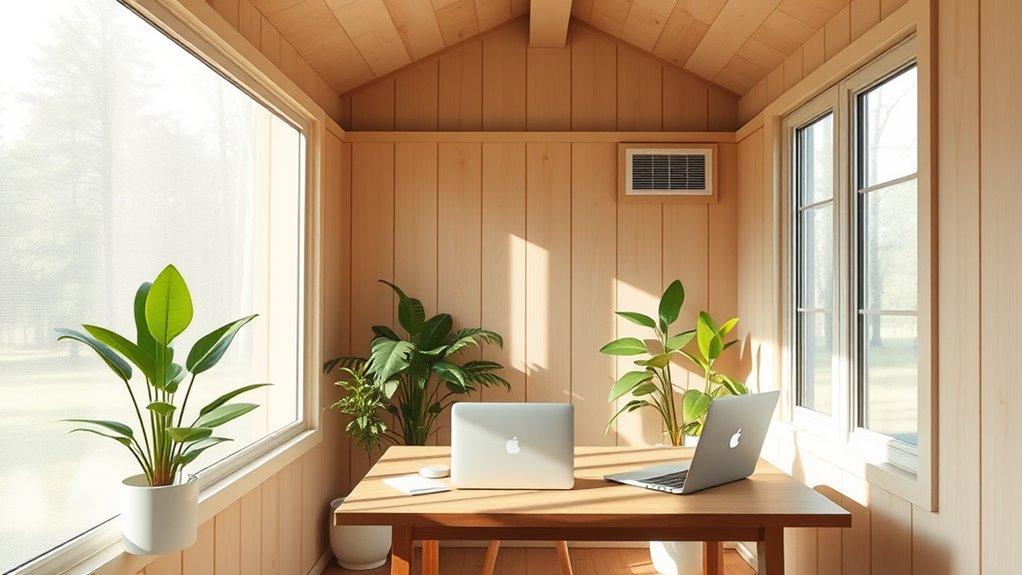
With more people working remotely, maintaining good indoor air quality (IAQ) in home workspaces has become essential for health and productivity. Whether you’re in a cozy cabin or a tiny home, the air you breathe impacts your focus and overall well-being. The key to achieving this starts with effective air filtration and humidity control. These elements work together to create a comfortable and healthy environment, helping you stay alert and prevent indoor air problems.
Air filtration is your first line of defense against pollutants, allergens, and dust that can accumulate in small, enclosed spaces. In cabins and tiny homes, air tends to recirculate often, trapping particles that can cause allergies or respiratory issues. Installing a high-quality air purifier with a HEPA filter can considerably improve air quality. These filters trap tiny particles, including pollen, pet dander, mold spores, and even some bacteria. Regularly changing or maintaining your filters ensures they continue to work effectively. Additionally, proper ventilation plays a crucial role. Opening windows when weather permits, or installing exhaust fans, helps bring in fresh air and push out stale air, reducing the buildup of indoor pollutants.
Humidity control is equally important. Too much moisture can lead to mold growth and musty odors, while too little can cause dry skin, respiratory irritation, and static electricity. Maintaining an ideal humidity level—generally between 40% and 60%—keeps the air comfortable and healthy. In tiny homes and cabins, using a dehumidifier or humidifier helps you achieve this balance. For instance, during humid summer months, a dehumidifier removes excess moisture, preventing mold growth and dampness. Conversely, in winter or dry climates, a humidifier adds moisture to combat dry air, which can cause discomfort and respiratory issues. Proper humidity levels also support the effectiveness of your air filtration system; dry air can cause particles to become airborne more easily, making filtration less efficient.
Combining air filtration and humidity control is essential in small, enclosed spaces. It might seem simple, but small adjustments can make a notable difference. Regularly inspecting and maintaining your HVAC system, filters, and humidifiers ensures continuous airflow and IAQ. You should also be mindful of sources of indoor pollutants, such as household cleaning products, smoking, or excess moisture from cooking and bathing. Using natural cleaning products, venting cooking areas, and ensuring proper insulation can further improve your air quality. Incorporating advanced filtration technologies can also significantly enhance pollutant removal and overall air purity. When you pay close attention to these details, your remote workspace in a cabin or tiny home becomes a haven where you can work comfortably, free from indoor air issues that could hinder your health and productivity.
HEPA air purifier for small spaces
As an affiliate, we earn on qualifying purchases.
As an affiliate, we earn on qualifying purchases.
Frequently Asked Questions
How Does Climate Affect IAQ in Remote Cabins and Tiny Homes?
Climate profoundly impacts IAQ in your cabin or tiny home. During cold seasons, you should practice seasonal ventilation to bring in fresh air without losing heat. In humid weather, humidity control becomes essential to prevent mold and dust mites. Hot, humid climates can worsen IAQ if you don’t manage moisture levels. Adjust your ventilation and humidity control systems accordingly to maintain a healthy, comfortable indoor environment year-round.
Are There Specific IAQ Concerns Unique to Off-Grid Remote Workspaces?
Imagine a quiet cabin, sunlight streaming through the windows, but hidden indoor pollutants linger unseen. Off-grid remote workspaces face unique IAQ concerns like ventilation challenges, making it harder to remove indoor pollutants effectively. Limited access to fresh air exchange and reliance on small or manual ventilation systems can trap pollutants inside, impacting your health. You need to prioritize good ventilation and monitor IAQ regularly to maintain a safe, comfortable workspace.
What Are the Long-Term Health Effects of Poor IAQ in Small Remote Habitats?
Poor IAQ in small remote habitats can lead to long-term health issues, especially affecting your respiratory health. Indoor pollutants like dust, mold, and volatile organic compounds build up over time, causing chronic respiratory problems, allergic reactions, and even more serious conditions. If you don’t address IAQ concerns, you risk ongoing health impacts that can diminish your quality of life and productivity in your remote workspace.
How Often Should IAQ Testing Be Performed in Remote Work Environments?
Like a trusty compass guiding your way, you should test IAQ at least quarterly in remote workspaces. You’ll want to check indoor plants’ health and verify ventilation systems are functioning properly. Regular testing helps catch issues early, preventing health problems down the line. If you notice odors or increased dust, consider more frequent checks. Staying vigilant keeps your tiny home or cabin a safe, healthy workspace.
Can Portable Air Purifiers Effectively Improve IAQ in Tiny Homes?
Yes, portable purifiers can effectively improve IAQ in tiny homes. They target common pollutants like dust, pet dander, and odors, making the air cleaner and healthier. By choosing a purifier with HEPA filters and proper size, you guarantee ideal IAQ enhancement. Regular use and filter maintenance enhance their effectiveness, helping you breathe easier and creating a safer remote workspace environment in your tiny home.
Conclusion
By prioritizing proper ventilation, air filtration, and regular maintenance, you can guarantee your remote workspace stays a sanctuary of clean air. Neglecting IAQ is like inviting chaos into your own home—an invisible threat that can undermine your health and productivity. Stay vigilant, and don’t let poor air quality turn your cozy cabin or tiny home into a silent battleground. With consistent effort, you’ll breathe easier, work better, and turn your space into the ultimate haven of fresh, pure air.
NFL season / tailgating Picks
team gear
As an affiliate, we earn on qualifying purchases.