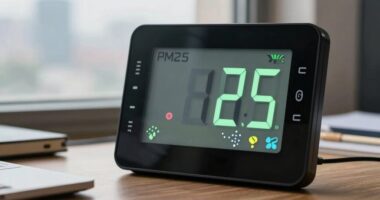

Morning measurements show how well your home was ventilated overnight by indicating indoor air quality, pollutant levels, CO₂, humidity, and airborne particles. Low CO₂ and balanced humidity suggest good airflow, while high levels point to poor ventilation. These insights can explain sleep quality and mood issues. By understanding these patterns, you can make better choices to improve your environment. Keep exploring to learn more about enhancing your home’s ventilation and health.
Get ready for Prime Big Deal Days — try Prime free
Exclusive member deals on October 6–7, plus fast free delivery. Cancel anytime.
As an affiliate, we earn on qualifying purchases.
Key Takeaways
- Morning CO₂ levels indicate how well the space was ventilated overnight.
- Low humidity and pollutant levels suggest effective airflow and fresh air exchange.
- Elevated indoor pollutants or CO₂ point to insufficient ventilation during sleep.
- Consistent morning readings help identify long-term ventilation and air quality trends.
- Improving ventilation based on morning data can enhance sleep quality and overall health.

Have you ever wondered how proper ventilation can transform your mornings? The answer lies in the insights revealed by morning readings about overnight ventilation. When you wake up, the air quality in your home offers a clear snapshot of how well your space was ventilated while you slept. Good ventilation isn’t just about fresh air; it directly impacts your sleep quality and overall well-being. If morning readings show high levels of indoor pollutants or stale air, it’s a sign that your ventilation system needs attention. Poor air quality can cause discomfort, headaches, and even affect your mood throughout the day. On the other hand, fresh, well-ventilated spaces promote restful sleep, helping you feel more energized and alert.
Good morning readings reveal how well your home’s ventilation supports restful sleep and overall well-being.
These morning measurements often include factors like carbon dioxide levels, humidity, and airborne pollutants. Elevated CO₂ levels can indicate insufficient airflow during the night, which means your body isn’t getting the oxygen it needs for peak rest. When your sleep environment is poorly ventilated, you might notice restless sleep or waking up feeling groggy. Conversely, readings that show low CO₂ and balanced humidity suggest that your space was properly ventilated, providing an environment conducive to deep, restorative sleep. This, in turn, boosts your daytime productivity and mental clarity. Additionally, monitoring indoor air quality regularly can help you identify long-term trends and maintain a healthy home environment. Recognizing these patterns can also guide you in selecting smart ventilation solutions that automatically optimize airflow based on real-time data. Incorporating air quality sensors into your home can provide continuous feedback and further improve your ventilation strategies. Furthermore, understanding how air quality impacts health can motivate you to take proactive measures to improve your indoor environment.
By paying attention to these early signals, you gain valuable insights into your home’s ventilation efficiency. If your morning readings consistently reveal subpar air quality, it’s a cue to enhance airflow—perhaps by opening windows, upgrading your ventilation system, or using air purifiers. These changes can make a noticeable difference in how you feel upon waking. Proper overnight ventilation ensures pollutants and excess moisture don’t build up, which can otherwise lead to mold growth or allergies. Good ventilation practices are essential for maintaining a healthy indoor environment and preventing long-term health issues. Consequently, your sleep quality improves, and you wake up feeling more refreshed and healthier.
Ultimately, the data from your morning readings serve as a health check for your indoor environment. They allow you to identify patterns and make informed decisions to improve your ventilation strategies. The more you understand these signals, the better you can maximize your sleep environment. Better air quality and improved sleep quality go hand in hand, creating a cycle of health benefits that start every morning. When you start your day with a clear mind and energized body, thanks to proper overnight ventilation, you realize just how crucial good airflow is to your daily life.
As an affiliate, we earn on qualifying purchases.
Frequently Asked Questions
How Accurate Are Morning Ventilation Readings Compared to Continuous Monitoring?
Morning ventilation readings can be fairly accurate, but they often have some variability due to factors like sensor calibration and environmental changes overnight. You might notice data variability between morning readings and continuous monitoring because sensors need regular calibration for precision. While morning readings give a snapshot, they may not fully capture overnight fluctuations. For the most reliable data, consider combining morning readings with continuous monitoring and ensuring your sensors are well-calibrated.
Can External Weather Influence Overnight Ventilation Measurements?
External weather can definitely influence overnight ventilation measurements. Cooler or windier conditions often improve indoor air quality by boosting ventilation system efficiency, while hot, humid weather might hinder it. You might notice fluctuations in readings based on outdoor temperatures and wind patterns. These external factors impact how well your ventilation system works overnight, so it’s important to take weather conditions into account when evaluating indoor air quality and ventilation effectiveness.
Do Different Sleep Positions Affect Ventilation Readings?
Yes, your sleep position impacts ventilation readings because sleep ergonomics influence your breathing patterns. When you change positions, you may open or restrict airways, affecting airflow and oxygen levels. For example, sleeping on your side can promote better ventilation, while lying on your back might hinder it. These variations highlight how essential sleep ergonomics are in maintaining ideal breathing patterns and accurate ventilation measurements overnight.
How Quickly Do Ventilation Levels Change Overnight?
Ventilation levels can fluctuate quickly overnight, often within minutes, due to ventilation variability tied to your sleep cycle. During REM sleep, your breathing may become irregular, causing noticeable changes, while during deep sleep, ventilation stabilizes. These shifts are normal and reflect your body’s natural adjustments. Understanding this variability helps you interpret overnight readings more accurately, recognizing that your ventilation naturally varies with different sleep stages.
Are Certain Health Conditions Detectable Through Ventilation Patterns?
You might be surprised to learn that certain health conditions, like sleep disorders and respiratory issues, can be detected through ventilation patterns. Studies show that irregular breathing during sleep often signals underlying problems, with up to 80% of sleep apnea cases initially identified through overnight ventilation analysis. These readings give you valuable insights into your respiratory health, helping catch issues early and guiding effective treatment strategies.
Conclusion
Morning readings reveal how well your ventilation works, how your space breathes, and how your health depends on fresh air. They show when to open windows, when to check filters, and when to improve airflow. They guide you to breathe easier, sleep better, and live healthier. By paying attention to these signs, you take control, make changes, and create a better environment. You listen, you learn, and you act—because good ventilation begins with awareness.
Fall yard work Picks
leaf blowers
As an affiliate, we earn on qualifying purchases.