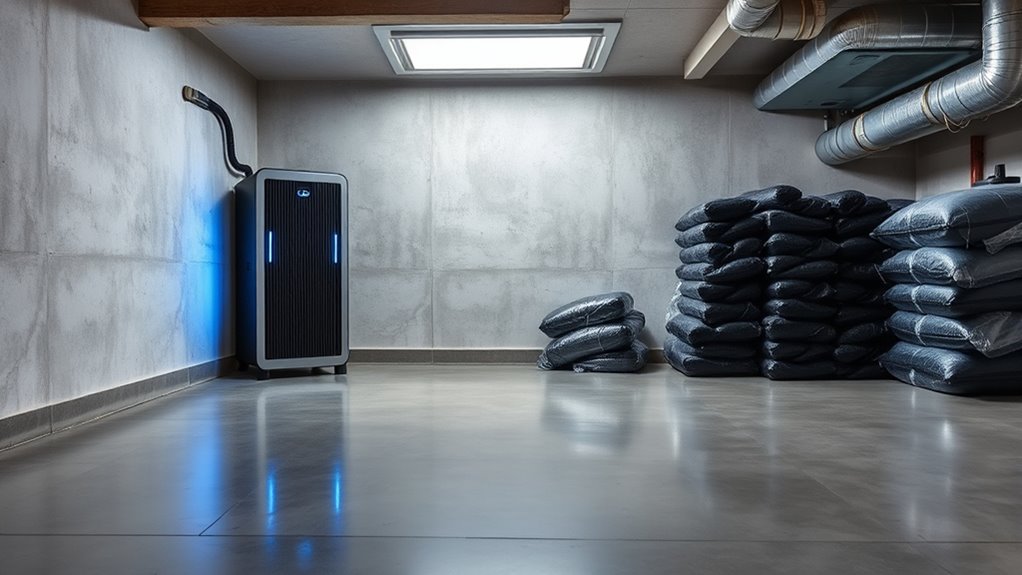

To reduce odors and VOCs in your basement or garage, start by improving ventilation with fans or opening windows. Use air purifiers with activated carbon filters to trap airborne pollutants, and place odor absorbers like baking soda or charcoal bags near problem areas. Keep humidity levels low with dehumidifiers and store chemicals properly in sealed containers. Regular cleaning and maintenance also help prevent odor buildup. For more effective strategies, explore additional tips to create a healthier space.
Key Takeaways
- Use air purifiers with activated carbon filters to effectively remove odors and VOCs.
- Incorporate natural odor absorbers like charcoal bags and baking soda near odor sources.
- Control humidity with dehumidifiers to prevent mold and damp odors.
- Ensure proper ventilation by opening windows or using exhaust fans to circulate fresh air.
- Regularly clean and store chemicals properly to minimize VOC emissions and maintain air quality.

Unpleasant odors and volatile organic compounds (VOCs) can profoundly impact indoor air quality and your overall well-being. When you step into your basement or garage, you might notice a lingering smell or feel the air feels heavy and stale. These odors often originate from everyday activities, stored chemicals, or building materials, and VOCs are released as gases from many common household items, including paints, cleaning products, and adhesives. Addressing these issues requires targeted solutions that can effectively improve the air you breathe and eliminate unwanted smells.
Unpleasant odors and VOCs can harm indoor air quality and your well-being.
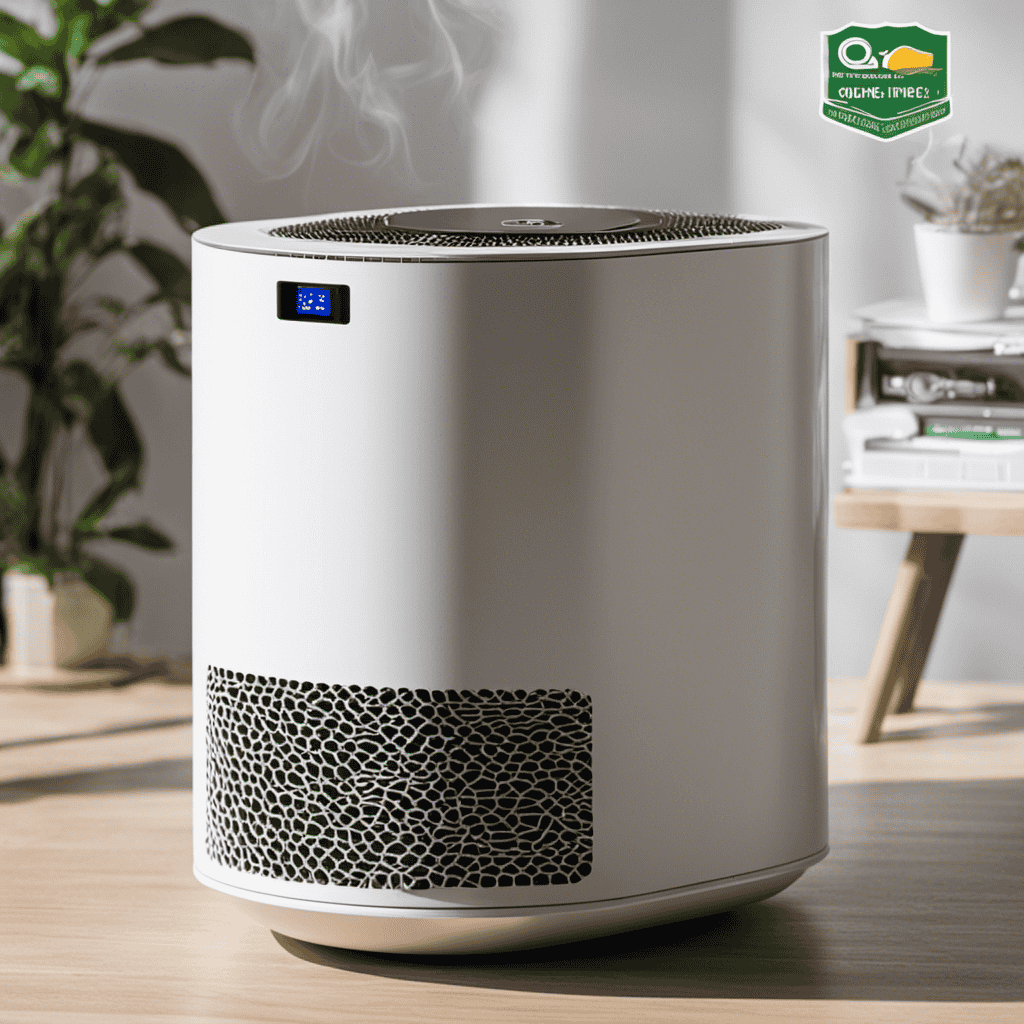
One of the most practical ways to combat odors and VOCs is by using air purifiers. These devices work by pulling in contaminated air and filtering out pollutants, including VOCs, dust, and bacteria. Look for air purifiers equipped with activated carbon filters or specialty media designed specifically for odor absorption. Activated carbon is highly porous, enabling it to trap and neutralize volatile organic compounds and reduce strong smells. When you run an air purifier in your basement or garage, you create a cleaner environment, making the space more comfortable and healthier for you and your family.
Odor absorption is key to maintaining a fresh atmosphere in these often neglected areas. You can enhance this process by using odor absorbers like charcoal bags or baking soda, which are natural and cost-effective. Placing these near sources of odors or in areas prone to trapping smells can considerably reduce their intensity. Additionally, controlling humidity levels helps prevent mold growth and damp odors that tend to thrive in basements and garages. Using a dehumidifier can keep moisture in check, further supporting the absorption of odors and VOCs.
Regular cleaning also plays an essential role in odor management. Removing dust, dirt, and any organic debris prevents the buildup of smells over time. Proper storage of chemicals and paints in sealed containers minimizes VOC emissions. Ventilation is equally important; opening windows or installing exhaust fans allows fresh air to circulate and carry away airborne pollutants. Combining these strategies—air purifiers, odor absorption products, humidity control, and good housekeeping—creates a thorough approach to improve air quality.
Ultimately, tackling odors and VOCs in your basement or garage requires consistent effort and the right tools. Investing in high-quality air purifiers with effective filters, using natural odor absorbers, and maintaining proper ventilation will make a noticeable difference. You’ll breathe easier and enjoy these spaces without the distraction of unpleasant smells or concerns about harmful gases lingering in the air. By taking these steps, you protect your health and make your home environment more pleasant and inviting.
Frequently Asked Questions
Can Houseplants Reduce Basement VOC Levels Effectively?
Houseplants can help improve indoor air quality by reducing VOC levels, but they won’t eliminate odors completely. To maximize effectiveness, choose plant species known for their air-purifying qualities, like snake plants or pothos. While they contribute to cleaner air, don’t rely solely on plants; combine them with proper ventilation and air filtration for a healthier basement environment. Your efforts will make a noticeable difference in indoor air quality.
Are Commercial Odor Absorbers Safe for Long-Term Use?
Imagine using a commercial odor absorber in your garage to fight persistent smells. These products rely on chemical absorption, but safety concerns arise with long-term use. While many are generally safe when used as directed, some may contain chemicals that could pose health risks over time. Always check labels and opt for eco-friendly options, and consider ventilation to guarantee your space stays safe and odor-free.
How Often Should I Test for VOCS in My Garage?
You should test for VOCs in your garage at least once every six months, especially if you use it for storing chemicals or vehicles. Regular testing helps you identify potential health risks early. Combine this with effective ventilation strategies like opening windows, using exhaust fans, or installing air purifiers. Adjust testing frequency if you notice lingering odors or symptoms, ensuring your garage stays safe and well-ventilated.
Do Air Purifiers Eliminate All Types of VOCS?
Air purifiers can’t eliminate all types of VOCs due to their limitations in VOC removal efficiency. While they help reduce many airborne pollutants, some VOCs, especially those with low concentrations or specific chemical structures, may persist. You should understand air purifier limitations and choose models with activated carbon filters for better VOC removal. Regular ventilation and source control remain essential for effectively managing VOCs in your garage or basement.
Can Sealing Basement Cracks Prevent Odor Infiltration?
Sealing basement cracks can considerably prevent odor infiltration by blocking entry points for odors and VOCs. When you perform crack sealing, you create a tighter barrier that keeps outside smells from seeping in and reduces the chances of indoor odors spreading. For effective odor prevention, it’s essential to inspect your basement regularly, seal any visible cracks promptly, and maintain a clean, well-ventilated space to keep odors at bay.
Conclusion
By addressing odors and VOCs proactively, you create a healthier, more pleasant space in your basement or garage. While some believe natural ventilation alone suffices, research suggests combining it with air purifiers and proper sealing offers more effective results. Trusting this layered approach, backed by scientific insights, guarantees you reduce airborne pollutants efficiently. Ultimately, maintaining good airflow and using targeted solutions helps you breathe easier and keeps your space fresher longer.