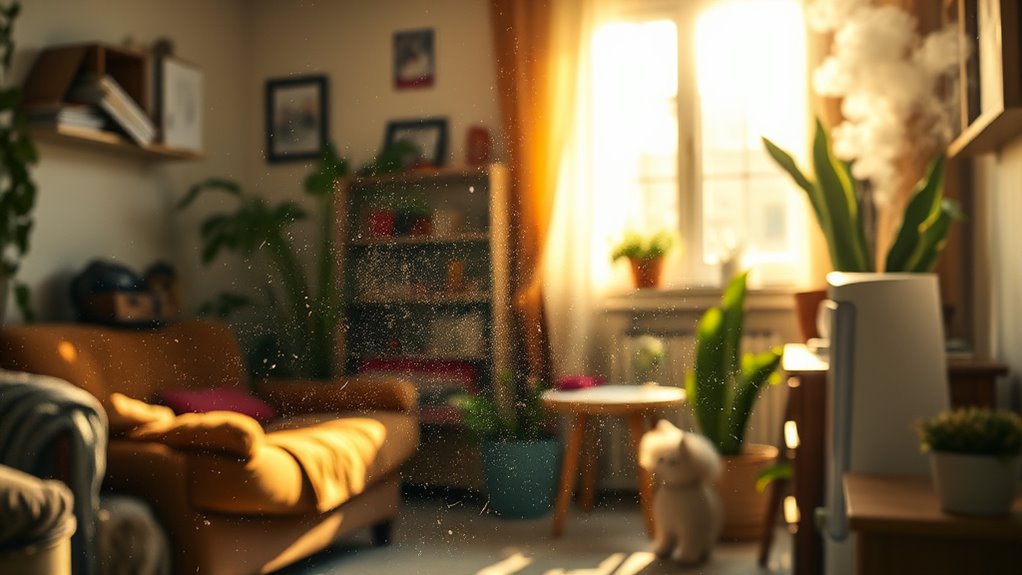

Indoor air pollutants include particles like dust, pet dander, mold spores, and pollen, as well as gases from cooking, cleaning, and off-gassing from furniture. Volatile Organic Compounds (VOCs) and microbial contaminants such as bacteria and viruses also taint indoor air quality. Odors from chemicals and organic matter further impact comfort. Understanding these pollutants and how to manage them can help you create a healthier living environment; more details await your exploration.
Key Takeaways
- Indoor air pollutants include particles like dust, pet dander, mold spores, and pollen.
- Gases from cooking, cleaning products, and off-gassing from furniture contribute to indoor air pollution.
- Volatile Organic Compounds (VOCs) are emitted from household items such as paints and adhesives.
- Microbial contaminants like bacteria, viruses, and mold spores can be present indoors.
- Odors resulting from chemicals and organic matter affect air quality and comfort inside buildings.
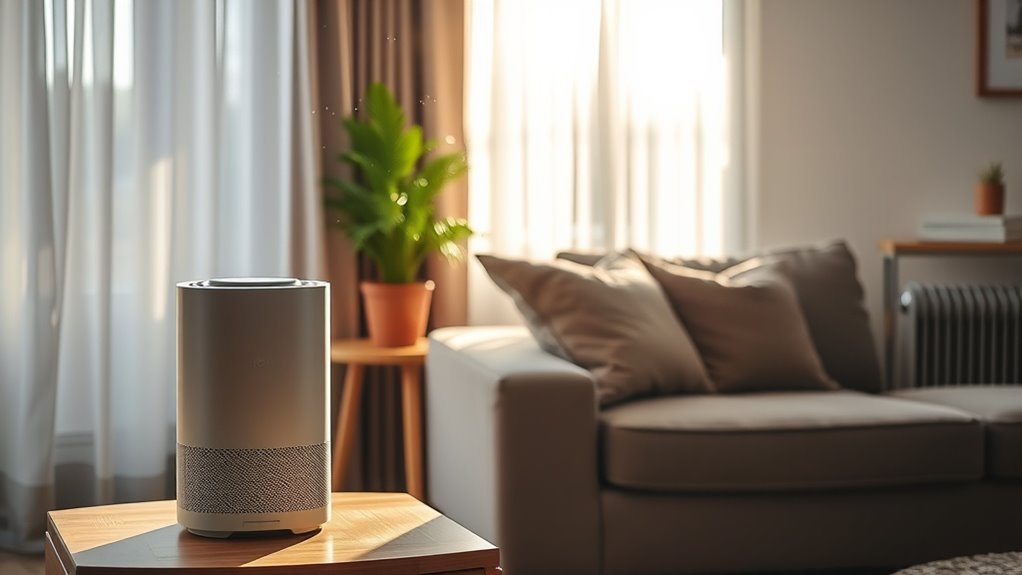
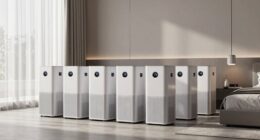
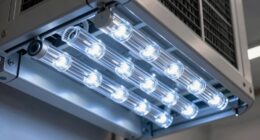
Have you ever wondered what’s lurking in the air inside your home? It’s easy to overlook, but indoor air can contain a surprising mix of pollutants that affect your health and comfort. Fortunately, understanding the different types of indoor pollutants and how air purifier technologies combat them can make a big difference. Indoor pollutant sources are varied and often hidden, such as everyday household items, building materials, and even your own activities. These sources release particles, gases, and volatile organic compounds (VOCs) that can accumulate over time, especially in poorly ventilated spaces. Dust, pet dander, mold spores, and pollen are common particulates that settle into carpets, furniture, and curtains, continuously circulating with each breath you take. Gas emissions from cooking, cleaning products, or off-gassing from new furniture can introduce harmful VOCs into your environment, leading to irritation of your eyes, nose, and throat or more serious health issues over prolonged exposure. Using an air purifier equipped with HEPA filters and activated carbon filters can significantly reduce these pollutants, providing cleaner indoor air. To combat these pollutants, air purifier technologies have advanced markedly. HEPA filters, for example, are highly effective at capturing tiny particles like dust, pet dander, and pollen, removing them from the air you breathe. Activated carbon filters excel at adsorbing gases and VOCs, helping to eliminate lingering odors and chemical emissions. Some air purifiers combine these technologies into multi-stage systems, providing holistic protection against a broad spectrum of indoor pollutants. UV-C light technology is another innovation, targeting bacteria, viruses, and mold spores, reducing microbial contaminants that can thrive indoors. When choosing an air purifier, it’s essential to consider your specific indoor pollutant sources. If you have pets, a device with a HEPA filter can drastically reduce dander. If your home has new furniture or is located near busy roads, activated carbon filters can help mitigate chemical fumes and odors.
Proper use of air purifiers, combined with good ventilation and regular cleaning, can markedly improve indoor air quality. It’s not just about removing visible dust but addressing the invisible particles and gases that can compromise your health over time. Remember, no single technology is a silver bullet, but the right combination tailored to your indoor pollutant sources can make your home a safer, healthier place. By staying aware of what’s in the air and utilizing effective air purifier technologies, you can breathe easier and reduce the risk of indoor air-related health problems.
Frequently Asked Questions
How Can I Test Indoor Air Quality Effectively?
To test your indoor air quality effectively, start with air quality sensors that monitor pollutants in real-time. These devices are easy to use and give instant feedback on factors like VOCs, humidity, and particulate matter. You can also try DIY testing kits, which often include test strips or air sampling tools. Regular testing helps you identify issues early and improve your home’s air quality for better health and comfort.
Are Natural Products Safer for Indoor Air?
Natural products can be safer for indoor air because they typically emit fewer harmful chemicals. However, be aware that natural emissions, like volatile organic compounds from plants or essential oils, can still trigger chemical reactions that produce indoor pollutants. Always ventilate well and choose natural products with minimal emissions to reduce potential health risks, ensuring a safer indoor environment for you and your family.
What Are the Symptoms of Indoor Air Pollution?
You might notice health symptoms like headaches, dizziness, coughing, or itchy eyes when indoor air pollution is present. These signs often appear after prolonged exposure and can vary in severity. Detection methods include air quality testing with monitors or professional assessments. If you experience these symptoms regularly, it’s important to improve ventilation or eliminate sources of pollutants to protect your health.
How Often Should Air Filters Be Replaced?
You should replace your air filters every 1 to 3 months to guarantee ideal filter replacement and air purifier maintenance. Regularly changing filters prevents dust, allergens, and pollutants from recirculating, improving indoor air quality. Check your manufacturer’s recommendations, as some filters need more frequent replacement, especially if you have pets or allergies. Consistent filter replacement keeps your air purifier working efficiently and helps maintain a healthier indoor environment.
Can Indoor Plants Improve Air Quality Significantly?
Imagine lush, air-purifying plants filtering toxins from your home’s air, creating a fresher space. While they can improve air quality, their impact isn’t dramatic but noticeable over time. Choose low-maintenance air purifying plants like snake plants or pothos. Follow plant selection tips such as considering light, humidity, and size. Incorporate these greenery accents to enhance your indoor environment, but remember, they work best alongside good ventilation and regular cleaning.
Conclusion
Just as Pandora’s box unleashed unforeseen troubles, neglecting indoor air quality can bring hidden dangers into your home. By understanding common pollutants, you hold the power to keep your environment safe. Take proactive steps, much like a vigilant guardian, to minimize risks and breathe easier. Remember, the air you breathe is your daily gift—guard it wisely, and guarantee your sanctuary remains a healthy haven amidst the unseen threats lurking within.