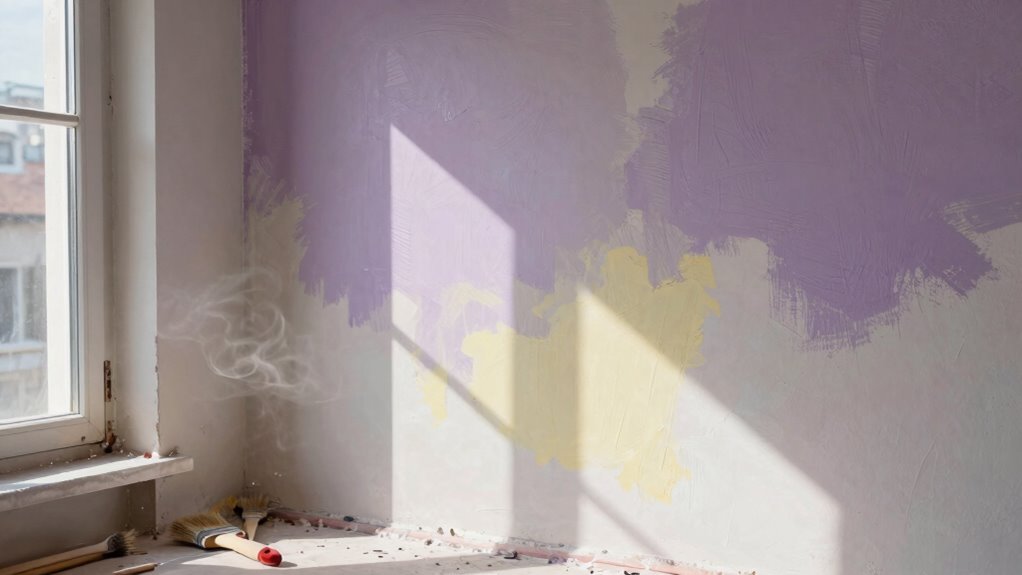

Paint fumes and renovation odors fade at different rates because they come from distinct chemicals that interact differently with surfaces and air. Paint fumes often contain volatile organic compounds (VOCs) that disperses quickly when ventilated, but odors can linger if trapped in porous materials. Renovation odors may include a mix of various chemicals that bond to surfaces, making them last longer. Understanding these differences helps you know which strategies speed up odor removal; keep going to learn more.
Key Takeaways
- Different chemicals in paint fumes and renovation odors bond with surfaces at varying strengths, affecting their dissipation rates.
- The initial odor intensity influences how long each type of smell persists in the environment.
- Porous surfaces can trap certain odors longer, causing delays in their fading compared to less porous materials.
- Some odors are more easily neutralized or absorbed, leading to faster fading than others with complex chemical compositions.
- Ventilation and absorption methods impact the timeline differently depending on the chemical properties and odor sources.

When you paint a room, the lingering fumes and odors can be bothersome long after the last brushstroke. You might notice that even after several hours or days, some smells seem to stick around, while others fade quickly. This difference in how long paint fumes and renovation odors last comes down to various factors, including how well you ventilate the space and the methods you use for odor absorption. Understanding these elements can help you speed up the process and make your environment more comfortable faster.
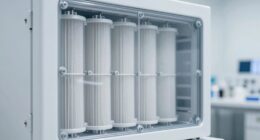
Ventilation techniques are essential in managing paint fumes and odors. When you open windows and doors, you allow fresh air to circulate, diluting the concentration of airborne particles. Using fans to direct air outside creates a steady flow that pulls fumes out of the room. If natural ventilation isn’t enough, employing air purifiers with activated carbon filters adds an extra layer of odor absorption, capturing volatile organic compounds (VOCs) before they settle or linger. The more you improve air circulation, the faster the fumes disperse, reducing the overall smell. Proper ventilation efficiency plays a critical role in how quickly fumes are expelled and odors are reduced.
Enhance air circulation with windows, fans, and air purifiers to quickly disperse paint fumes and odors.
Odor absorption plays a vital role in how quickly odors fade. Some materials naturally absorb and neutralize smells better than others. For example, placing bowls of baking soda or activated charcoal around the room can help absorb residual odors. These substances attract and trap odor-causing molecules, pulling them out of the air. Additionally, using specialized odor-neutralizing sprays can help break down the chemical compounds responsible for the smell. The effectiveness of odor absorption depends on the surface area exposed and the type of substances you use. More porous materials, like fabric or sponge, can also trap and hold onto odors, preventing them from dispersing back into the air. In addition, odor-neutralizing agents can accelerate the process of odor removal when used correctly.
While ventilation techniques are essential for dispersing fumes, odor absorption methods help neutralize lingering smells. Some odors are stubborn because they are chemically bonded to surfaces or deeply embedded in porous materials. In these cases, cleaning surfaces with mild acids or specialized cleaning agents can accelerate odor removal. The timeline for odor fade varies based on the intensity of the smell, the ventilation effort, and the odor absorption techniques employed. In many cases, continuous ventilation combined with odor-absorbing materials can considerably shorten the time it takes for fumes and odors to disappear entirely. Additionally, ventilation efficiency plays a critical role in how quickly fumes are expelled and odors are reduced.
Ultimately, managing paint fumes and renovation odors is a balancing act. Proper ventilation techniques will get the majority of fumes out of the space, while odor absorption methods help neutralize what remains. By combining these strategies, you can create a fresher, more comfortable environment faster and enjoy your newly renovated space without the persistent smell hanging around.

MOOKA Air Purifiers for Home Large Room up to 1076ft², H13 True HEPA Air Filter Cleaner, Odor Eliminator, Remove Smoke Dust Pollen Pet Dander, Night Light, B-D02L White
- Large Coverage Area: Covers up to 1076 ft² with 6 air changes/hour
- High-Efficiency Filtration: Captures pet hair, dander, smoke, and dust
- True HEPA Filter: Removes airborne particles as small as 0.3 microns
As an affiliate, we earn on qualifying purchases.
As an affiliate, we earn on qualifying purchases.
Frequently Asked Questions
Do Different Paint Brands Have Varying Odor Durations?
Yes, different paint brands have varying odor durations because of their unique paint formulation. Some brands prioritize low-VOC ingredients, which emit fewer fumes and odors over time, while others might use stronger solvents. Your choice also depends on brand reputation for quality and safety. Opting for reputable brands known for their low-odor paints can help reduce lingering renovation odors and make your space more comfortable faster.
Can Home Ventilation Speed up Odor Dissipation?
Think of your home as a breathing organism, and proper air circulation as its heartbeat. Yes, increasing ventilation speeds up odor dissipation by dispersing airborne chemicals more quickly. Fresh air acts like a cleansing wind, carrying away lingering fumes and chemicals. By opening windows, using fans, or air purifiers, you actively promote chemical dispersion, helping your space smell fresh faster and reducing the health risks associated with prolonged exposure to renovation odors.
Are There Specific Paints That Produce Fewer Fumes?
Yes, you can choose eco-friendly paints and low VOC options to reduce fumes. These paints emit fewer volatile organic compounds, making your space safer and less odorous during and after painting. Look for labels that specify low VOC or zero VOC content, and opt for brands committed to environmentally friendly products. By selecting these paints, you’ll minimize unpleasant odors and health risks, ensuring a cleaner, healthier home environment.
How Do Temperature and Humidity Affect Odor Fade?
Temperature and humidity markedly influence how quickly odors fade. You should guarantee good air circulation to help disperse fumes faster. Keeping the temperature controlled—neither too hot nor too cold—can also speed up the process, as heat can intensify odors while cooler air slows their release. Proper humidity levels prevent lingering moisture that traps odors, making ventilation and temperature control essential to reduce renovation smells efficiently.
Is It Safe to Stay Indoors During Paint Drying?
It’s generally safe to stay indoors during paint drying, but beware—your indoor air quality may temporarily decline. Paint fumes can affect your respiratory health, especially in poorly ventilated spaces. To stay safe, keep windows open and use fans to circulate fresh air. If you notice lingering odors or feel symptomatic, consider leaving the area until fumes dissipate. Your respiratory health depends on maintaining good ventilation during this time.
Conclusion
As you step back from your freshly painted room, imagine the lingering fumes like ghostly whispers fading into the shadows, each breath clearer than the last. While some odors drift away quickly, others cling like stubborn shadows, slowly dissolving over time. With patience, those paint fumes will vanish, leaving your space refreshed and vibrant. Until then, think of it as nature’s gentle clearing—your room’s way of breathing anew, ready for new memories to unfold.