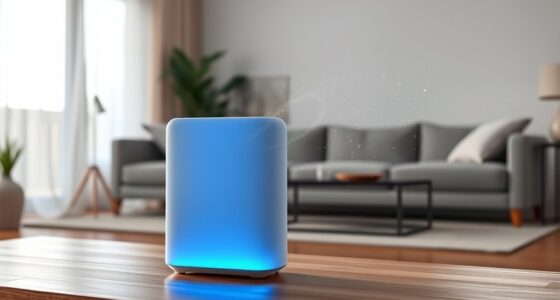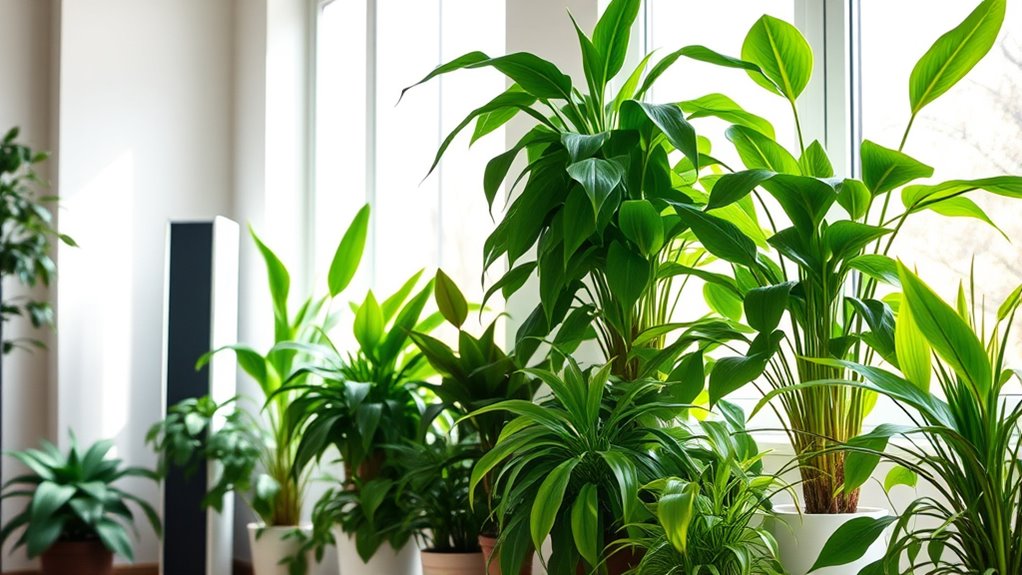

While indoor plants can improve air quality by filtering some pollutants and increasing humidity, they can’t fully replace air purifiers. Scientific studies show that you’d need many plants to match the cleaning power of a good air purifier, and plants only provide a supplementary benefit. To truly improve your indoor air, it’s best to combine plants with proper ventilation and mechanical filters. If you’re curious about how to optimize your space, keep exploring the facts behind this common myth.
Key Takeaways
- Plants can improve indoor air quality but cannot fully replace mechanical air purifiers.
- The NASA study shows that large quantities of plants are needed for significant pollutant removal, which is impractical.
- Plants serve as a supplementary measure, enhancing air quality when combined with proper ventilation and cleaning.
- Effective air purification involves a mix of natural plants and mechanical systems for comprehensive coverage.
- Overall, plants are beneficial but limited, and should be part of a holistic approach to indoor air quality management.
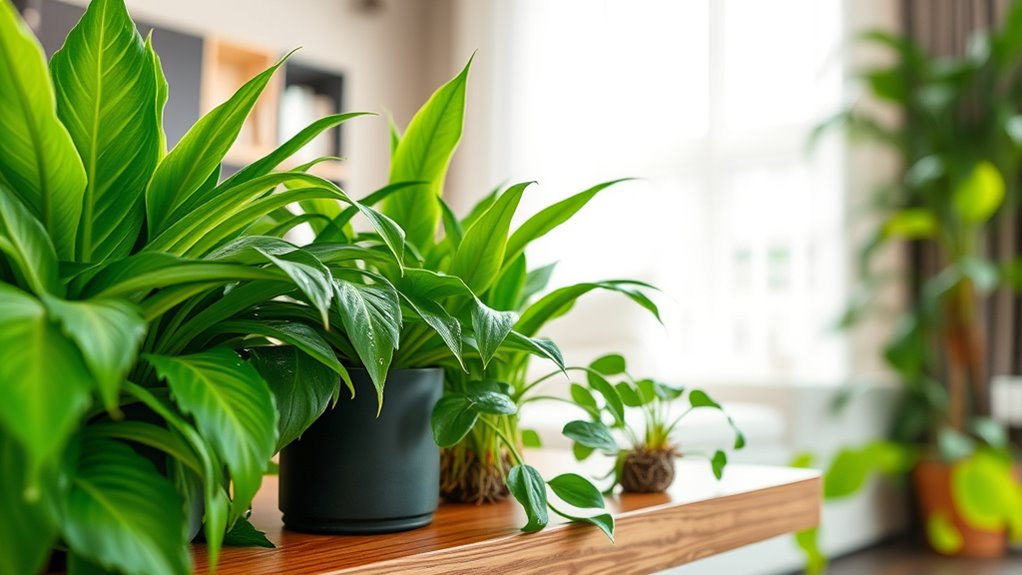
Indoor plants do more than add beauty to your space—they actively improve air quality by filtering out pollutants and releasing oxygen. When you choose the right plants, you’re not only decorating your home but also taking steps to enhance your indoor air quality. The key lies in thoughtful plant selection; not all plants are equally effective at purifying the air. Some species excel at removing specific toxins like formaldehyde, benzene, or trichloroethylene, which are common indoor pollutants from furniture, cleaning products, and paints. By understanding which plants have these natural abilities, you can tailor your plant choices to maximize air purification.
Choosing the right indoor plants enhances air quality by naturally removing toxins and improving your environment.
For example, snake plants, pothos, and peace lilies are popular for their air-filtering properties. Snake plants, in particular, are hardy and require minimal maintenance, making them ideal for busy households. Pothos can thrive in low light, and peace lilies not only filter out pollutants but also add a touch of elegance to your space. When considering plant selection, think about your environment—the level of natural light, humidity, and your ability to care for the plants. Some plants do better in low-light conditions, while others need direct sunlight. Matching the right plant to your indoor environment ensures they stay healthy and continue to purify the air effectively.
It’s tempting to think that filling your space with lots of plants will turn your home into an air purification powerhouse. However, the science behind plants as air purifiers isn’t as straightforward as it seems. While they do contribute to cleaner air, they shouldn’t replace traditional air purifiers, especially in environments with high levels of pollution or specific health concerns. The NASA Clean Air Study popularized the idea that certain indoor plants can improve air quality, but its findings also emphasized that the amount of plants needed to make a significant difference is often impractical for typical homes.
In reality, plants serve as a supplementary measure rather than a full substitute for mechanical air purification systems. They can reduce some airborne toxins and increase humidity, which can help with respiratory comfort, but they don’t filter out all pollutants or replace the need for proper ventilation. So, if you’re considering plants as a natural way to enhance indoor air quality, focus on strategic plant selection and maintenance. Use them alongside air purifiers, proper ventilation, and good cleaning habits to create a healthier environment. Ultimately, plants are a valuable addition, but not a exhaustive solution, for cleaner indoor air.
Frequently Asked Questions
How Many Plants Are Needed to Clean a Typical Room Effectively?
You’ll need about 15 to 20 plants for an average-sized room to see noticeable air purification. Proper plant placement is key; spread them around the space to maximize air circulation. Keep in mind, while plants contribute to cleaner air, they shouldn’t replace traditional air purifiers entirely. Instead, combine plant placement with good ventilation to improve indoor air quality effectively.
Do Certain Plants Work Better for Specific Indoor Pollutants?
You’ll be pleased to know that certain plant species excel at removing specific indoor pollutants. For example, snake plants are effective against formaldehyde, while spider plants help filter out carbon monoxide. Studies show that understanding pollutant specificity allows you to choose the best plant species for targeted air purification. By selecting the right plants, you can optimize your indoor air quality naturally, making your space healthier and more comfortable.
Can Plants Remove Airborne Viruses and Bacteria?
Plants alone can’t effectively remove airborne viruses and bacteria, but some have notable plant antiviral properties and bacterial removal efficacy. While they may reduce certain pollutants and boost air quality, relying solely on plants for disinfection isn’t enough. You should combine plants with good ventilation and air purification methods for better protection. So, even if plants contribute to cleaner air, they can’t replace dedicated air purifiers when it comes to airborne pathogens.
What Are the Maintenance Requirements for Plants Used as Air Purifiers?
You’ll find that maintaining plants as air purifiers isn’t as effortless as imagined. You need to regularly water them to keep them thriving, and yes, pest control becomes an ongoing battle—because bugs love greenery too. Pruning and cleaning fallen leaves help prevent mold and disease. So, while plants do some cleaning, expect consistent plant watering and pest control to keep them healthy and effective at improving your air quality.
Are There Any Safety Concerns With Keeping Certain Indoor Plants?
You should be aware of safety concerns with certain indoor plants, as some pose toxicity risks if ingested by pets or children. Additionally, some plants have allergenic potential, which can trigger respiratory issues or skin reactions. To stay safe, research each plant’s safety profile, especially if you have pets or allergies, and keep potentially harmful plants out of reach. Always follow guidelines to minimize any health risks associated with indoor greenery.
Conclusion
While plants bring a touch of nature indoors, they’re more like gentle poets than mighty air purifiers. They can improve your mood and add fresh life to a room, but don’t rely on them to clear out toxins like a true air purifier. Think of plants as a charming sidekick, not the hero. For truly clean air, combine plants with proven filtration methods—because relying solely on greenery is like expecting a butterfly to do a lion’s job.